
The usual advice about Crisp chat alternatives starts with feature counts and subscription prices. That's the wrong starting point. A Shopify merchant doesn't necessarily need a better version of Crisp. The store may need a different kind of tool, one built around helping shoppers choose products or managing a growing support operation.
Crisp isn't automatically the problem. A store answering occasional product questions has different needs from a retailer managing returns, delivery exceptions, and conversations across social channels. Switching between similar inboxes won't fix a mismatch between the software and the work.
The useful distinction is between AI shopping assistants, human-first live chat, and full support platforms:
- Sales assistants help shoppers compare products, understand suitability, and decide what belongs in the cart.
- Human-first chat apps give merchants a practical way to answer personally, with automation handling supporting tasks.
- Full helpdesks organize ownership, order context, workflows, and escalations across a support team.
The comparisons below prioritize those jobs, Shopify context, human fallback, and billing considerations rather than treating every feature as equally valuable. Competitor pricing figures belong only alongside confirmation from the vendor's own pricing page. Where current prices or allowances couldn't be confirmed, they're omitted rather than borrowed from another comparison.
The best replacement is the tool that handles the store's actual conversations without adding work the team doesn't need.
1. Carti
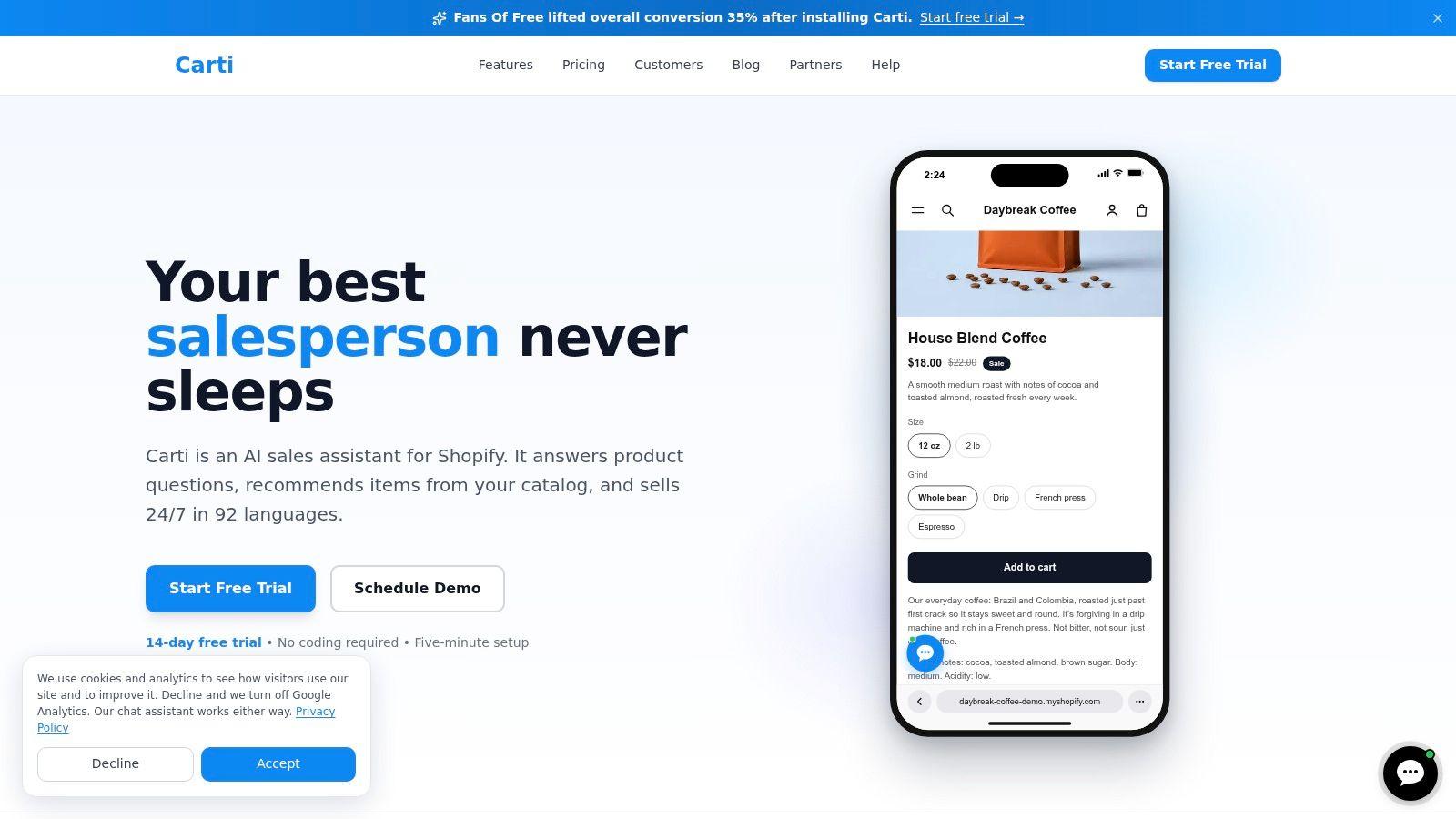
Best fit: Shopify merchants seeking a sales-first AI shopping assistant. Carti learns a store's catalog, policies, and FAQs, then answers pre-purchase questions about sizing, shipping, returns, and product differences. It recommends relevant products rather than treating every conversation as a support ticket.
Instant Answers, Smart Suggestions, and proactive prompts support shoppers during product discovery. Review integrations with Judge.me, Loox, Yotpo, Okendo, and Fera can inform answers about fit and quality, while the Insights Dashboard helps merchants inspect shopper questions and assisted sales.
Where the Fit Is Strongest
A fashion store can use this approach to explain differences between garments. A beauty retailer can help shoppers compare products without expecting them to review every product page independently. The important prerequisite is accurate store information, especially where suitability or policy exceptions require care.
- Useful capabilities: No-code setup, customizable brand voice, storefront assistance, and replies through Instagram and Facebook Messenger.
- Practical limitation: Incomplete product descriptions and unclear policies still need merchant attention. Automation isn't a substitute for maintaining those details.
- Billing trade-off: Conversation allowances are capped, so projected usage matters when choosing a tier.
Plans are Free with 50 AI conversations a month, Starter at $49/month with 250, Growth at $99/month with 600, and Scale at $249/month with 1,750. Paid plans include a 14-day free trial.
Merchants should evaluate the assistant on realistic buying questions, not just simple FAQ answers. Correctly explaining which product fits a shopper's needs matters more than producing a polished response to a question that the product page already answers clearly.
2. Shopify Inbox
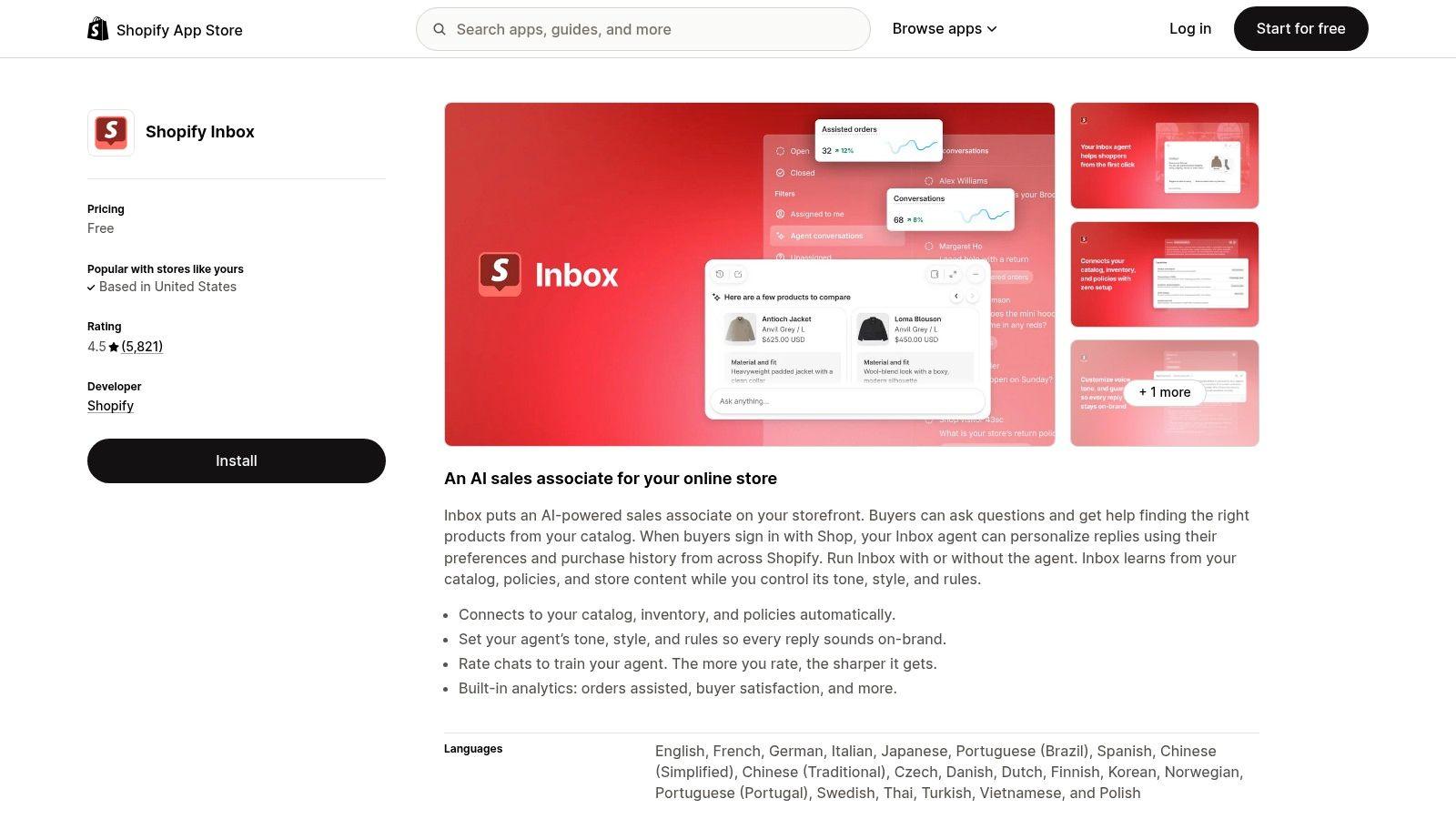
Shopify Inbox suits merchants who still want to answer shoppers themselves. Its appeal is proximity to the store, not the breadth of a separate support platform. Storefront conversations sit within Shopify's ecosystem, with shopping context that can make replies more useful.
Shopify Inbox supports automated messages, instant answers, cart context, and discount sharing. Those tools suit an owner-operated store where the person answering chat also understands stock, promotions, and customer expectations.
A Sensible Human-First Baseline
Shopify reports that 17% of pre-purchase Shopify Inbox conversations converted into sales in November 2023, according to its customer-service statistics. That measures pre-purchase conversations, not all visitors, and it isn't a promised storewide conversion rate.
The practical question is whether the merchant can provide useful coverage. An inbox won't answer a nuanced fit question personally while the owner is packing orders.
- Choose it for: Direct shopper conversations without adopting a deep helpdesk.
- Test carefully: Notifications, unanswered-message handling, and how much context remains visible during a reply.
- Consider another category for: Team routing, extensive escalation workflows, or specialist automated product guidance.
The Shopify Inbox comparison offers a closer look at the distinction between merchant-led chat and dedicated shopping assistance. Current commercial terms should be confirmed directly with Shopify.
3. Tidio
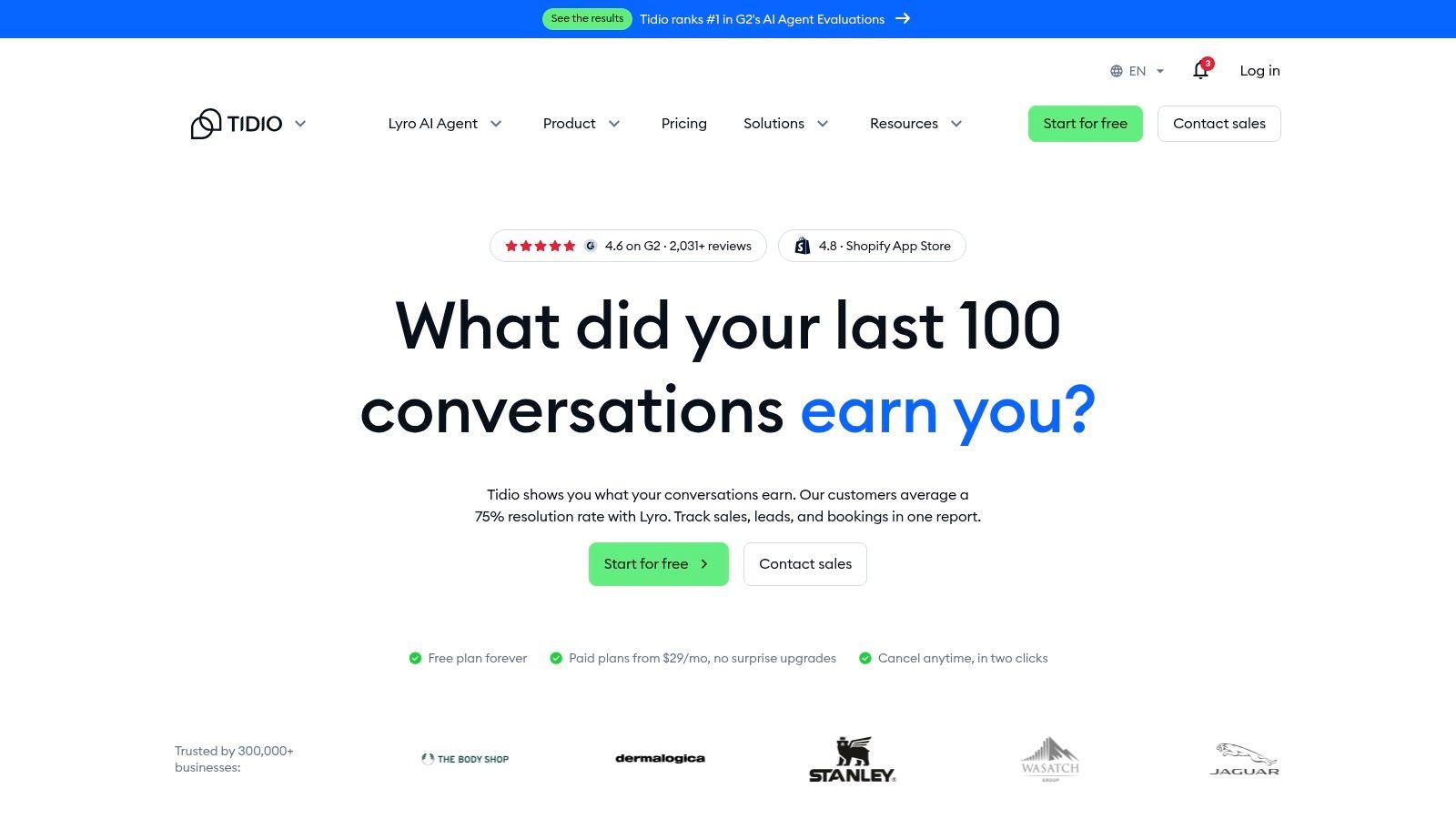
Some stores don't want to choose between personal replies and automation. Tidio occupies that middle ground, combining live chat, ticketing, chatbot flows, and its Lyro AI agent.
Tidio also supports Shopify product questions and recommendations using product data. That makes it relevant when the same conversation may begin with product discovery and finish with a delivery or returns question.
A hybrid tool earns its place when a shopper can move from automation to a person without explaining the problem again.
Test the Transition, Not Just the Bot
A useful trial starts with an ordinary product question, then introduces an exception. A shopper might ask about a garment's material before explaining that it must arrive for an event. The merchant should inspect what the assistant answers, what it leaves unresolved, and what the human agent receives.
- Strength: Human support and automated shopping guidance can share the same operating environment.
- Trade-off: Chatbot flows, AI assistance, and staffed support require different setup and maintenance decisions.
- Billing consideration: The required combination of AI access, conversation volume, and add-ons needs confirmation before purchase.
Current prices and plan allowances couldn't be confirmed from a vendor pricing page, so no figures are quoted. The Tidio comparison is useful for merchants deciding whether a hybrid support platform fits better than a focused shopping assistant.
4. Gorgias
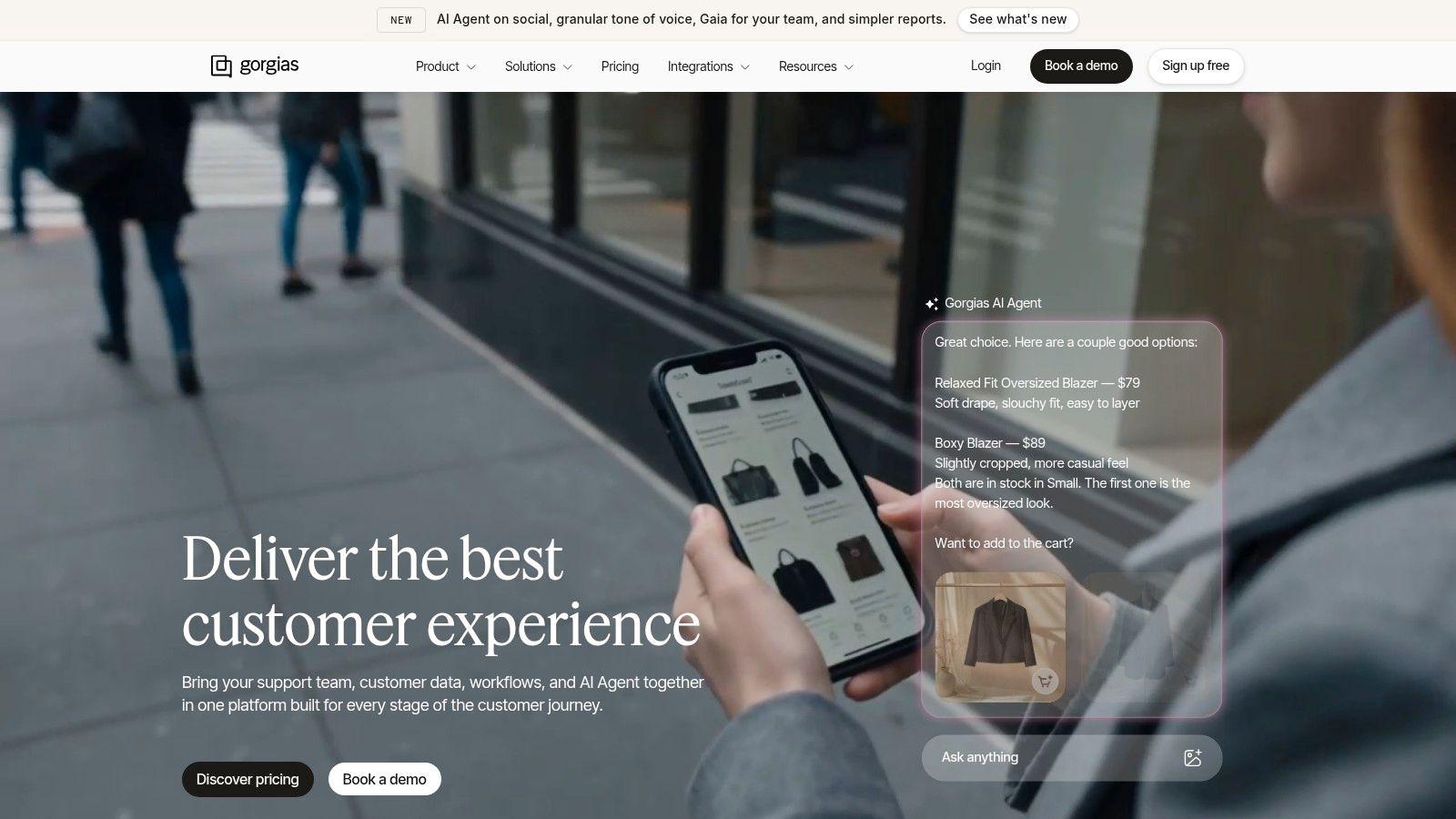
Gorgias belongs on the shortlist when support has become an operation rather than an occasional task. Its ecommerce helpdesk brings customer conversations and Shopify order context into a shared workspace.
Gorgias combines support workflows with an AI Agent and AI Shopping Assistant. That creates a broader proposition than a storefront widget, particularly for merchants managing both buying questions and post-purchase requests.
Buy It for Operational Depth
An agent handling a missing parcel needs order context, clear ownership, and a reliable escalation path. A shopper comparing products needs a different response. Merchants evaluating Gorgias should test both jobs rather than assuming success at one proves the other.
- Strong fit: Teams handling conversations across chat, email, social messaging, and other service channels.
- Useful distinction: Product assistance sits alongside order-related support instead of replacing it.
- Main compromise: A small store seeking only pre-purchase guidance may inherit more configuration and workflow management than it needs.
Billing deserves a separate review because ticket activity and AI usage can affect the total. Current prices, included volumes, and charge definitions couldn't be confirmed from its pricing page, so no amounts are listed.
The Gorgias comparison helps frame the central decision: whether the store needs a customer-service workspace or a more focused sales-assistance tool. The answer should follow the team's workload, not the size of the feature list.
5. Re:amaze
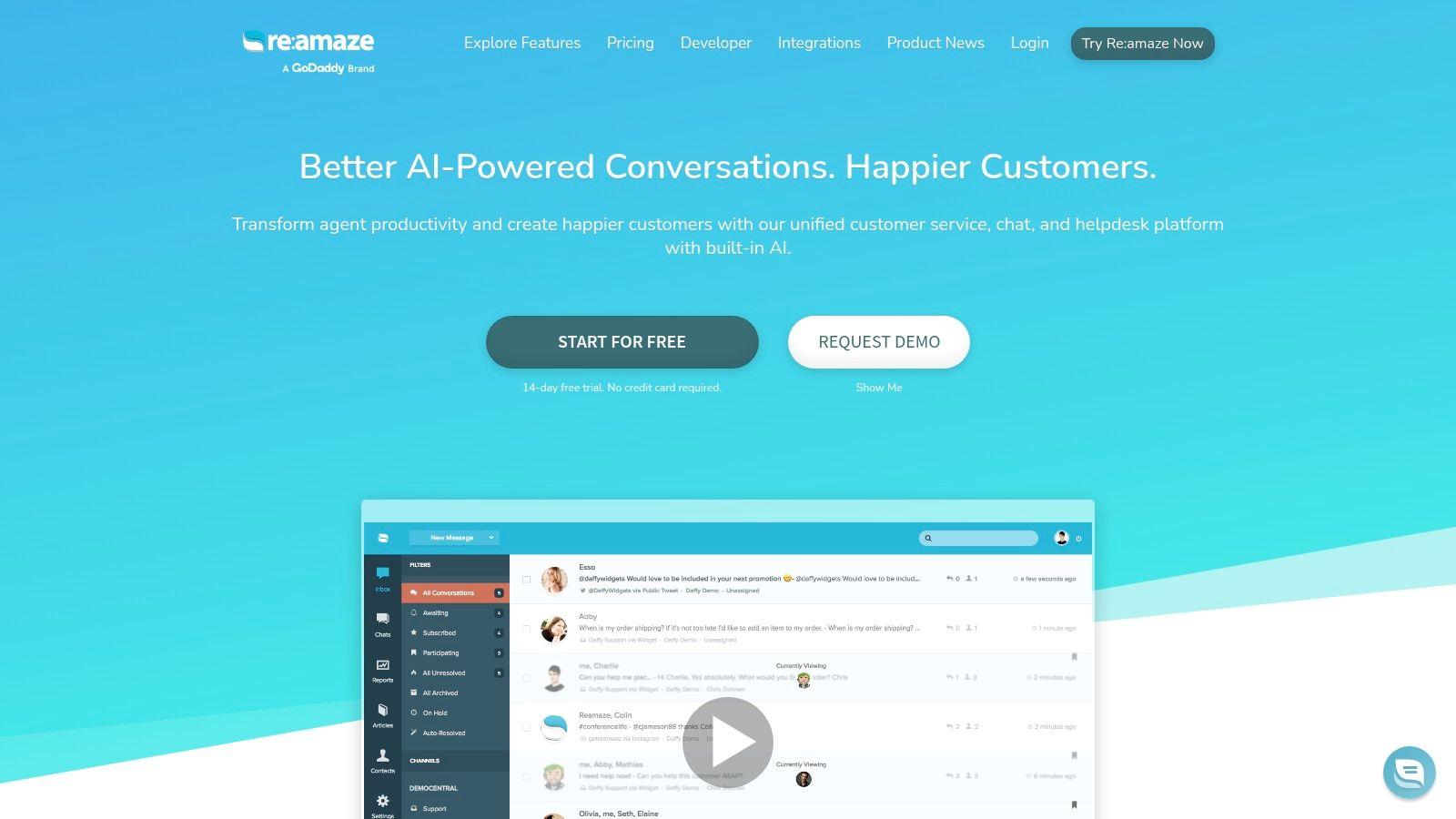
A customer sends an email, follows up through chat, and later asks about the same order on social media. Re:amaze is worth considering when coordinating those contacts is the core problem.
Re:amaze combines a multichannel inbox with live chat, chatbots, FAQs, proactive Cues, workflow macros, and AI assistance. Its Shopify integration brings order context into the support workflow and supports order-management tasks.
Keep the Workflow Understandable
The attraction is having several service tools together. The risk is building overlapping automation that staff can't explain or maintain. Merchants should assign a clear purpose to proactive messages, chatbot flows, saved replies, and AI responses before enabling them broadly.
- For the support lead: Test assignment, internal coordination, and how an agent resumes an automated conversation.
- For the store owner: Check whether the setup reduces repeated work or merely creates another administration task.
- For product discovery: Compare recommendation quality against a specialist shopping assistant rather than assuming inbox breadth is equivalent.
Per-user and conversation-volume pricing approaches are relevant to the evaluation, but current plan names, prices, and allowances couldn't be confirmed from a vendor pricing page. No figures are quoted.
Re:amaze is a better candidate for merchants who need coordinated customer service than for stores whose main objective is helping browsers choose between similar products. Its value depends on whether staff will use the broader workflow.
6. Richpanel

Richpanel suits stores where recurring order questions take up support time. Order status, cancellations, refunds, returns, and subscription queries call for a different setup than helping shoppers compare products before buying.
Richpanel focuses on ecommerce support automation. Its tools include a unified inbox, self-service options, human handoff, and merchant-set approval rules. The key fit question is whether your team needs support workflows that handle order issues, rather than a sales assistant focused on product discovery.
Examine Actions and Approval Boundaries
Post-purchase chat deserves a practical evaluation. Statista's analysis of consumer survey data collected in November and December 2024 found that 46% of consumers used chatbots to report an issue or start a return. Test the workflow against the kinds of requests your team receives.
Operational safeguard: Explaining a refund policy and having permission to issue a refund are separate decisions.
Check how the system handles an eligible request, an ineligible one, and an ambiguous case. It should follow store rules and retain enough context for a person to resolve exceptions. That boundary matters: automation can reduce repetitive work, but poorly defined approval rules can create more work for support staff.
Before choosing, compare helpdesk seat costs with any metered AI usage, and request current rates and minimum commitments directly from Richpanel. Richpanel is a stronger fit when order support is the bottleneck; stores mainly seeking pre-purchase product advice should compare sales-focused chat tools instead.
7. Intercom
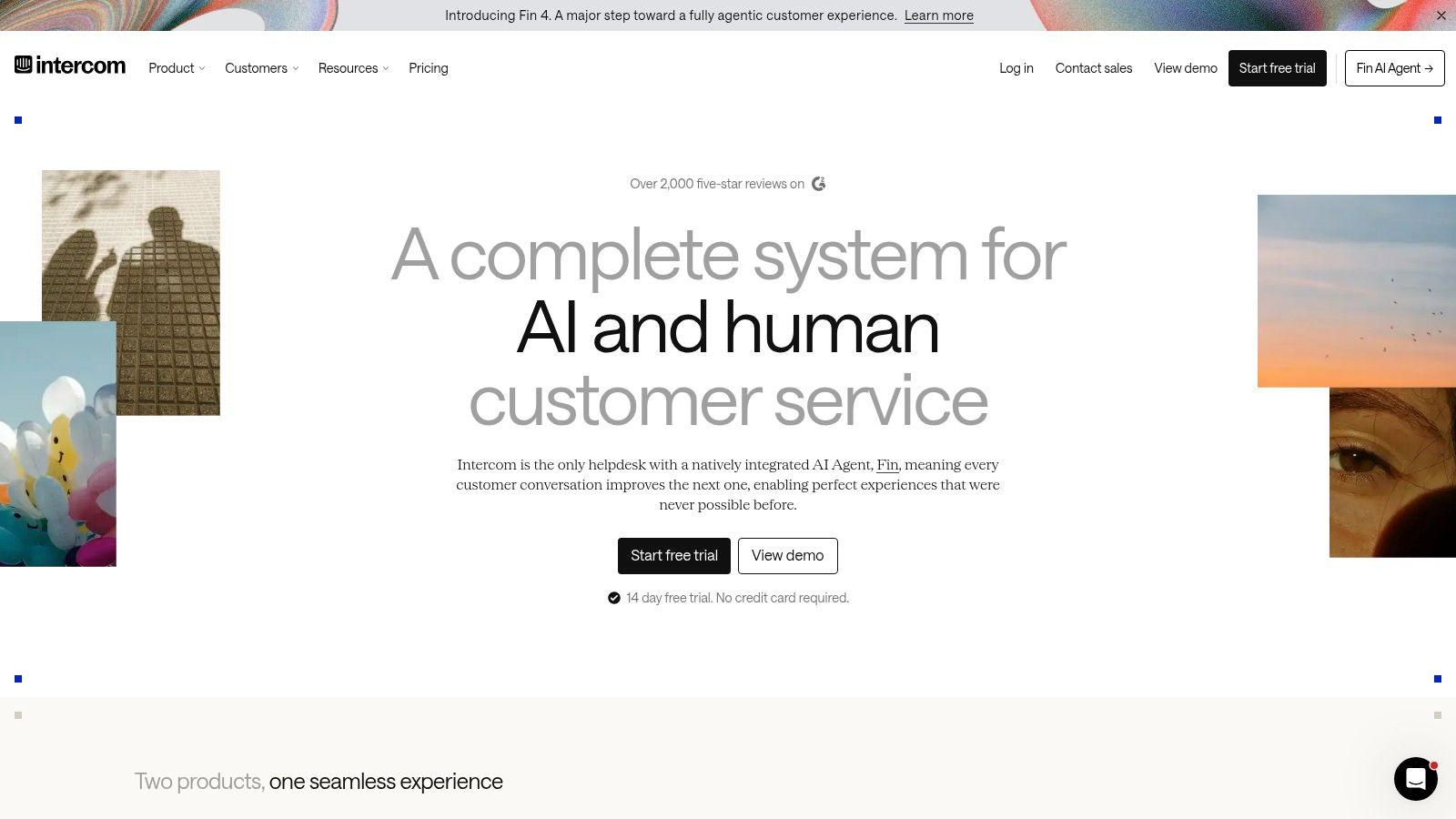
Intercom is a broad customer-service platform, not a Shopify chat replacement. Its Messenger, shared inbox, help center, workflows, and Fin AI Agent suit businesses that need a structured service environment.
Intercom is worth evaluating when the support team needs automation across a maintained knowledge base and connected systems. A merchant seeking only a product-question widget should be cautious about taking on that wider scope.
Knowledge Quality Comes Before Automation
The important test isn't whether an assistant can answer a straightforward shipping question. It's whether it can distinguish the published policy from an exception, recognize missing information, and leave a useful record for a person.
- Best reason to shortlist: The store needs coordinated service workflows and knowledge-based automation.
- Reason to hesitate: The team lacks time to maintain help content, routing, and escalation rules.
- Budget question: Seat fees and AI outcome charges must be evaluated together, including how the vendor defines a billable outcome.
Current prices, plan limits, and trial terms couldn't be confirmed from the vendor's pricing page. No figures are quoted.
For Shopify merchants, product discovery should receive its own evaluation. A capable service platform doesn't automatically provide the most useful product comparisons, variant guidance, or shopping recommendations. Intercom makes more sense when service operations justify the platform independently of the storefront chat widget.
8. Zendesk
Zendesk is a full helpdesk choice for merchants whose support complexity extends beyond storefront conversations. Ticketing, messaging, routing, a knowledge base, reporting, and integrations form the core of that decision.
Zendesk suits an evaluation centered on ownership and process. A retailer handling delivery exceptions, payment questions, social messages, and phone support needs more than an attractive chat bubble.
Start With the Agent's Work
A useful demonstration follows a difficult request through its whole lifecycle. The merchant should inspect who receives it, what customer context is visible, how another team becomes involved, and whether the original agent can track the outcome.
- Operational advantage: A structured service workspace can support responsibilities that span several people or channels.
- Implementation cost: Routing, permissions, knowledge content, and reporting require deliberate configuration.
- Poor fit: An owner-operated store that mainly wants help answering pre-sale questions may not need this scope.
Current prices, plan names, and agent allowances couldn't be confirmed from a vendor pricing page, so no figures are listed. Merchants should establish which capabilities are included in the proposed subscription rather than treating the entire product catalog as standard.
Zendesk deserves consideration when the replacement project is really about organizing customer service. If the unresolved problem is shoppers struggling to choose a product, a sales-first assistant is the more direct category to test.
9. Chatway
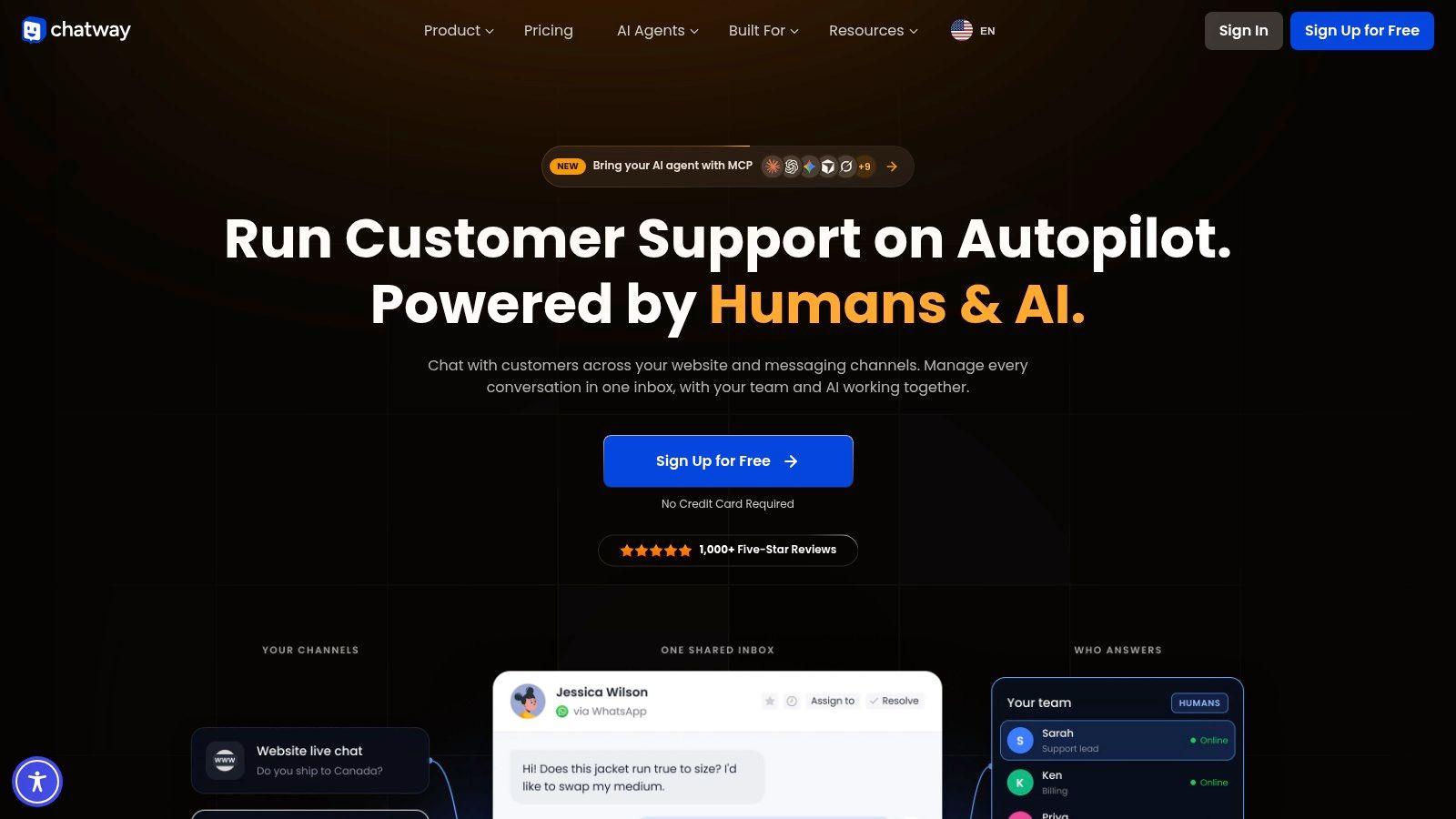
Chatway is a human-first candidate for merchants who want chat and shared messaging without beginning with a large helpdesk. Its Shopify app brings cart, order, and coupon information into the agent's workflow.
Chatway combines storefront chat, a shared inbox, mobile apps, FAQs, canned replies, and optional AI chatbot capabilities. Social messaging support is relevant for retailers whose customers move between the storefront and direct messages.
Personal Service Still Needs Coverage
Meta's business messaging materials report that online adults are more likely to do business with or purchase from companies they can contact through messaging. That supports checking the channels customers use, rather than evaluating website chat alone.
The operational constraint is staffing. A mobile app can help a merchant notice a message, but it doesn't create time to answer while the merchant is packing orders or handling another customer.
- Test notifications: Confirm that the responsible person notices and can resume a conversation.
- Inspect context: Check whether Shopify information reduces repeated questions during support.
- Separate AI costs: Optional chatbot access and credits should be assessed independently of human-chat requirements.
Current plan prices, seat allowances, and conversation caps couldn't be confirmed from the vendor's pricing page, so those figures are omitted.
Chatway is most compelling when personal service remains the strategy. Merchants seeking autonomous product discovery should test that requirement separately.
10. Dori AI Shopping Assistant

A shopper comparing products needs sales guidance, not necessarily a support ticket. Dori frames chat as a shopping decision, helping with product questions, comparisons, recommendations, variant selection, and adding items to a cart.
Dori may suit Shopify stores that want guided product discovery. Quizzes, routines, gift recommendations, and upsells distinguish it from a conventional ticket inbox. That makes it a sales-assistant option, rather than a human-first chat tool or full helpdesk.
Judge the Recommendation, Not Its Confidence
Test how the assistant handles the product decisions your store faces. A beauty shopper might compare routines using your published product guidance. Someone furnishing a home might need a recommendation based on dimensions or materials. In either case, the answer should connect the shopper's needs to product information without inventing attributes.
Confidence is not proof of a good recommendation. The shopper needs a clear reason the suggested product fits.
- Best fit: Stores prioritizing guided discovery and product selection.
- Important boundary: Treat the shopping assistant and the support operation as separate jobs. Don't assume it replaces team assignments, returns workflows, or a multichannel helpdesk.
- Trial focus: Check product accuracy, variant handling, brand voice, and what happens when no suitable product is available.
Plan prices, conversation allowances, and catalog limits change, so confirm the current terms on Dori's pricing page before subscribing.
Dori belongs on a sales-assistance shortlist. Choose it if product guidance is the job you want chat to do, rather than judging it by how closely it resembles a familiar support widget.
Crisp Chat Alternatives at a Glance
A long feature list will not tell you which Crisp replacement to install. Sort by the job you want chat to do.
Sales assistants handle product questions, comparisons, and the path toward checkout. Human-first chat is for a merchant who still answers in person. A full helpdesk is for teams that need ownership, order context, and shared workflows. Prices below are only the figures each vendor's own pricing page supports. Blank commercial terms stay blank.
| Best for | Free plan | Starting price | AI features | Shopify focus |
|---|---|---|---|---|
| Carti: sales assistant for Shopify product guidance and conversion | Yes, 50 AI conversations/month | Free; paid plans from $49/month | Product answers, recommendations, proactive prompts, 92 languages | Built specifically for Shopify |
| Shopify Inbox: human-first chat for merchants who want simple, native replies | Not stated | Not stated | Automated answers; may include an AI sales associate | Shopify-native |
| Tidio: mixed live support and automation | Not stated | Not stated | Lyro AI, product questions and recommendations | Shopify product data and integrations |
| Gorgias: full helpdesk for ecommerce teams | Not stated | Not stated | AI support agent and shopping assistant | Ecommerce-focused with Shopify order context |
| Re:amaze: full helpdesk for multichannel support workflows | Not stated | Not stated | AI Agent and AI-assisted replies | Shopify order context and order management |
| Richpanel: helpdesk work that automates order-related support | Not stated | Not stated | AI agents for support and order tasks | Ecommerce workflows, including Shopify |
| Intercom: full customer-service platform for complex operations | Not stated | Not stated | Fin AI Agent and workflow automation | Integrates with Shopify; less focused on product discovery |
| Zendesk: full helpdesk for larger teams with complex support operations | Not stated | Not stated | AI agents, automated resolutions and routing | Shopify integration within a broad helpdesk platform |
| Chatway: human-first live chat and social messaging | Not stated | Not stated | Optional AI chatbot capabilities | Shopify app with cart, order and coupon context |
| Dori: AI Shopping Assistant for product discovery | Not stated | Not stated | Product comparisons, recommendations, variant guidance and add-to-cart | Shopify-focused shopping assistant |
How to Pick Your Crisp Replacement and Switch Safely
The strongest Crisp chat alternatives solve different problems. A sales-first assistant suits a store where browsers need help comparing products and resolving buying hesitation. A human-first chat app suits a merchant who wants to answer personally. A full helpdesk suits a team that needs ownership, order workflows, and coordinated support.
Automation volume shouldn't decide the purchase by itself. In a 2025 Morning Consult study, roughly two-thirds of ecommerce shoppers preferred human support across six service scenarios, according to its consumer research. A visible, practical route to a person remains part of the evaluation.
Test Resolution Before Replacing the Widget
Comm100's benchmark found that 81.37% of organizations maintained wait times below 30 seconds in 2024, yet those waits produced 79.6% CSAT, according to its 2025 Live Chat Benchmark Report. Speed deserves measurement, but it doesn't establish that the answer was correct or useful.
Merchants should build a trial around actual conversation types. Product comparisons, shipping questions, returns exceptions, unavailable items, and uncertain requests expose more than a polished demonstration.
- Preserve history: Export available transcripts and contacts before canceling Crisp. Confirm export formats, keep a secure archive, and don't assume another product can import everything.
- Rebuild useful knowledge: Update FAQs, saved replies, shipping details, and returns policies. Conflicting content should be resolved before an assistant learns from it.
- Test mobile behavior: Check the widget on product pages and cart screens, including keyboard behavior, close controls, and overlap with other storefront elements.
- Verify handoff: Confirm where escalations arrive, who owns them, and whether the recipient receives the conversation context.
The replacement should be ready before Crisp is removed. A controlled cutover is safer than leaving competing widgets active, confusing shoppers, or discovering afterward that messages aren't reaching the team.
Compare the Whole Bill
Every quoted price and allowance should be rechecked on the vendor's own pricing page before subscribing because plans change. The review should include billing frequency, seats, conversations, AI outcomes, credits, add-ons, and any minimum commitment.
A lower entry price isn't necessarily a lower operating cost. The better choice is the product that handles the store's required workload accurately, keeps exceptions manageable, and remains affordable at expected usage.
For merchants considering a sales-first Crisp replacement, Carti offers Shopify product guidance, pre-purchase answers, and relevant recommendations based on store content. Merchants can explore the free plan and test realistic sizing, shipping, returns, and comparison questions before committing to a paid plan.

Written by
Daniel AndersonFounder of Carti. 10+ years building ecommerce brands in apparel and supplements. Still runs a Shopify store and built Carti to help merchants convert more browsers into buyers.