
Your Shopify orders are growing, but the stockroom still runs on a spreadsheet, printed packing slips, and someone remembering where the spare cartons went. A picker finds an empty shelf, customer support sells stock that isn't available, and you spend the afternoon checking orders instead of running the store.
Warehouse management software coordinates the physical work behind fulfillment. It connects receiving, putaway, inventory control, picking, packing, shipping, and returns so your team knows what arrived, where it belongs, and what should leave next. Done properly, that means fewer mispicks, more dependable stock records, and faster fulfillment.
Deployment and product scope are separate decisions. Cloud software runs on vendor-managed infrastructure, while on-premise software runs on infrastructure your business manages. A standalone WMS specializes in warehouse execution, while warehouse modules inside ERP or ecommerce platforms keep operations closer to your existing business systems.
Buy for the work your team needs to control, not the longest feature list.
For a single-stockroom brand, disciplined barcode workflows might matter more than advanced automation. A multi-client logistics provider needs client separation and billing, while an enterprise network needs deeper coordination across facilities and equipment.
The options below cover those different situations. Judge each against your Shopify integration requirements, floor workflows, implementation capacity, and total operating cost.
1. Boostmyshop
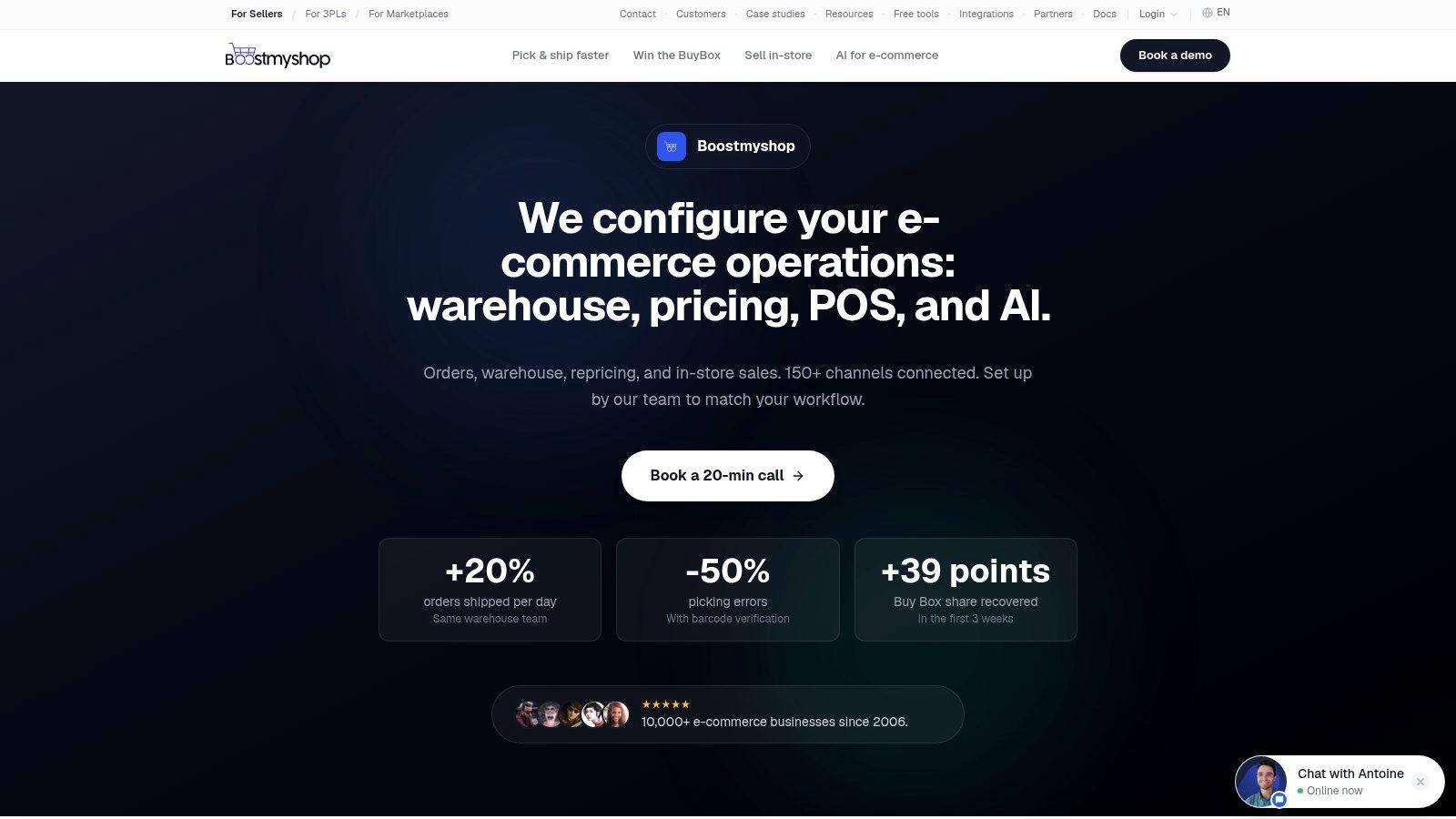
Best for merchants whose warehouse problems cross into order management and multichannel operations. Boostmyshop combines warehouse and order management through myFulfillment with related tools for repricing, connected POS, and AI workflows.
Its warehouse management software for e-commerce focuses on coordinating orders, stock, picking, and shipping. Barcode-verified wave and batch picking, stock synchronization, and carrier rules address the practical handoffs where growing stores often lose control.
Say you sell skincare through Shopify and marketplaces while also supplying a physical shop. The operational challenge is not just knowing your total stock, but allocating it correctly and ensuring warehouse staff ship the right variant without reconciling separate order queues.
Where the broader platform helps
Boostmyshop makes sense when you want connected operational processes rather than another isolated warehouse application. Its implementation approach includes workflow mapping, system connections, staff training, and go-live support.
The related products matter only if they solve an actual problem:
- myFulfillment brings warehouse execution and order management together, including barcode-led picking and shipping workflows.
- myPricing supports repricing and competitive intelligence, with floor-price controls for merchants protecting margins.
- myWebPOS connects store transactions with inventory for workflows such as collection and shipping from stores.
- AICommerce provides AI agents trained on business data.
For a Shopify merchant, the priority should still be the warehouse workflow. A repricing tool won't fix stock received against the wrong SKU, and a connected checkout won't correct an unrecorded location transfer.
What to test before choosing it
Request a demonstration that follows an incoming delivery through putaway, allocation, picking, and shipment confirmation. Include a cancellation after allocation and a return that needs inspection before becoming sellable again.
The trade-off is breadth versus implementation discipline. A connected stack can reduce disconnected processes, but you'll need clear ownership of inventory records, channel rules, and exceptions. Boostmyshop belongs on the shortlist when those connections are part of the problem, not merely because the extra products are available.
2. ShipHero
A growing DTC brand and a logistics provider can use similar racks and scanners while needing different software controls. ShipHero offers separate warehouse management systems for ecommerce brands and third-party logistics providers.
For merchants, its appeal is a dedicated ecommerce workflow covering inventory, orders, picking, packing, shipping, and returns. Batch shipping, automation rules, rate shopping, warehouse routing, and lot or expiration tracking make it relevant when fulfillment has outgrown a lightweight inventory app.
Choose the workflow before the package
ShipHero is a candidate when online-order execution is your main constraint. For a beauty brand, that might mean controlling expiration-sensitive stock while keeping pickers moving through small parcel orders.
For a logistics provider, the decision changes. Customer portals and billing become important because the warehouse must show each client what happened and charge for the services performed.
- Brand operation needs accurate allocation, efficient picking, dependable shipment updates, and manageable returns.
- Logistics operation also needs customer-level visibility, permissions, billing rules, and separation of client inventory.
- Seasonal operation needs training and exception handling that temporary staff can follow without relying on a supervisor's memory.
Don't buy from a polished dashboard demonstration alone. Have the vendor process a partial shipment, a damaged item, a replacement order, and an address change using your proposed setup.
The main trade-off is commitment. A dedicated WMS requires staff time for configuration, training, and process changes, and its ongoing cost needs to match the work it replaces. Confirm which integrations, onboarding services, and support arrangements belong in your proposal rather than assuming everything shown is included.
3. SKULabs
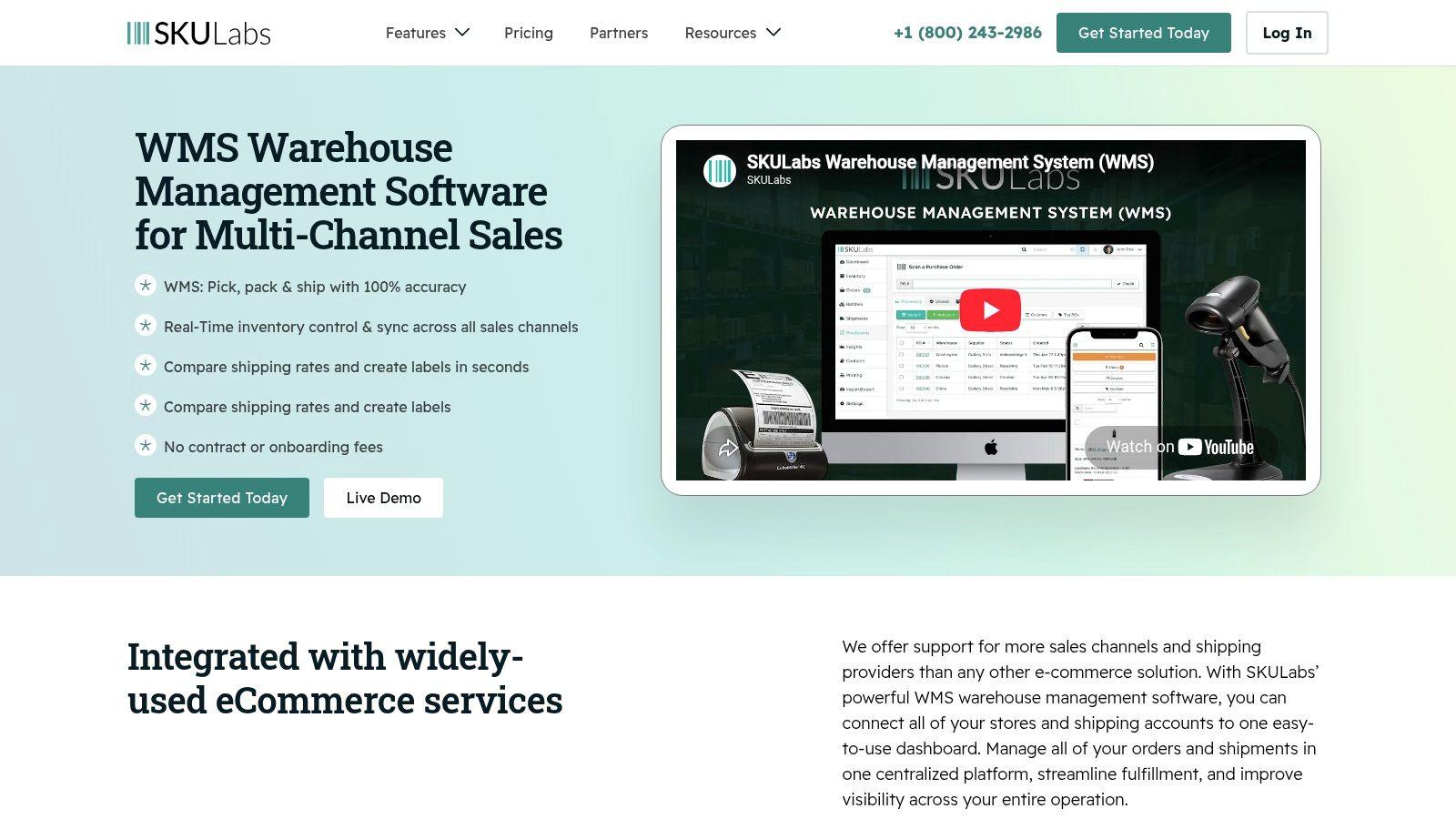
Selling through additional channels creates an inventory coordination problem before it creates an enterprise warehouse problem. A Shopify merchant adding marketplaces or another storefront needs consistent stock records and repeatable fulfillment without necessarily rebuilding the entire operation.
SKULabs provides cloud-based inventory, order, and warehouse tools for multichannel sellers. Barcode scanning and shared inventory management make it a relevant option for a brand moving beyond spreadsheets into more controlled fulfillment.
Its plans vary by order volume, users, channels, warehouses, and SKU count. More advanced tiers add capabilities such as guided scanning, returns workflows, batch processing, and forecasting, so the plan decision needs to follow your actual working process.
Buying rule: Compare the package your operation needs, not the entry package that gets your attention.
Watch the allowances and integration boundaries
A homewares seller might have a manageable product catalog but sell through several channels. Another merchant might have a single storefront with many size and color variants, creating a different set of plan requirements.
Build your comparison around those constraints:
- Catalog structure should account for variants and how they map between Shopify and other channels.
- Staff access should reflect everyone who receives, picks, packs, supervises, or investigates discrepancies.
- Integration needs should include custom connections and whether your selected plan permits the required API access.
- Growth allowances should cover the order, channel, warehouse, and SKU capacity you expect to use.
The trade-off is accessible scope versus plan boundaries. Published tiers can make initial comparisons easier, but your operating cost depends on the allowances and features you need.
During the demo, check each sales channel separately. Don't assume an integration supports the same order edits, returns, bundles, or inventory behavior as the Shopify connection.
4. Fishbowl
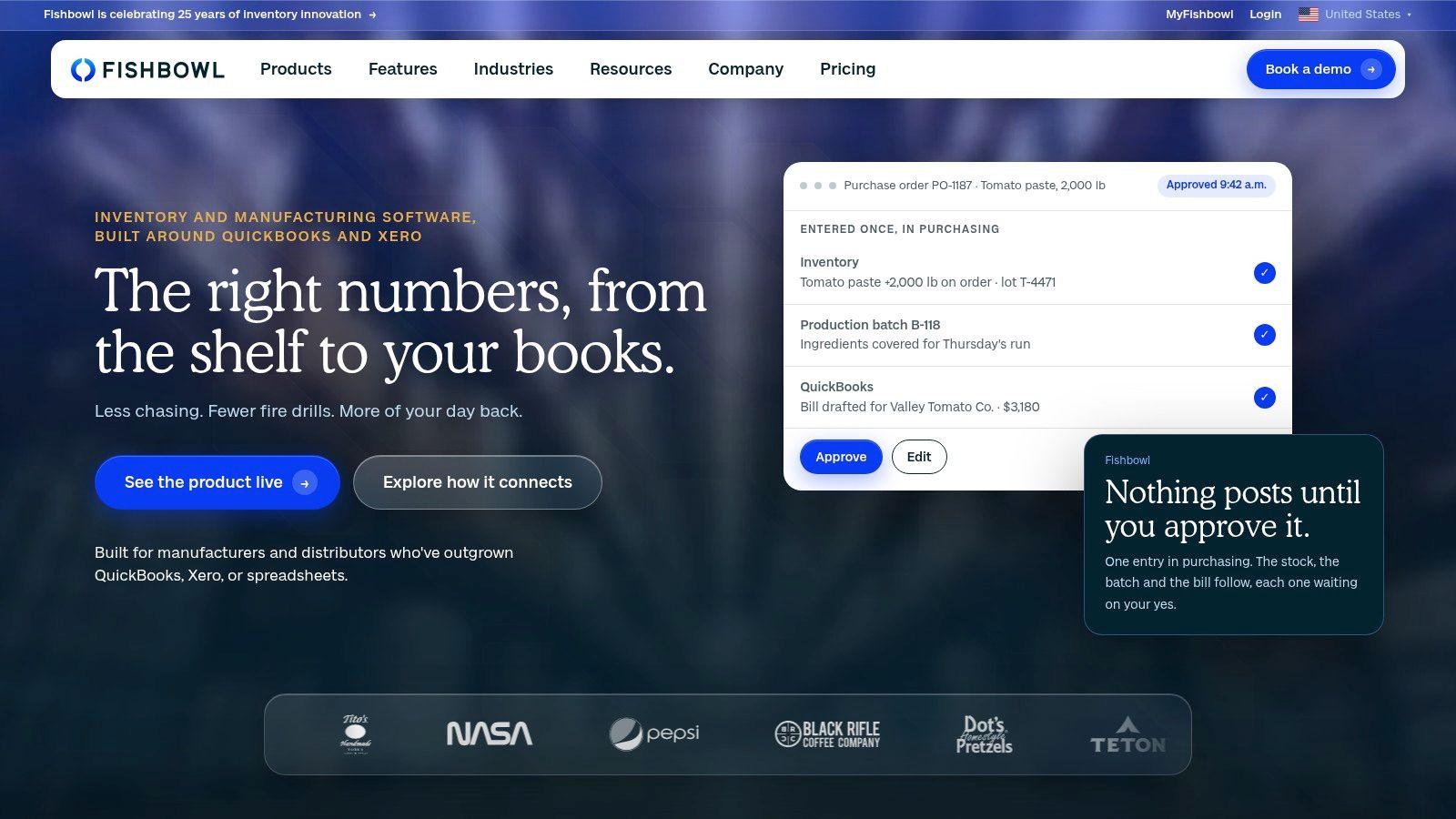
If your warehouse team and bookkeeper spend too much time reconciling the same stock movements, start with the accounting connection. Fishbowl is most relevant when inventory operations need to stay aligned with accounting or manufacturing.
Fishbowl combines inventory and warehouse capabilities, with manufacturing functionality in applicable products. Its Inventory plans include QuickBooks Online and Xero integrations, while warehouse features and more advanced controls vary across products and tiers.
That distinction matters for Shopify merchants selling assembled goods, kits, or products they also manufacture. Recording a finished product sale isn't the same as tracking the materials consumed to make it.
Match the product to the physical process
Fishbowl's offering spans simpler cloud inventory requirements and more involved warehouse or manufacturing operations. Don't treat the brand name as a guarantee that every edition contains the same receiving, picking, shipping, or traceability features.
Build a process-specific shortlist:
- Inventory control needs stock tracking, barcode scanning, and reorder-point handling.
- Warehouse execution needs receiving, location control, picking, and shipping workflows on the proposed plan.
- Traceability may require lot tracking, audit trails, or controls beyond basic stock quantities.
- Production needs a clear method for moving materials into finished goods.
For a Shopify store, the demonstration should follow a sale into the warehouse and through the accounting handoff. Then reverse the transaction with a return, including what happens to stock and the financial record.
The trade-off is accounting alignment versus product complexity. Fishbowl deserves consideration when accounting and physical inventory are tightly connected, but buyers need to examine edition boundaries carefully. Check billing terms, included users, integrations, and implementation scope in the actual proposal rather than comparing product names alone.
5. Logiwa
A busy fulfillment operation needs more than a screen showing available stock. Supervisors need to coordinate orders, warehouse work, customer requirements, and exceptions without turning every decision into a spreadsheet exercise.
Logiwa targets ecommerce brands and logistics providers with substantial fulfillment volume or complexity. Its cloud warehouse and order fulfillment tools cover ecommerce, wholesale, and third-party logistics use cases, including customer access portals.
The strongest fit is an operator ready to scope a dedicated fulfillment system around established processes. It's less compelling for a small stockroom whose immediate problem is inconsistent receiving or missing shelf labels.
Evaluate the operating package
Logiwa's pricing overview describes core WMS functionality, standard integrations, implementation, and ongoing support as included, with unlimited users. Treat that as the starting point for defining scope, not a substitute for a detailed proposal.
User access matters when your team spans shifts or expands seasonally. However, broad access only helps if permissions, training, devices, and task ownership are configured properly.
- Shopify connection should handle allocation, cancellations, shipment confirmation, and inventory adjustments in your intended workflow.
- Customer visibility should give logistics clients useful information without exposing another client's records.
- Implementation scope should identify integrations, data preparation, training responsibilities, and acceptance tests.
- Exception handling should cover short picks, unavailable stock, failed labels, and orders requiring manual review.
Ask the demonstrator to stop a process halfway through and show how a supervisor resolves the problem. A normal order proves that the happy path works, while a short pick reveals how much manual intervention the team will need.
The trade-off is capability versus operational overhead. Logiwa's custom-quote approach calls for careful scoping, and its breadth may exceed what a small merchant can justify. Choose it for complexity you already face or can clearly describe.
6. Extensiv 3PL Warehouse Manager
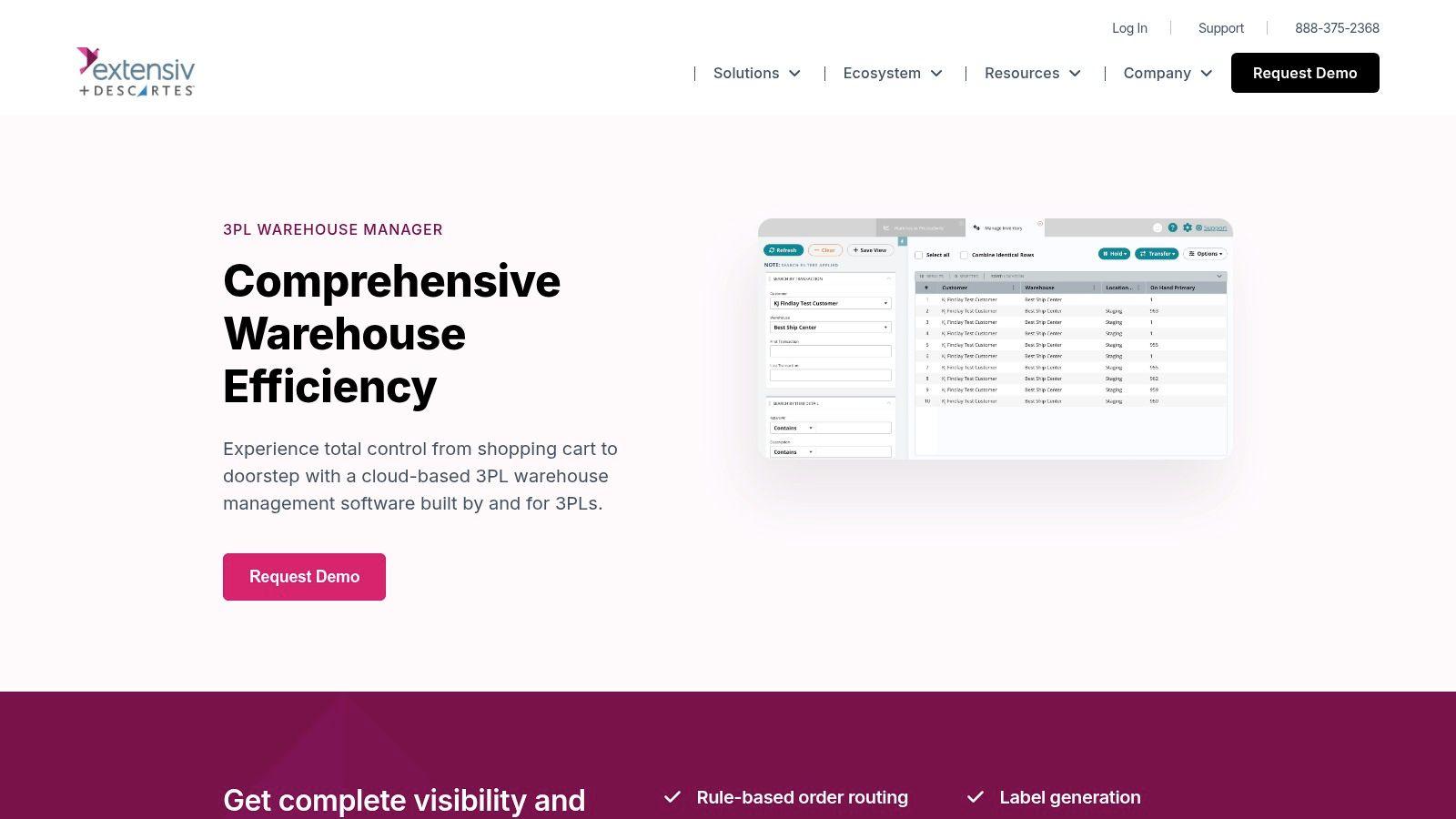
A logistics provider doesn't just ship orders, it performs chargeable services for separate businesses. Receiving, storage, picking, packaging, and special handling must remain attributable to the right client.
Extensiv 3PL Warehouse Manager is designed around that multi-client operating model. Its capabilities include inventory and order management, billing and invoicing workflows, customer visibility, integrations, mobile scanning, and operational reporting.
That makes it more relevant to a warehouse serving Shopify brands than to a merchant managing only its own goods. Client billing and portal access are central requirements for the former, but unnecessary complexity for many brand-owned stockrooms.
Test the service-to-invoice chain
The practical question isn't whether staff can scan an item. It's whether the system can connect a warehouse activity to the correct inventory record, client view, and billing outcome.
Use a scenario involving client-specific packaging and an additional handling step. Follow the order through the vendor's SmartScan receiving, picking, and packing workflows, then examine how those services appear in reporting and invoicing.
A warehouse can ship the correct order and still lose money if the team doesn't record the work it performed.
Your evaluation should include client onboarding and rule changes, not just daily picking. Different clients may need different packaging, reporting, carrier rules, and approval processes.
The trade-off is specialization. Extensiv's client-oriented features address genuine logistics-provider needs, but they aren't a reason for a Shopify brand to adopt a more complicated system than necessary.
Pricing requires a quote. Before committing, test label generation, mobile scanning, report configuration, and billing exceptions using your own service model, because those repeated tasks will determine whether the system fits the operation.
7. Manhattan ActiveWarehouse
When supervisors must coordinate labor, equipment, replenishment, and competing order priorities across a distribution network, basic inventory software isn't enough. Manhattan ActiveWarehouse belongs in an enterprise evaluation, not a routine Shopify app search.
Manhattan ActiveWarehouse is a cloud-native WMS offered in Essentials, Enterprise, and Enterprise Premier editions. Core workflows include receiving, returns, putaway, inventory control, picking, packing, and loading, with more advanced capabilities available by edition.
Its API-first architecture and cloud-based updates are relevant to businesses connecting warehouse execution with broader systems. Advanced capabilities include labor and yard management, equipment connectivity, dynamic replenishment, task optimization, and embedded warehouse execution.
Buy against a network requirement
For a large retailer, Shopify may be a sales channel within a much broader operation. In that situation, the warehouse decision should account for wholesale commitments, automation, facility differences, and shared inventory policies.
The edition structure gives procurement teams a way to separate foundational warehouse needs from more advanced coordination. Manhattan also describes adding capabilities on the same platform without replatforming.
- Warehouse leadership should demonstrate how priorities and exceptions reach supervisors.
- IT teams should validate integrations, data ownership, and equipment connections.
- Operations teams should test replenishment, task allocation, and mixed order types.
- Procurement teams should separate software scope from implementation and integration services.
The trade-off is enterprise depth versus implementation burden. These capabilities can be appropriate for a complex distribution network, but they're likely excessive for a small DTC warehouse.
Public pricing isn't listed on the product page. Build the commercial comparison around the selected edition, required services, and integration scope, and have the actual floor team evaluate task execution before approving the system.
8. SAP Extended Warehouse Management (SAP EWM)
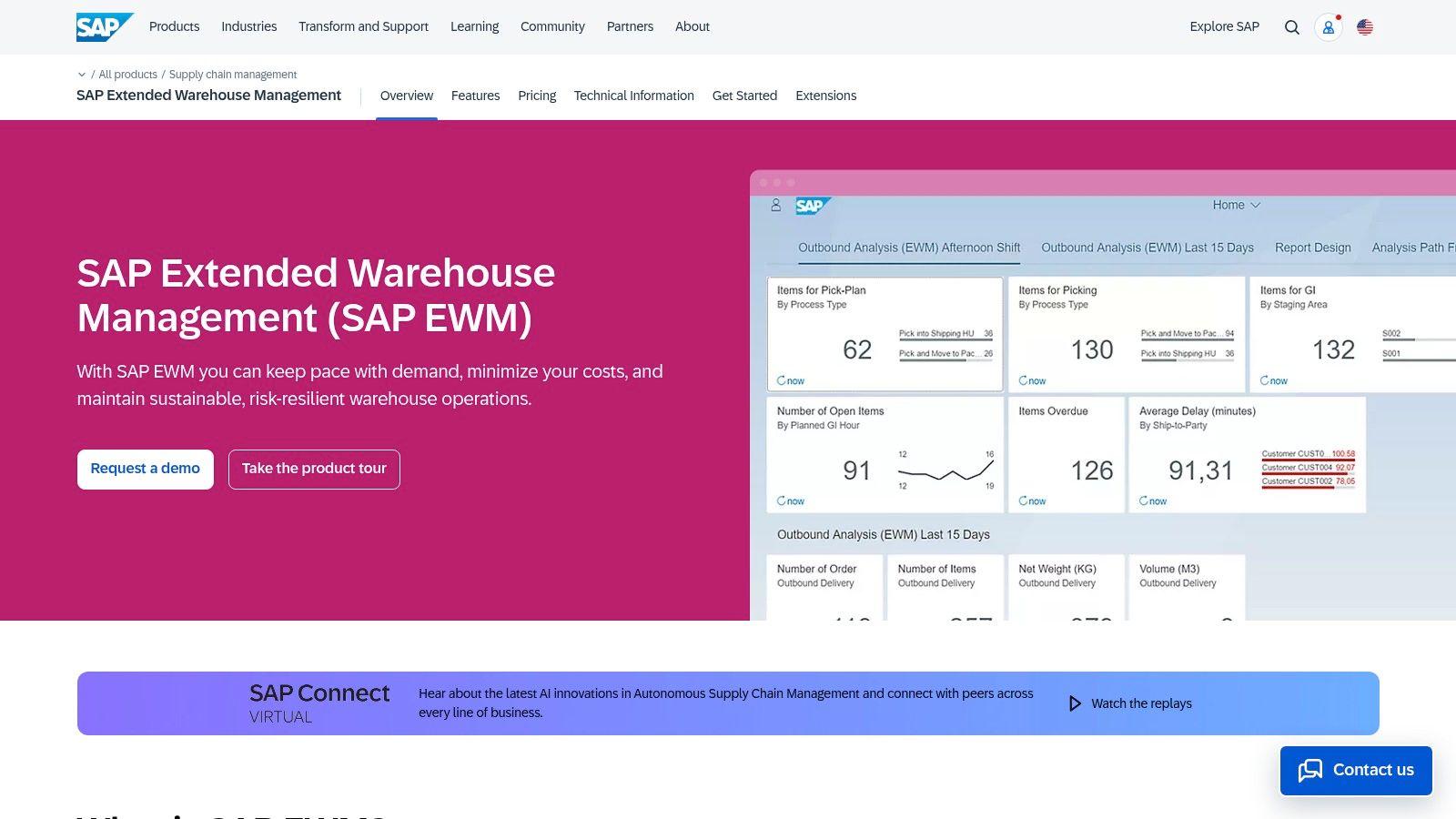
Already running SAP across purchasing, manufacturing, or supply-chain operations? SAP EWM deserves consideration when warehouse control needs to fit that wider business environment.
SAP Extended Warehouse Management supports warehouse inventory and bin-level management, inbound and outbound processes, internal movements, wave planning, labor management, and automation. Advanced capabilities include voice-guided workflows, slotting, and connections with production or transportation processes.
For a manufacturer selling through Shopify, warehouse work may include materials feeding production as well as finished goods leaving for customers. The right system must distinguish those flows rather than treating every movement as a parcel shipment.
Start with the SAP process map
SAP EWM is generally a substantial implementation project rather than a quick-start stockroom tool. Its value depends on how warehouse processes connect with the organization's broader SAP operations.
Map the boundaries before evaluating screens. Identify which system owns product records, purchasing information, inventory status, transportation instructions, and financial postings.
Then demonstrate a physical exception, such as goods received into an inspection status or finished stock moved between warehouse areas. The team should be able to explain both the floor action and its effect on downstream processes.
The trade-off is detailed process control versus configuration and change-management work. Broad functionality is useful for complex distribution, manufacturing, and automated facilities, but that breadth creates decisions your implementation team must own.
Pricing and contract details require a sales conversation. Include configuration, integration, training, and post-launch operating responsibilities in the assessment.
For a smaller Shopify brand with a single stockroom, SAP EWM is likely more system than necessary. For an SAP-based enterprise, the relevant question is whether its warehouse capabilities match the organization's process requirements and implementation resources.
8 Warehouse Management Software Options at a Glance
| Software | Best For | Pricing Model | Shopify Fit | Standout Capability |
|---|---|---|---|---|
| Boostmyshop | Multichannel sellers connecting warehouse, pricing, and POS | Not specified, included in rollout | Syncs Shopify orders and stock with marketplaces and ERPs | OMS, WMS, repricing, POS, and AI workflows |
| ShipHero | Growing ecommerce brands and 3PLs needing a dedicated WMS | Monthly plan | Shopify-first order and warehouse workflows | Batch shipping, automation rules, 3PL portals |
| SKULabs | Multichannel Shopify sellers managing inventory and fulfillment | Published tiers by usage | Shopify alongside other sales channels | Barcode workflows with tiered automation |
| Fishbowl | Inventory and warehouse tools alongside accounting or manufacturing | Published plans, some annual | Shopify orders into inventory and accounting workflows | Inventory with QuickBooks Online or Xero |
| Logiwa | High-volume ecommerce brands and 3PLs with complex fulfillment | Custom quote | Shopify orders into high-volume fulfillment | Cloud WMS with implementation and support |
| Extensiv 3PL Warehouse Manager | 3PLs managing inventory and orders for multiple clients | Quote-based | Shopify brand orders inside multi-client 3PL workflows | Client billing, portals, mobile scanning |
| Manhattan ActiveWarehouse | Large organizations with multi-site or automated warehouses | Not publicly listed | Shopify brands only inside enterprise deployments | Cloud-native execution with editions by complexity |
| SAP EWM | SAP businesses with complex distribution, manufacturing, or automation | Sales conversation | Shopify sits outside the core SAP process, integration is a project workstream | Detailed control tied to SAP supply-chain operations |
How to Choose and What to Do Next
Choose warehouse management software by tracing an order through your actual operation, not by comparing feature counts. Map receiving, putaway, allocation, picking, packing, shipping, and returns, then mark where staff stop to investigate, retype information, or ask someone what to do.
Shopify's warehouse management guide identifies measures including order accuracy, on-time shipment rate, orders processed per hour, and dock-to-stock cycle time. Establish your baseline before implementation so you can distinguish a better process from a better-looking dashboard.
Your Practical Evaluation Checklist
- Map the failure points. Identify whether errors begin with receiving, location control, allocation, picking, or returns. Give each process a named owner.
- Choose deployment deliberately. Cloud shifts infrastructure management toward the vendor. On-premise requires your team to own infrastructure, maintenance, and upgrades.
- Confirm Shopify integration depth. Test variants, bundles, cancellations, partial shipments, location mapping, returns, and inventory adjustments rather than accepting a connector logo.
- Compare total ownership cost. Include subscriptions, devices, labels, integrations, data cleanup, training, internal labor, and ongoing administration.
- Use authoritative pricing. Take published competitor prices only from each vendor's own pricing page. For custom pricing, compare written proposals with equivalent scope.
Cost and adoption belong in the same decision. In the 2024 Modern Materials Handling software usage survey, total cost of ownership and compatibility with existing systems were each concerns for 46% of respondents, while user acceptance concerned 43%.
Action Steps Before You Commit
- Prepare a demo pack. Bring representative products, orders, returns, carrier requirements, and awkward exceptions.
- Let warehouse staff test it. Have receivers, pickers, and packers perform tasks on the proposed devices.
- Pilot a controlled area. Validate item data, location labels, scan behavior, and inventory reconciliation before expanding.
- Set launch responsibilities. Assign owners for training, integration failures, stock discrepancies, and escalation decisions.
Training should follow physical tasks, not software menus. The Modern Materials Handling software survey coverage highlights user acceptance, training, and implementation resources as recurring obstacles, so make operational readiness part of procurement.
Warehouse software fixes execution, but the storefront still needs to convert shoppers who aren't sure what to buy. Carti is our AI sales assistant for Shopify, automatically learning your catalog, policies, and FAQs after installation and answering product questions around the clock. It installs directly from the Shopify App Store, and our free plan includes 50 AI conversations per month.
Shortlist the WMS that fits your floor, then book a demo using your real order exceptions. For the storefront side, explore Carti for Shopify and start answering shoppers' pre-purchase questions. The right WMS plus a storefront that answers those questions turns accurate inventory into completed orders.

Written by
Daniel AndersonFounder of Carti. 10+ years building ecommerce brands in apparel and supplements. Still runs a Shopify store and built Carti to help merchants convert more browsers into buyers.