
A shopper lands on a candle product page at 9 pm, checks the scent description, and reads the greeting above the chat button. A useful offer of help could keep that shopper browsing. A generic sales pitch could get dismissed before the product photos finish loading.
That first line deserves the same care as the product page. A good welcome message for customers explains what the store sells, makes help easy to find, and offers a next step without blocking the purchase.
The greeting also needs to fit the moment. Someone arriving from an Instagram story needs help identifying a product, while someone comparing clothing sizes needs measurements rather than another introduction.
The Cometly guide to shopping touchpoints provides useful context for treating these interactions as connected parts of the shopping journey. For a Shopify merchant, that means matching the greeting to the page, channel, and question instead of pasting the same message everywhere.
Practical rule: A welcome should make shopping easier before it asks for anything.
The examples below pair copyable wording with a specific store context and a storefront test. Bracketed fields need replacing with the store's actual details before publication.
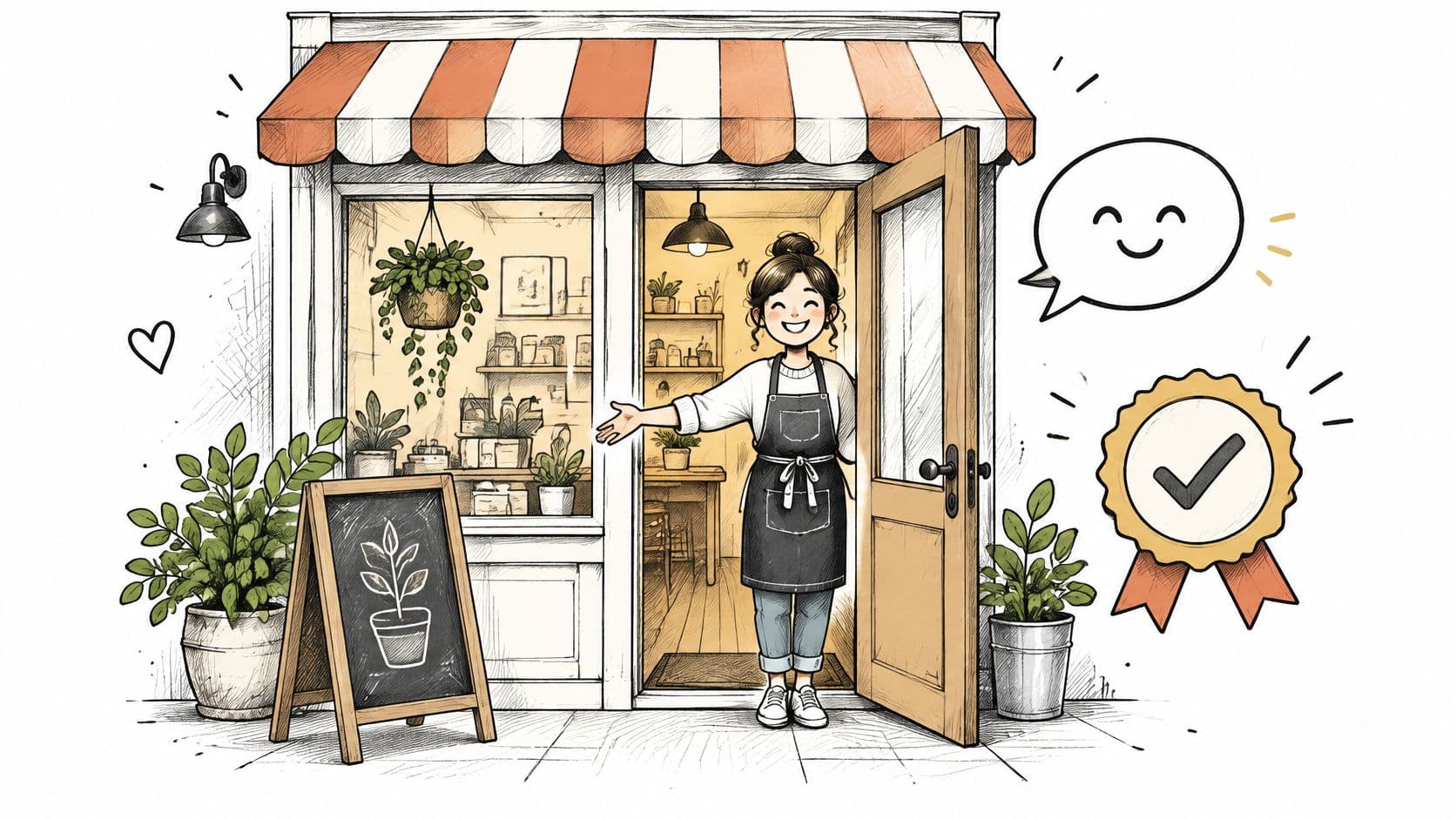
1. Friendly Greeting with a Clear Store Promise
Best fit: Storefront chat on the homepage of a focused clothing, beauty, or homeware store. This is the starting point when visitors need a clear introduction rather than a promotion.
Copyable template
Welcome to [Store], home to cotton basics with garment measurements on every product page. Sizing and shipping help is available through this chat.
This greeting names the product category and gives a checkable store promise. It doesn't depend on unsupported claims about exceptional quality or unbeatable value.
For a cotton-basics store, garment measurements are more useful than a vague statement about comfortable clothing. A candle store could instead mention scent notes and care instructions, provided those details are available.
Make the promise visible on the storefront
The greeting and the product page should agree. If the message promises garment measurements, shoppers shouldn't need to search a buried help article to find them.
Keep the greeting compact enough that it doesn't cover product information on mobile. A friendly introduction loses its value when the visitor has to close it to select a variant.
- Choose a concrete benefit: Name something shoppers can verify, such as fabric composition, refill availability, or product-specific care guidance.
- Keep help optional: Let visitors browse without answering a question or sharing contact details.
- Match the landing page: A collection page greeting should describe that collection rather than the whole catalog.
A/B test: Compare the store-promise greeting with a plain welcome on the same Shopify homepage. Track product-page visits and add-to-cart behavior among eligible visitors, not just chat opens.
The trade-off is specificity. A narrow promise feels more useful, but it needs updating if the assortment or service changes.
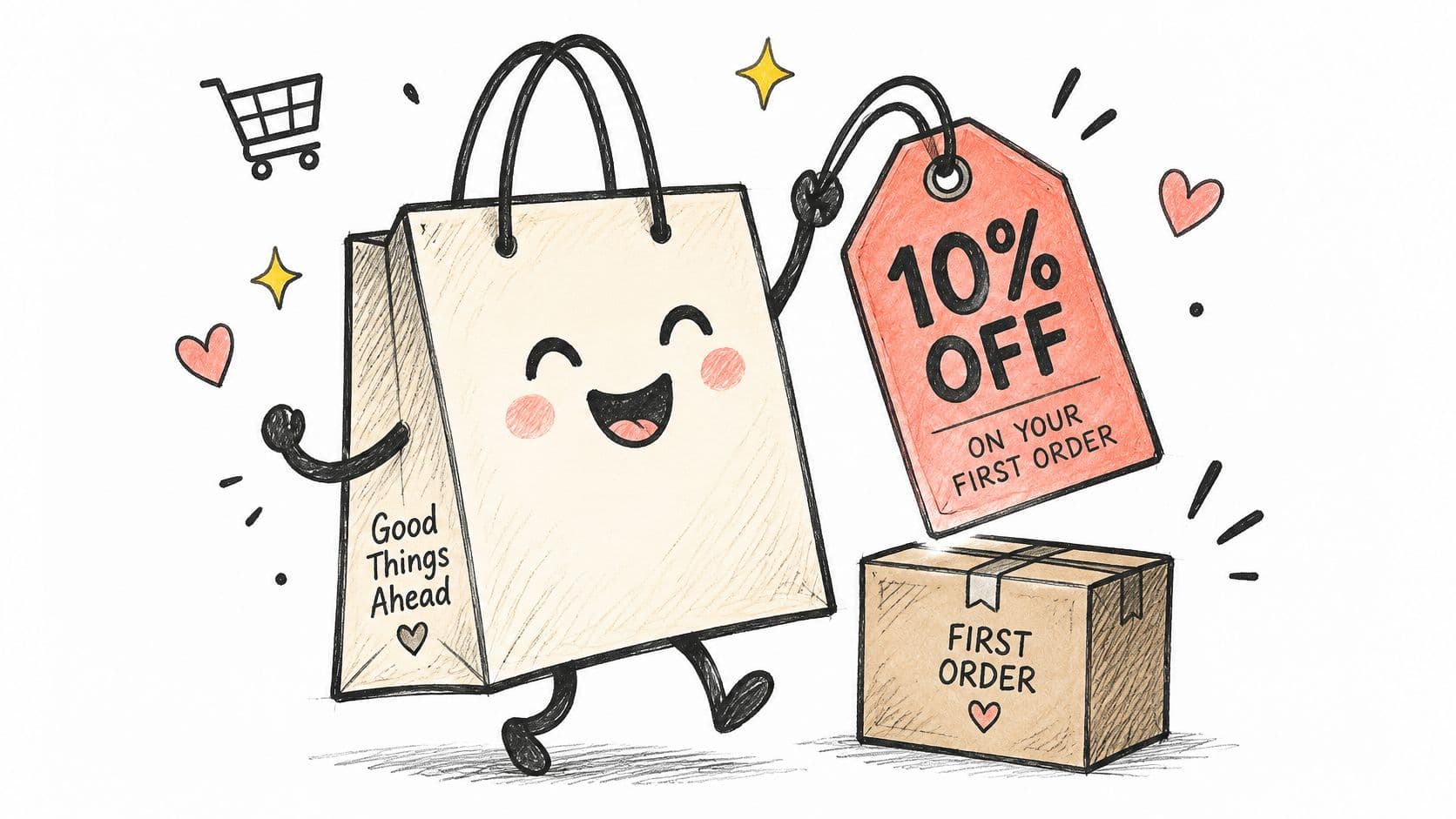
2. First-Order Discount Welcome
A discount welcome fits email signup forms and first-purchase offers, especially when the store already has a clear margin allowance for acquisition. It's less suitable when shoppers mainly need product advice.
Copyable template
Welcome to [Store]. Code [CODE] gives [discount] off an eligible first order until [expiry date]. Full-price items only. Product and delivery questions are welcome before checkout.
The offer is understandable without opening another page. Its value, eligibility, and expiry are visible together, so the shopper doesn't discover the restrictions only after entering the code.
Welcome emails deserve this care. GetResponse benchmarks summarized by Tabular report an average welcome-email open rate of 83.63%, compared with 40.08% for newsletters in the same dataset.
Separate the offer from the permission
An email address entered for a receipt or product question isn't automatically a request for promotional messages. Signup wording should explain what the subscriber will receive, while the welcome should deliver the promised offer.
For SMS acquisition, the California Sea Grant SMS marketing guide explains the importance of explicit consent, clear disclosures, and an easy opt-out under U.S. TCPA rules.
- Configure eligibility: Match Shopify discount settings to the first-order promise.
- Protect margin: Exclude products that can't support the discount.
- Test redemption: Complete a test checkout with eligible and excluded items.
A first-order incentive and a repeat-purchase reward serve different purposes. The BonusQR loyalty card software page is relevant when considering the latter, rather than expanding a welcome discount indefinitely.
A/B test: Compare a discount-led signup welcome with a product-guidance welcome. Evaluate purchases and margin after discounts, not signup volume alone.
3. Sizing and Fit Guidance Welcome
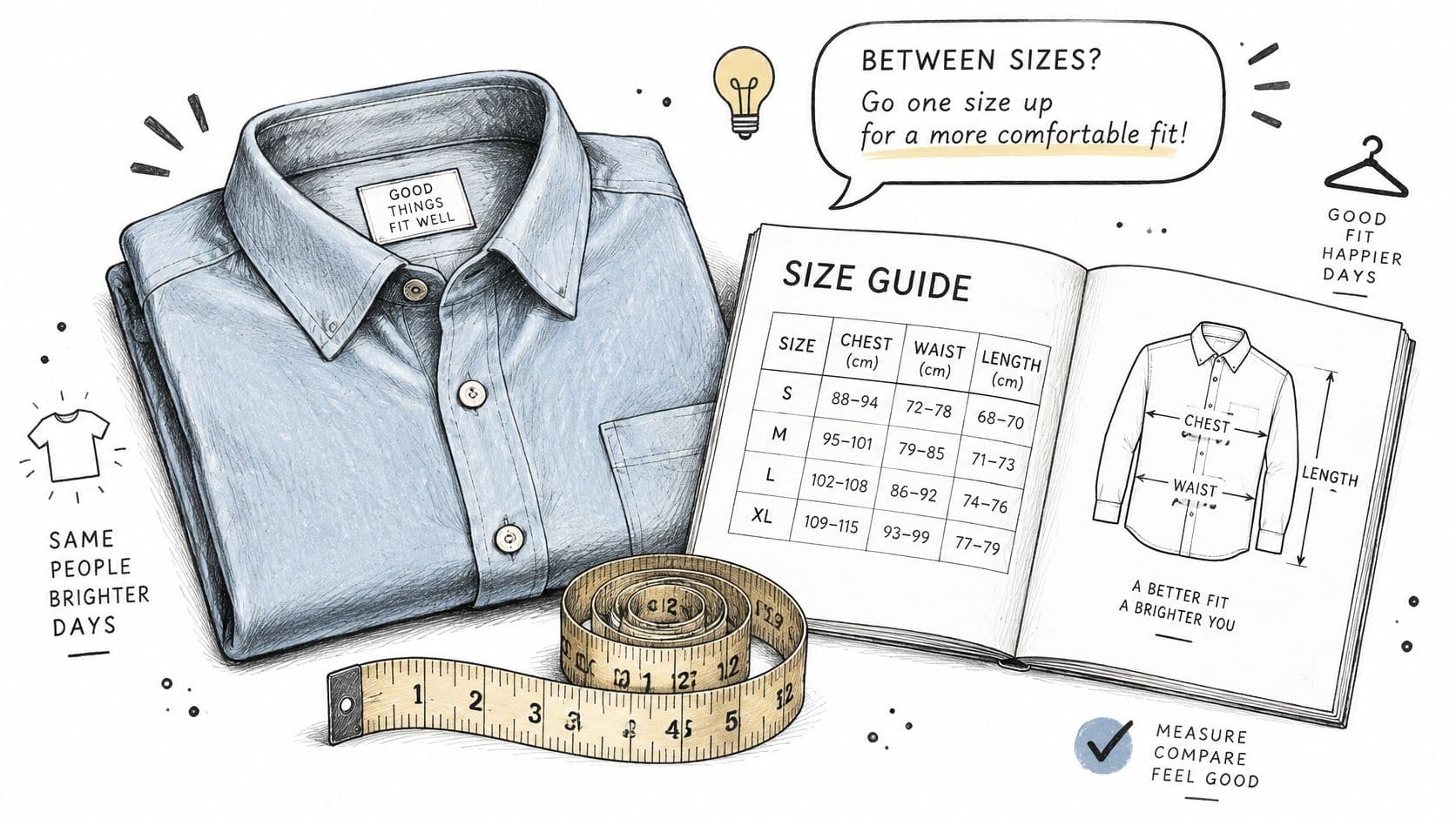
Best fit: Product-page chat for apparel, footwear, or accessories where shoppers need help interpreting the size chart. A useful fit greeting names the information needed to make a recommendation.
Copyable template
Between sizes for [product]? Share the usual size and preferred fit, such as close-fitting or relaxed, for guidance based on this item's size chart.
This works better than asking only for the shopper's usual size. A relaxed sweatshirt and a fitted shirt may require different guidance, even when their labels match.
The assistant should distinguish body measurements from garment measurements. Confusing them can produce a confident recommendation that's wrong.
Build the answer before promoting the help
For a Shopify dress store, the merchant should check that each product's chart identifies measurement units, measuring points, and any relevant stretch. The welcome can then direct shoppers toward a meaningful comparison with clothing they already own.
The guide to answering sizing questions on Shopify is useful for organizing those details into practical responses.
- Use item-specific information: Don't apply a general chart when a product has a different cut.
- Label review evidence: Customer comments about running small are observations, not measurements.
- Admit uncertainty: A recommendation shouldn't become a guarantee of fit.
Fit assistance should explain the comparison, not merely announce a size.
A/B test: On the same Shopify apparel product pages, compare a size-chart invitation with a question about preferred fit. Track completed purchases alongside fit-related exchanges and returns, allowing time for those outcomes to appear.
A more detailed question may attract fewer replies but produce more useful conversations. That's preferable to collecting quick answers that don't support a reliable recommendation.
4. Shipping and Returns Clarity Welcome
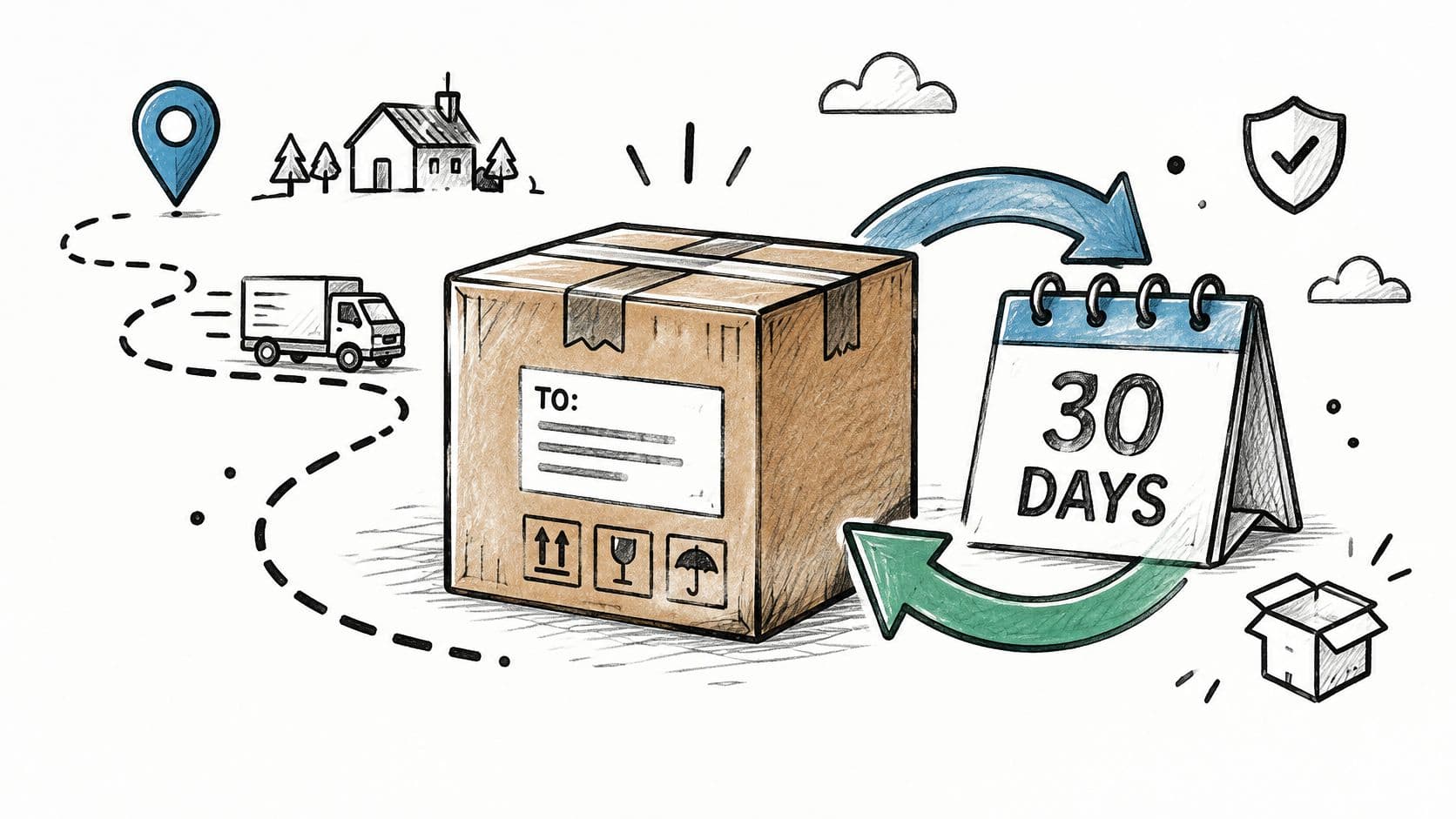
Delivery and return questions call for plain policy language, not reassurance without details. This welcome fits product pages for gifts, higher-consideration goods, and products shoppers may need by a particular date.
Copyable template
Welcome to [Store]. Orders dispatch within [dispatch window], and returns follow [return window and conditions]. Share the delivery destination for available shipping options.
Dispatch and delivery aren't interchangeable. A store can control when a parcel leaves its warehouse more directly than when a carrier completes delivery, so the greeting should distinguish them.
Baymard's cart-abandonment benchmark identifies an unsatisfactory returns policy as an abandonment reason for 13% of shoppers, while 12% couldn't see or calculate the total order cost upfront.
Give a summary without hiding exceptions
For a homeware store, the message might invite questions about destination, bulky-item shipping, or return eligibility. The full policy should remain accessible, including any product exclusions and customer-paid costs.
The guide to shipping questions can help structure the questions a storefront assistant needs to answer.
Regional rights also matter. The European Commission's consumer guidance states that online shoppers generally have 14 days to reconsider a purchase and withdraw from the contract, subject to applicable exceptions.
- Separate timeframes: State dispatch and estimated transit independently.
- Expose costs: Don't describe returns as free when the customer pays postage.
- Maintain consistency: Update the greeting whenever the underlying policy changes.
A/B test: Compare a shipping-and-returns welcome with a general product-help welcome on Shopify gift-product pages. Monitor purchases and unresolved delivery questions, while keeping policy wording identical across variants.
The useful promise is accuracy, not the shortest possible delivery estimate.
5. Category Navigation Welcome
A large catalog needs direction more than another brand introduction. Homepage chat and broad collection pages are suitable places to help shoppers choose a starting point.
Copyable template
Welcome to [Store]. Browse by purpose: everyday essentials, gifts, or home updates. Select a category to see relevant products.
For a lifestyle store, those choices reflect shopping intentions rather than the merchant's warehouse structure. Internal categories such as seasonal assortment or collection codes rarely help someone decide where to click.
A navigation welcome should reduce the work of browsing. If it opens another long menu, it moves the same problem into chat.
Send each choice somewhere useful
Build Shopify collections that match the greeting before publishing it. A gifts option should lead to gift-appropriate products, not the entire catalog sorted by newest.
- Use customer language: Draw category labels from storefront search terms and actual product questions.
- Keep choices distinct: Avoid overlapping options that require explanation.
- Offer an escape: Keep ordinary browsing available for shoppers who don't need assistance.
Relevant personalization can be worth testing. In the DFS Furniture case study, an automated welcome email series produced a 4.2% increase in conversion rate versus a non-personalized control group.
That finding concerns email, not a guaranteed result from chat navigation. The useful application is to test whether a shopper's stated interest produces a more relevant next step.
A/B test: Compare purpose-based choices, such as gifts and everyday use, with product-type choices on the same Shopify homepage. Measure destination collection engagement and purchases, rather than treating every menu click as success.
For a small catalog, direct links to the main products may work better. Navigation assistance earns its place only when it removes a real decision.
6. Social DM Welcome for Instagram and Messenger
A shopper replying to an Instagram story may know the product visually but not its name. The opening response should establish which item started the conversation before offering recommendations.
Copyable template
Thanks for messaging [Store]. Which piece caught attention? Send the post, product name, or screenshot for help with availability, sizing, and delivery.
This fits Instagram and Facebook Messenger conversations triggered by posts, stories, or ads. It avoids guessing that every incoming message concerns the latest campaign.
Social responsiveness has commercial consequences. Shopify's customer-service statistics report that 73% of social media users say they'll purchase from a competitor when a brand doesn't respond on social media.
Ask for context, then answer the question
For a jewelry store, a screenshot can identify a necklace more reliably than a description such as the gold one. Once the item is clear, the response can address chain length, availability, or destination-specific shipping.
The Instagram auto-reply message guide helps frame that opening. The discussion of CTAs for Instagram welcome messages is also relevant when choosing a reply prompt rather than a generic shopping link.
A product question is a request for help, not blanket permission for future promotions.
Keep policy language consistent with the Shopify storefront. A friendly DM shouldn't offer broader return rights or a delivery promise the checkout can't support.
A/B test: Compare an item-identification prompt with a general help prompt for equivalent social entry points. Send product links to the matching Shopify pages and track subsequent purchases using consistent campaign tagging.
A short acknowledgment alone isn't enough. The useful welcome either answers an identifiable question or collects the missing detail needed to answer it.
7. Proactive Engagement Welcome
Best fit: A relevant product-page conversation offered after a shopper has had room to browse. Proactive messaging can help with uncertainty, but repeated interruptions can make assistance feel like pressure.
Copyable template
Still comparing [product]? Product differences, materials, and delivery options are available through this chat.
This wording offers help without pretending to know why the shopper hasn't purchased. Time on a page might indicate uncertainty, careful reading, or an unattended browser tab.
For a homeware store, a useful follow-up might compare dimensions or materials. For beauty products, it could explain documented ingredients and suitability information without making unsupported health claims.
Match the trigger to an answerable question
Start with a product-page trigger rather than a blanket message across the storefront. The selected page should contain the information needed to support the offer.
- Use page context: Mention the current product or a relevant comparison.
- Limit repetition: Avoid reopening the same invitation throughout the visit.
- Review conversations: Repeated questions may point to missing product-page content.
Welcome automations and scheduled campaigns can perform differently. A 2025 welcome-email benchmark summary reports a 2.11% conversion rate for welcome automations in a dataset covering more than 27,000 brands.
That's an email benchmark, not evidence that a proactive chat trigger will produce the same result. A storefront test still needs its own baseline and purchase measurement.
A/B test: Keep the Shopify product-page message unchanged while comparing an earlier and later trigger. Evaluate assisted purchases alongside chat dismissals and visitor engagement.
The best result isn't necessarily the highest reply rate. A message that attracts conversations but interrupts shoppers who were ready to buy may be counterproductive.
8. Multilingual Welcome for International Shoppers
A translated hello isn't enough when the next answer uses unfamiliar units or the wrong shipping policy. International storefronts need a complete path from greeting to useful assistance.
Copyable template
Welcome to [Store]. Product, sizing, and delivery help is available in [supported language]. Select a preferred language to continue.
Publish a reviewed version in each supported storefront language. An English-language template should become natural local copy, not a mixed-language sentence that assumes every shopper understands both.
For an apparel store selling internationally, the conversation should preserve measurement units and distinguish size labels from body measurements. For home goods, dimensions, electrical compatibility, and destination restrictions may matter more.
Check the market as well as the language
Language doesn't establish the delivery country. A shopper browsing in English may need shipping to a market with different availability, costs, or return requirements.
- Confirm destination: Ask for the relevant shipping country before discussing delivery.
- Preserve product meaning: Check material names, care instructions, and technical terms.
- Review local wording: Have a fluent reviewer assess whether policy answers are clear and accurate.
Delivery guidance must remain precise. The European Commission's online-shopping guidance states that goods should arrive by the agreed date, or within 30 days when no delivery date was agreed.
A welcome shouldn't turn that regional guidance into a universal store promise. It should direct the shopper toward the correct destination-specific information.
A/B test: On a localized Shopify storefront, compare a localized help invitation with a language-selection prompt. Evaluate resolved questions and purchases separately by language and market.
A language picker can be helpful when detection is uncertain. It becomes unnecessary friction when the shopper has already selected a language and the assistant can reliably continue in it.
How the eight welcome message for customers formats differ
| Item | Main Goal | Best Fit | Typical Risk |
|---|---|---|---|
| Friendly Greeting with a Clear Store Promise | Introduce the store and state one clear benefit | Any storefront or product category | A generic greeting may be ignored |
| First-Order Discount Welcome | Encourage a first purchase with a discount | First-time visitors and email capture | Discounts can reduce margins or train shoppers to wait |
| Sizing and Fit Guidance Welcome | Help shoppers choose the right size and fit | Apparel, footwear, and fitted products | Inaccurate guidance can increase returns |
| Shipping and Returns Clarity Welcome | Explain delivery and return terms upfront | Stores where shipping or returns affect purchase decisions | Outdated or lengthy policy details can confuse shoppers |
| Category Navigation Welcome | Guide shoppers to relevant products or collections | Stores with large or mixed catalogs | Too many or unclear choices can slow shoppers down |
| Social DM Welcome for Instagram and Messenger | Start a helpful conversation in social direct messages | Stores that sell through Instagram or Messenger | Inconsistent replies or platform limits can disrupt service |
| Proactive Engagement Welcome | Offer help based on shopper behavior | Stores aiming to address objections before checkout | Poor timing or excessive prompts can feel intrusive |
| Multilingual Welcome for International Shoppers | Welcome shoppers and answer questions in their language | Stores serving customers across countries | Translation errors or incorrect local policies can cause confusion |
Pick One Welcome to Test First
The strongest starting point is the greeting that fits the store's busiest channel and most common pre-purchase question. An apparel store with recurring fit questions should start with sizing help, while an Instagram-led jewelry store should begin with product identification in DMs.
Run the selected welcome against the current greeting for at least two weeks as an initial testing window. That's a practical starting recommendation, not a guarantee of enough evidence, so lower-traffic stores may need longer before drawing conclusions.
Keep the test interpretable
Change the message before changing its timing, placement, and audience. When all those variables move together, the merchant can't tell which change influenced the result.
- Define eligibility: Compare visitors on equivalent pages and channels.
- Choose a purchase outcome: Track completed orders or revenue per eligible visitor alongside conversations.
- Watch for friction: Review dismissals, unresolved questions, opt-outs, and complaints.
- Inspect the answers: Check whether the welcome's promise is fulfilled after the shopper responds.
Broader lifecycle results also need careful attribution. The MarketingSherpa JewelScent case study reported a 384% increase in revenue after a program that combined welcome, cart-abandonment, and retention campaigns, so the gain can't be credited to the welcome series alone.
The same discipline belongs in a Shopify test. A simultaneous sale, advertising change, or new collection can influence purchases independently of the greeting.
Choose a manageable implementation
Carti is an AI shopping assistant for Shopify that learns the store's catalog, policies, and FAQs to answer pre-purchase questions. Its Free plan includes 50 AI conversations a month, giving merchants a way to test a focused welcome format before selecting a larger plan.
Every paid plan includes personalization for returning shoppers, including greetings by name, remembered preferences, and recommendations based on purchase history. Prospective customers can also book a demo through the website's Schedule Demo button.
A useful test ends with a specific decision: keep the greeting, revise the offer of help, or remove an interruption that didn't earn its place. The next change should address what shoppers asked, rather than add more promotional copy.
Carti offers storefront answers, product recommendations, and proactive engagement for Shopify stores. Visit Carti to explore a welcome built around the store's sizing, shipping, or product-comparison questions, or use the Schedule Demo button to discuss the setup.

Written by
Daniel AndersonFounder of Carti. 10+ years building ecommerce brands in apparel and supplements. Still runs a Shopify store and built Carti to help merchants convert more browsers into buyers.