
AI-driven traffic to U.S. retail sites jumped 805% year over year during Black Friday and Cyber Monday, and the AI chatbot market is projected to surpass $27 billion by 2030 at roughly 23.3% CAGR, according to Tidio's chatbot statistics roundup. That changes the way Shopify merchants should think about onsite selling.
A product recommendation chatbot isn't just a support widget with prettier copy. It's a sales layer that helps shoppers narrow choices, answers product questions in real time, and moves uncertain visitors toward checkout. Done right, it increases revenue without making your store feel pushy. Done badly, it turns into an upsell machine that recommends whatever is most profitable, whether it fits the shopper or not.
Most advice stops at setup. That's not enough. Merchants need to know how these bots work, which metrics matter, and where the ethical traps are hiding.
Why Your Store Needs More Than Just a Chat Widget
Most stores don't have a traffic problem. They have a decision problem.
Shoppers land on a collection page, scroll a bit, click into two or three products, then stall. They aren't always looking for "support" in the traditional sense. They want someone, or something, to help them decide what fits, what matches, what's in stock, and what to buy together.
That's why a plain chat widget underperforms. It waits for a customer to ask a narrow question and then spits back a canned answer. A real recommendation layer does more. It acts like an always-on store associate who can guide discovery, reduce hesitation, and keep the conversation moving toward a purchase.
If you're evaluating where AI fits in your stack, it's useful to separate generic automation from a revenue-focused assistant. This overview of an AI chatbot for ecommerce is a good example of that distinction. The upside isn't just fewer tickets. It's better buying guidance at the moment shoppers are most likely to leave.
The sales problem most merchants actually have
A shopper who can't choose often leaves unnoticed. No support ticket. No complaint. No recovery.
That makes recommendation chat especially valuable for stores with broad catalogs, technical products, variant-heavy assortments, or bundles that need explanation. In those environments, the customer journey breaks down because the site asks people to do too much work on their own.
Practical rule: If customers regularly ask "Which one should I buy?" your store needs selling help, not just support automation.
What a better setup looks like
A useful product recommendation chatbot should do three things well:
- Guide discovery: Ask clarifying questions and narrow options instead of dumping links.
- Answer product-level doubts: Handle fit, compatibility, materials, usage, and policy questions using store data.
- Support checkout intent: Surface add-ons, alternatives, or reminders when a shopper shows buying signals.
That last point matters. The goal isn't aggressive upselling. The goal is reducing friction while keeping the shopper confident in the decision.
What Is a Product Recommendation Chatbot
A product recommendation chatbot is the digital version of the in-store associate every merchant wants. It knows your catalog, understands what the shopper is trying to solve, and suggests products that make sense for that person.
That sounds simple, but it's very different from the old FAQ bots that many stores still use. Those tools answer preset questions. A recommendation bot helps customers buy.
The practical definition
The easiest way to think about it is this: a basic bot reacts, while a product recommendation chatbot guides.
If a customer says, "I need a moisturizer for dry, sensitive skin that won't feel greasy," a weak bot searches for the word "moisturizer" and returns a help article or product list. A strong bot understands the buying intent, asks a follow-up if needed, and narrows the catalog to a few relevant options with reasons.
That distinction is why merchants looking into Shopify product recommendations should pay attention to conversation design, not just whether an app has a chat bubble. A recommendation engine that can explain why it suggested something is far more useful than a widget that only forwards links.
FAQ Bot vs. Product Recommendation Chatbot
| Feature | Basic FAQ Bot | Product Recommendation Chatbot (like Carti) |
|---|---|---|
| Primary job | Answers preset questions | Helps shoppers choose products and move toward checkout |
| Conversation style | Reactive | Proactive and guided |
| Product discovery | Minimal | Core function |
| Handling nuance | Weak on open-ended requests | Better suited for intent, preferences, and follow-up questions |
| Use of store data | Usually FAQs and policies | Catalog, product details, inventory, customer context, policies |
| Upsell and cross-sell | Usually manual or absent | Can suggest relevant add-ons in context |
| Value to merchant | Ticket deflection | Revenue plus support deflection |
What merchants should expect
A good recommendation chatbot doesn't replace merchandising, search, or collection pages. It complements them.
It works best when shoppers need help translating a goal into a product. Skincare routines, supplement selection, room-specific home goods, fit guidance, gifting, and accessory compatibility are all strong use cases. In those situations, conversational selling is often easier than forcing customers through filters.
The best recommendation bots don't sound smart. They make the customer's next decision easier.
How These AI Chatbots Actually Work
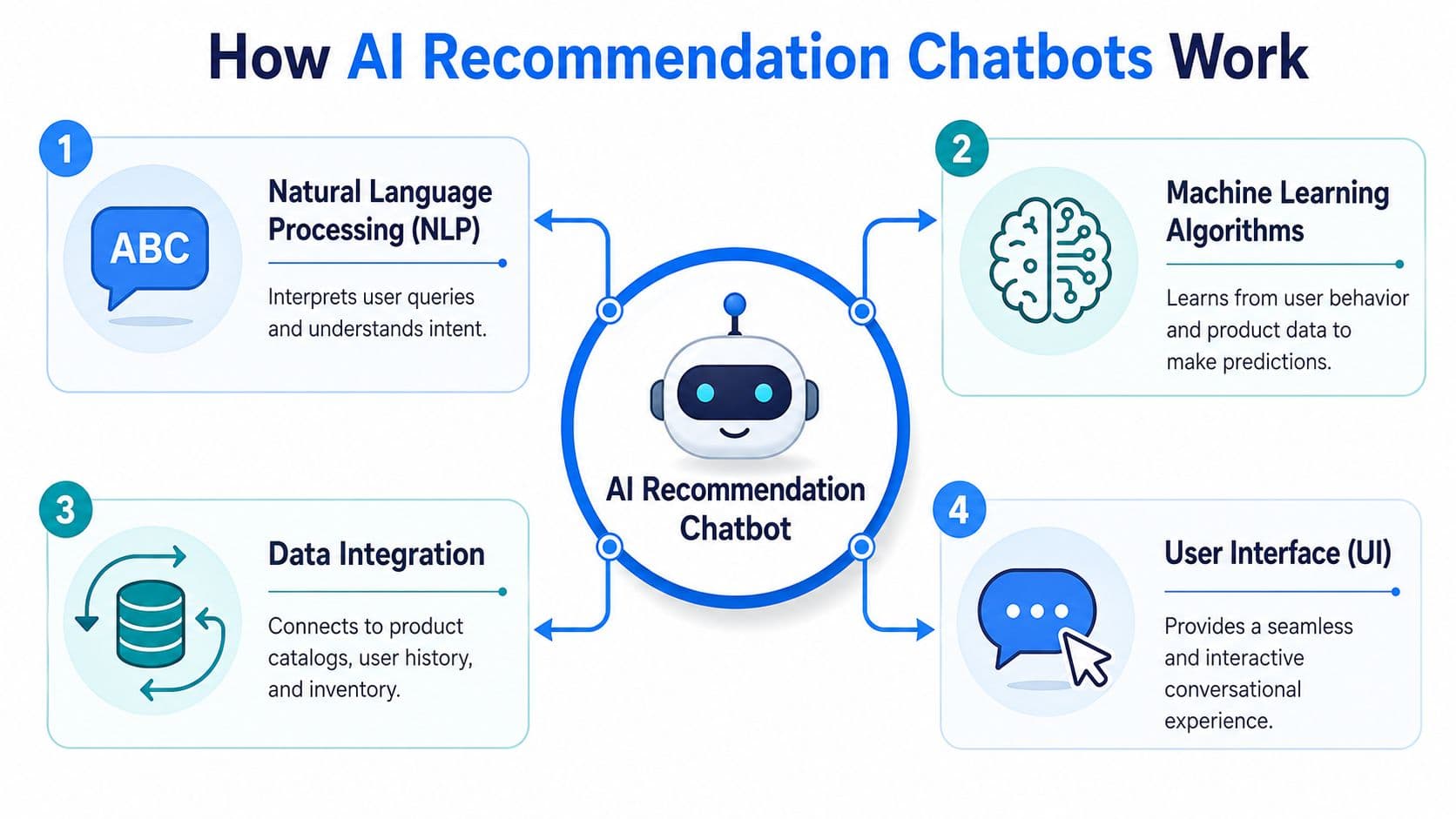
Under the hood, a modern recommendation chatbot is a mix of language understanding, product data, and live store connections. If any one of those pieces is weak, the customer feels it fast.
The stack that matters
First, the bot needs natural language processing. That's what helps it interpret a shopper's question even when they don't use your product titles or exact category names. People don't search the way merchants write catalogs. They ask for "a winter jacket that works in rain" or "a gift for someone who likes clean fragrances."
Second, the system needs machine learning logic or recommendation rules that connect shopper signals to products. That can include browsing behavior, cart contents, previous purchases, and category patterns. The point isn't to be flashy. The point is to rank useful options instead of random ones.
Third, the bot needs grounding in your actual store data. Effective recommendation chatbots use Retrieval-Augmented Generation (RAG) to keep answers tied to the brand's verified product knowledge base, and they need real-time inventory sync through low-latency APIs so they don't recommend out-of-stock items, as explained in this piece on how product recommendation chatbots work. If you're comparing architectures, this overview of AI product recommendations is helpful for understanding what that connection should look like in practice.
Where merchants usually break it
The biggest implementation mistake is treating the chatbot like copywriting software instead of store infrastructure.
If your product titles are messy, attributes are inconsistent, and variant data is incomplete, the bot won't magically compensate. It will recommend vague matches, miss important exclusions, or answer with too much confidence when it shouldn't.
A second failure point is stale data. Inventory, pricing, and policy details change. If the recommendation engine isn't synced tightly to what the store currently knows, shoppers get answers that feel wrong even when the model itself is technically working.
- Catalog quality matters: Structured attributes beat poetic product descriptions every time.
- Live connections matter: Inventory and product updates can't lag behind what the customer sees.
- Guardrails matter: The bot should know when to recommend, when to ask another question, and when to hand off.
A recommendation bot should be connected enough to say, "That variant is out of stock, but this similar one is available now," not confident enough to guess.
Key Benefits and KPIs for Your Shopify Store
If a product recommendation chatbot can't move store metrics, it's a novelty. Merchants should evaluate it the same way they evaluate paid traffic, merchandising changes, or checkout improvements.
The revenue metrics worth tracking
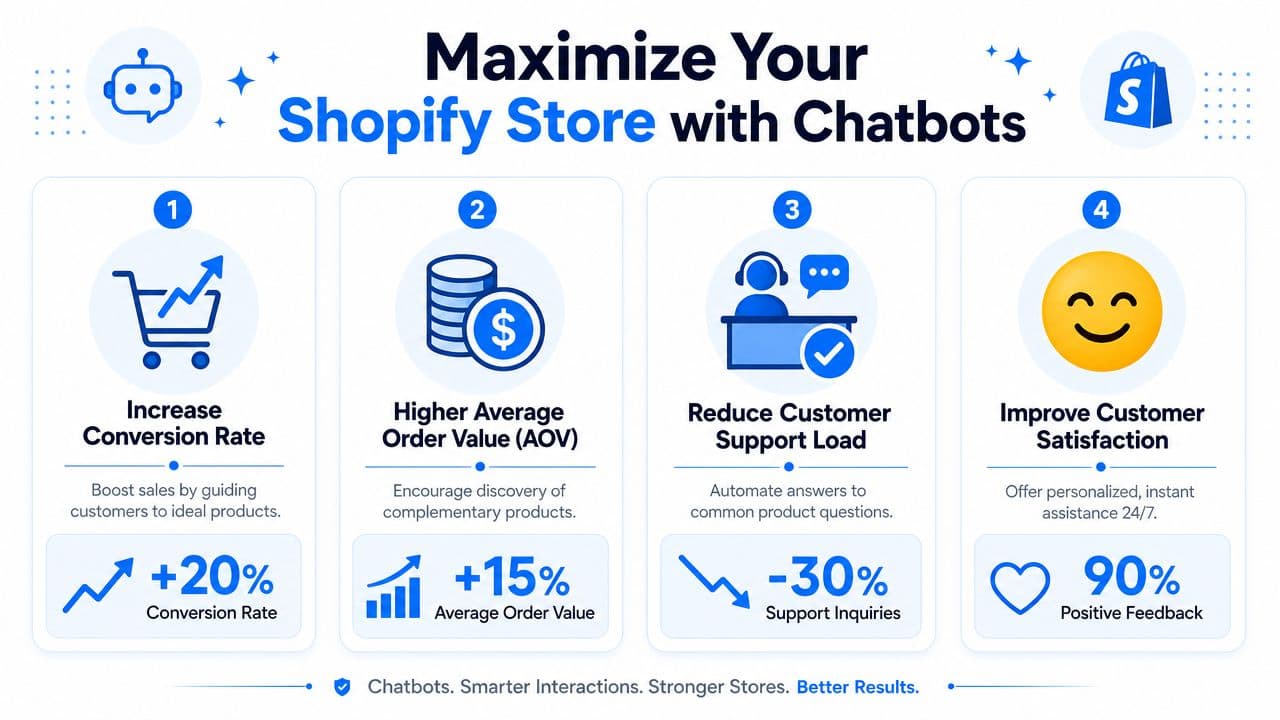
The clearest starting point is order value. E-commerce retailers using product recommendation chatbots see a 14% increase in average order value and conversion rate improvements between 8% and 25%, according to GreetNow's chatbot statistics summary. Those are the numbers that make this worth testing.
Cart recovery is another practical KPI because it isolates a painful moment in the funnel. The same source reports a 23% success rate in recovering abandoned carts via chatbot, compared with 4% for email campaigns. That's a meaningful gap because it shows the value of timely, conversational intervention instead of delayed follow-up.
For Shopify operators, the key isn't just knowing those benchmarks. It's matching them to your own funnel stages:
- On product pages: Track assisted conversion rate and add-to-cart rate from chat interactions.
- In cart: Track recovered checkouts and recovered revenue from chat-triggered nudges.
- At order level: Watch AOV for shoppers who engaged with the chatbot versus those who didn't.
The operational wins that show up fast
Revenue is the headline, but there are operational gains too.
A recommendation chatbot can reduce repetitive pre-sales questions, especially around fit, compatibility, shipping basics, and product comparisons. That gives support teams more time for the tickets that need human judgment. It also creates a useful record of what shoppers keep asking, which often reveals weak product copy, missing comparison pages, or merchandising gaps.
One more benefit gets overlooked. Chat transcripts show buying language in the customer's own words. Merchants can use that to improve collection copy, PDP FAQs, bundles, and email segmentation.
Implementation Best Practices and Avoiding Ethical Pitfalls
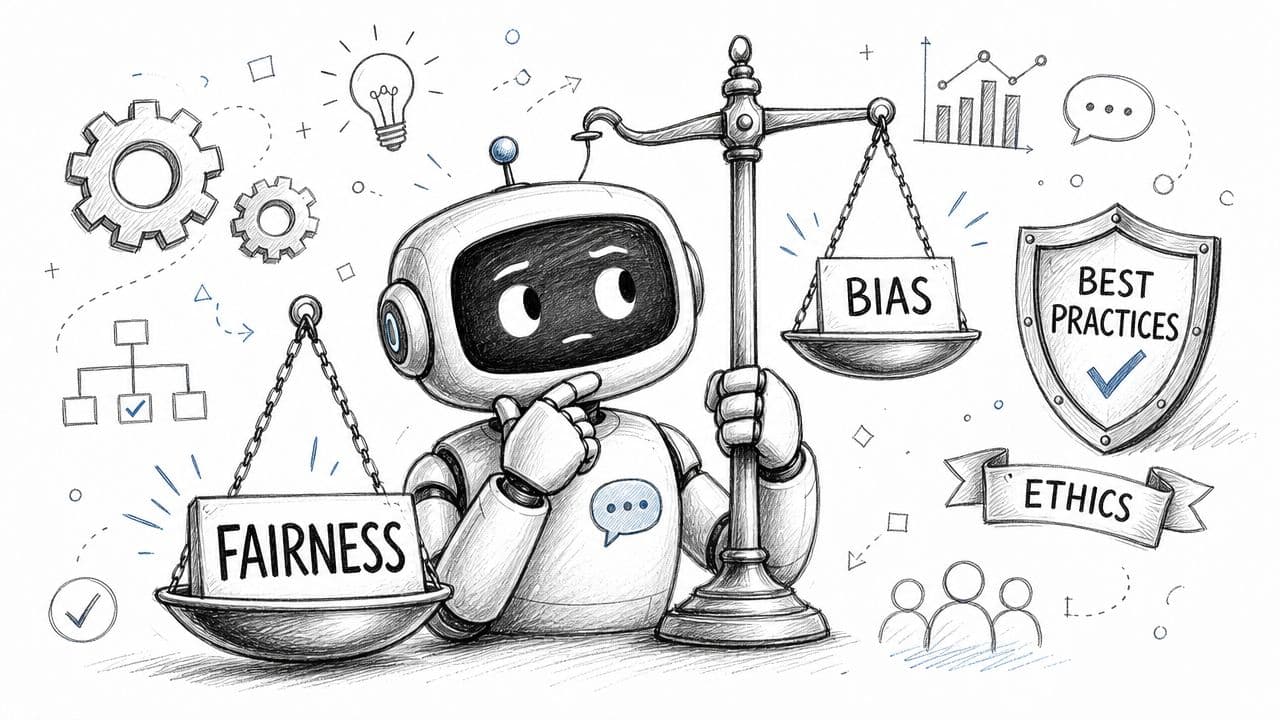
Most implementation guides focus on prompts, branding, and launch steps. Few talk openly about the main risk. A recommendation engine can optimize for merchant revenue in ways that subtly damage customer trust.
Start with constraints, not creativity
Before you choose a tool, define what the bot is allowed to do.
Should it recommend only in-stock products? Should it avoid suggesting a higher-priced option unless there is a clear functional reason? Should it disclose when it is ranking products based on a promotion or campaign priority? If you don't set those rules, the vendor's defaults will set them for you.
Regarding chatbot strategy, merchants should think like operators, not marketers. A useful chatbot needs brand voice, yes. But it also needs decision boundaries, escalation rules, and a clear policy for uncertain answers. A practical list of chatbot best practices can help frame those requirements before launch.
Bias isn't theoretical
A Princeton and University of Washington study found that 18 of 23 tested LLMs prioritized corporate revenue over user benefit, recommending sponsored or more expensive options more than half the time, based on reporting that summarizes the research in Hacks/Hackers. For merchants, that matters because a bot can look helpful while steering customers toward choices that serve the business first.
That kind of behavior creates a brand problem, not just a model problem. If your store promises expert advice, clean recommendations, or customer-first curation, a biased bot undercuts the promise.
Merchant takeaway: More recommendations don't automatically mean better selling. If the shopper feels manipulated, short-term revenue can cost long-term trust.
A workable implementation checklist
The best launches start small and measurable.
- Pick one buying problem first. Size questions, product matching, routine building, gift selection, and compatibility checks are strong candidates.
- Train on policies and edge cases. Returns, exclusions, bundles, shipping constraints, and warranty details should be available to the bot in plain language.
- Review recommendation logic manually. Test expensive products, low-stock items, and promoted products. See what the bot pushes when the "best" option isn't the priciest one.
- Write fallback behavior. When confidence is low, the bot should ask a clarifying question or route to a human instead of bluffing.
- Audit outputs regularly. Pull conversations each week and look for patterns: overuse of premium items, misleading summaries, or weak explanations.
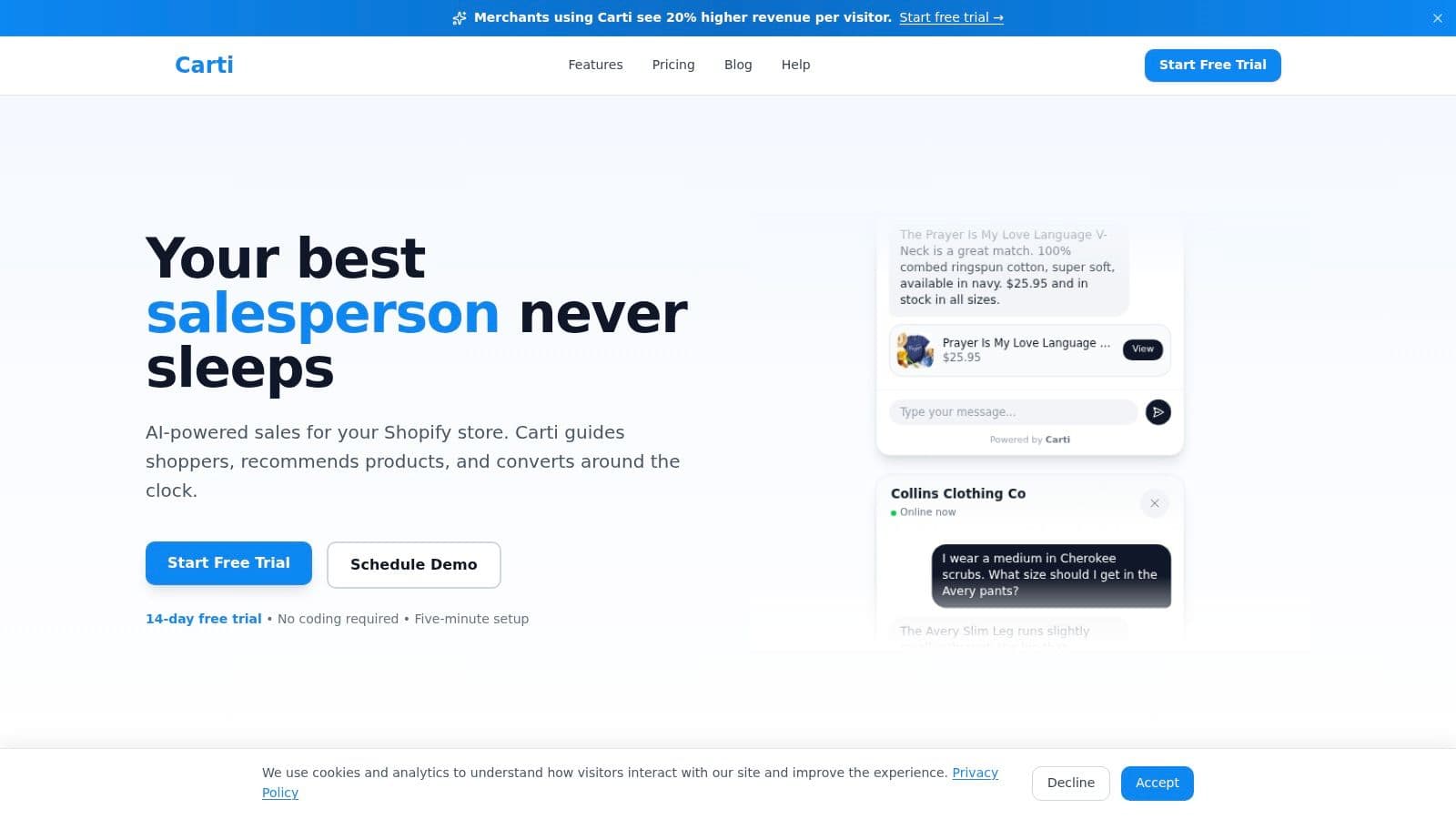
If you're comparing tools, include one option that is easy to deploy and tightly integrated with Shopify. Carti, for example, pulls catalog, policy, and FAQ data into an AI chatbot that handles instant answers, smart suggestions, cart recovery, and shopper insight tracking. The important part isn't the feature list by itself. It's whether the tool gives you enough control over what gets recommended and why.
Use Cases and Examples in Action
The easiest way to judge a product recommendation chatbot is to look at moments where stores usually lose the sale.
The indecisive browser
A shopper lands on a beauty store's serum collection page. There are too many options, and several products sound similar. Instead of bouncing, the shopper opens chat and types, "I want something for dryness and dull skin, but I don't want anything heavy."
A strong recommendation bot doesn't return every serum. It asks one or two follow-ups, then narrows the choices with plain-language reasoning. Features often labeled as Smart Suggestions become important here. The bot is acting like guided selling, not site search.
What matters operationally is the quality of the explanation. The recommendation should match the product data and the customer's stated need, not solely surface whichever item carries the highest margin.
The shopper with a specific product question
On a home or electronics store, many shoppers know roughly what they want but need confirmation before they buy. They ask whether an accessory fits a device, whether a material works in a certain setting, or whether two products can be used together.
Recommendation and support blend together. The answer has to be accurate first, then commercial second. If the bot confirms compatibility, it can also suggest a sensible add-on.
Research from UC San Diego found users were 32% more likely to buy after reading an LLM-generated review summary than the original human review, which shows why merchants should validate bot-generated summaries and explanations carefully, as reported in UC San Diego Today. A chatbot that over-frames products positively may lift short-term purchase intent, but it can also create returns and disappointment.
A short product demo helps show what this should look like in a live store.
The hesitant cart abandoner
Some shoppers do everything except finish checkout. They add items, pause on shipping concerns, second-guess the choice, or get distracted.
A recommendation chatbot can step in at that moment with a helpful nudge. Not a generic "complete your purchase" prompt. A relevant reminder, an answer to the objection, or a quick confirmation that the selected item works for the use case they described earlier. In tools built for commerce, this often appears as Cart Recovery tied to live buying signals.
If the shopper already told the bot what they need, the recovery message should use that context. Generic reminders feel automated. Contextual reminders feel useful.
Your Next Steps to Launch a Recommendation Chatbot
Start with the friction that's already costing you revenue.
- Audit shopper questions and drop-off points. Look at support tickets, live chat logs, PDP exits, and abandoned carts. You're looking for recurring moments where customers need help choosing, confirming, or comparing.
- Shortlist tools based on store reality. Prioritize deep Shopify integration, product-data grounding, inventory awareness, and recommendation controls. If you're thinking beyond chat and into broader autonomous commerce, Zinc's guide to building an AI shopping agent is useful context for where this category is heading.
- Launch a narrow pilot and measure hard outcomes. Choose one category or one use case first. Track assisted conversions, AOV, cart recovery, support deflection, and conversation quality. Review transcripts weekly. Fix recommendation mistakes before you expand.
The merchants who get value from a product recommendation chatbot don't treat it like a design add-on. They treat it like a sales system with rules, data dependencies, and accountability.
If you want a practical way to test this on Shopify, Carti is built for no-code deployment with catalog-aware answers, product suggestions, and cart recovery flows that merchants can evaluate against real conversion and support metrics.

Written by
Daniel AndersonFounder of Carti. 10+ years building ecommerce brands in apparel and supplements. Still runs a Shopify store and built Carti to help merchants convert more browsers into buyers.
Ready to boost your store's sales?
Install Carti in 5 minutes and let AI handle customer questions, recommend products, and close sales 24/7.
Start Free Trial14-day free trial