
A 5% increase in retention can be associated with a 25% to 95% increase in profits, which is why customer retention strategies sit at the center of durable e-commerce growth, not on the sidelines WorldMetrics. For Shopify DTC merchants, that matters even more because acquisition is expensive, competition is crowded, and every returning buyer lowers the pressure to keep paying for new traffic. Retention also compounds, since repeat customers can drive a disproportionate share of revenue, and strong-retention businesses often post better lifetime economics than weak-retention ones.
The best retention programs do not try to fix everything at once. They focus on the moments where Shopify stores lose momentum, after the first browse, after checkout, after delivery, and after the customer has already bought once but has not formed a habit yet. An AI chatbot like Carti fits naturally at those points because it can answer questions instantly, suggest relevant products, recover carts, and surface the customer signals your team needs to act faster. For example, a store can pair Carti with checkout process optimization to reduce hesitation before purchase and shorten the path from intent to order.
For DTC teams, the question is not whether retention matters. The question is which tactics reduce friction, increase repeat purchases, and protect margin without creating discount addiction. The strategies below are built for that reality.
1. Personalized Product Recommendations
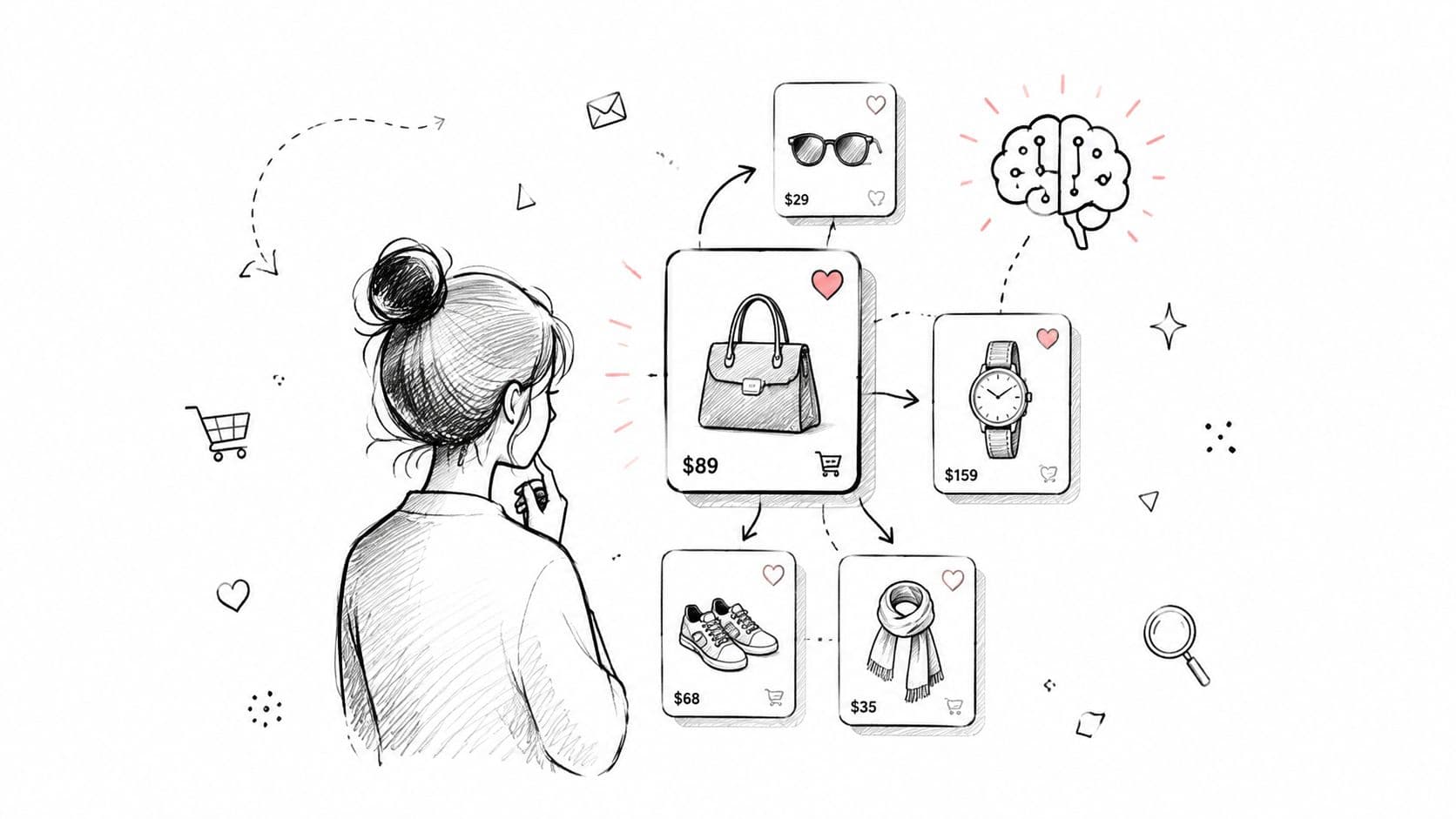
A Shopify store rarely loses a customer because it has too few products. It loses them because the next product feels random. Personalized recommendations solve that by using browsing history, purchase patterns, and preference signals to present the right item at the right time, so the store feels attentive instead of generic.
For DTC merchants, this is especially useful on product pages, in cart, and after purchase. A skincare buyer who just purchased a cleanser doesn't need another cleanser shoved at them. They need a compatible serum, a refill reminder, or a complementary bundle. Carti's Smart Suggestions can automate that logic so your team isn't hand-building every recommendation path for every collection.
Why this works for Shopify
Shopify catalogs move fast. New arrivals, size variants, seasonal drops, and trending SKUs make static merchandising stale quickly. Carti helps keep recommendations fresh by reading shopper behavior in real time, which is exactly what fast-moving fashion and beauty stores need when product relevance changes week to week.
Practical rule: build recommendations from the full catalog, not just bestsellers. If the system only knows your top 20 products, it will keep repeating the same suggestions and stop feeling personal.
A useful workflow is simple. Let Carti read the browsing session, trigger a recommendation on the product page, then monitor which suggestions lead to add-to-cart or second-purchase behavior in the analytics dashboard. If a customer views a dress, then lingers on shoes and accessories, the bot should surface those companions instead of pushing a generic discount.
Use seasonal language in the copy, too. “Complete the look,” “pair it with,” and “customers also liked” feel natural for DTC shoppers because they mirror how people browse. Strong recommendation systems don't just sell more, they make shoppers feel understood.
2. Abandoned Cart Recovery
Cart abandonment is where many stores leak revenue they've already earned the right to collect. The customer added the product, showed intent, and then disappeared, often because of hesitation, distraction, shipping concerns, or a question that never got answered.
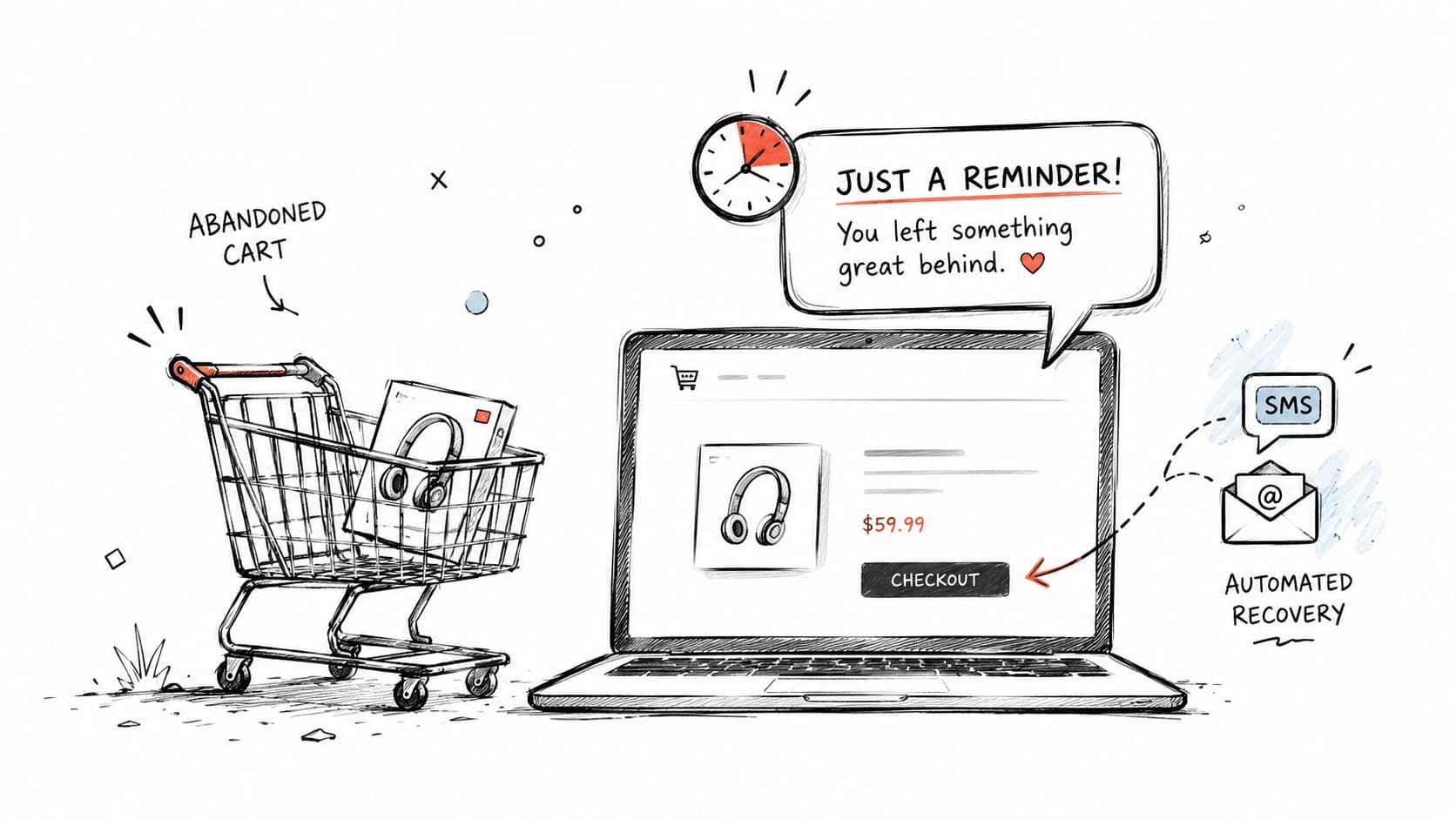
Carti's Cart Recovery feature is built for that exact moment. For Shopify merchants, the value isn't only in the reminder. It's in the timing, the context, and the ability to nudge the shopper with the exact item they left behind, without forcing a support agent to manually intervene.
A strong recovery flow works best when it's staged. The first reminder should be fast, the second should address objections, and the third, if you use one, should be reserved for high-intent shoppers with bigger carts. That lines up with broader checkout optimization guidance, especially for merchants who want to tighten the path from cart to purchase, as outlined in Carti's checkout process optimization guide.
Recovery copy that actually gets opened
The message should feel like help, not pressure. Use the exact cart contents, the last viewed item, and one clear action.
- First message: “You left your [product name] in your cart. If sizing, materials, or shipping are holding you back, reply here and we'll help.”
- Second message: “Still thinking it over? Your cart is ready, and we saved the items you picked.”
- High-value carts: “If you'd like a quick size check or product match, Carti can help before you place the order.”
For beauty and fashion stores, visual reminders matter because shoppers often need reassurance on fit, texture, or shade. Carti can answer those questions instantly inside the recovery flow, which reduces the chance that a customer abandons the cart again after clicking back in.
Keep the messaging useful. If the cart was abandoned because of uncertainty, answer the uncertainty. If it was abandoned because of comparison shopping, highlight the product fit. That's how recovery turns into retention instead of a one-time coupon hit.
3. Instant Customer Support & Live Chat
People do not always abandon a purchase because they changed their mind. Sometimes they leave because a question about size, ingredients, shipping, returns, or compatibility went unanswered at the point of decision. Instant support closes that gap by giving shoppers immediate help before hesitation turns into an exit.
Carti is built for that exact use case. It can cut response time from hours to seconds, which matters in Shopify stores where a sizing question or a policy question can decide the sale. For fashion, beauty, wellness, and home goods merchants, the chatbot becomes a first-line sales associate as well as a support layer, which is why support quality belongs in any serious plan to improve customer service.
You do not need a large support stack to do this well. You need clear FAQs, clear policies, and escalation rules for edge cases. Carti can learn store content automatically, but the strongest results come from training it on the questions shoppers ask most often, then reviewing conversation logs to identify what is still missing.
A chatbot should answer repeat questions, then hand off anything sensitive, unusual, or high-friction to a human without making the customer repeat themselves.
What to teach the bot first
Start with the questions that slow the purchase decision.
- Sizing and fit: “Does this run true to size?”
- Materials and ingredients: “Is this fragrance-free?” or “What's the fabric blend?”
- Shipping and returns: “How long does delivery take?” or “Can I exchange this?”
- Product comparison: “What's the difference between these two bundles?”
A useful setup path is to begin with your top five pre-sale questions, then expand into post-purchase support. That gives the bot a chance to reduce friction where it matters most, while your human team handles more complex cases. If a return-related question comes up, a clear answer can also reduce uncertainty about what happens after the order, which is why ClothME explains item returns in a way that helps shoppers feel more confident before they buy.
For Shopify DTC merchants, the value is not just faster replies. It is a support experience that protects revenue, keeps the store easy to trust, and makes it more likely the customer will come back.
4. Loyalty Programs & Rewards
A loyalty program only works if customers understand it quickly and believe the rewards are worth reaching for. That's why the strongest programs feel simple, visible, and achievable, not like a spreadsheet hidden behind too many rules.
For Shopify DTC merchants, loyalty can't just be about discounts. If you train people to wait for the next promo, you damage margin and weaken repeat purchase behavior. The better approach is to reward actions that deepen the relationship, such as repeat buying, referrals, reviews, and member-only access. Carti's retention workflows can support that by surfacing the right offer when the customer is already engaged, instead of blasting the same message to everyone.
Loyalty also works best when it's tied to identity. Beauty, fashion, and wellness customers often buy because they feel seen, not because they did the math on points. Make the program easy to read, easy to redeem, and easy to explain in your onboarding emails and chat responses.
Carti's customer lifetime value guide is a useful companion if you're trying to connect rewards to long-term economics rather than just short-term redemption.
Keep the economics under control
Use loyalty to strengthen repeat behavior, not replace your product.
- Show the next reward early: Customers stay engaged when they can see how close they are to a benefit.
- Reward non-discount actions: Reviews, referrals, and social shares often build more durable value than constant price cuts.
- Use Carti for reminders: The bot can remind shoppers how close they are to a tier, member benefit, or exclusive drop.
For Shopify stores, the smartest loyalty move is often member visibility. Let Carti answer “How many points do I have?” or “What reward comes next?” instantly, so the customer never has to hunt for the answer. That reduces friction and makes the program feel active, not hidden.
5. Proactive Customer Communication
Most stores communicate too late. They wait until a shopper complains, a package is late, or a repeat purchase window has already passed. Proactive communication flips that script by reaching customers before they ask, with updates that feel useful rather than intrusive.
For DTC, this is one of the cleanest retention moves available. Order confirmations, shipping updates, restock alerts, launch announcements, and replenishment reminders all keep the brand present in a way that feels service-oriented. Carti can automate these touchpoints with contextual language, so the message matches what the shopper needs at that moment.
The best proactive communication is narrow and timely. A first-time buyer doesn't need the same messages as a repeat shopper. A beauty customer might want replenishment help, while a fashion customer may care more about new arrivals in their size. That's where behavioral triggers matter, because they let you send fewer messages that land better.
A useful rule is to communicate around the customer's next likely question. If they just bought a skincare set, tell them how to use it. If they just placed a furniture order, give them shipping updates and setup guidance. The message should reduce uncertainty, not create another inbox task.
How Carti can help
Carti can also handle the inbound version of proactive communication. If a shopper asks about their order, the bot can answer instantly without forcing them to wait for email support. That matters because support speed shapes trust, and trust drives repeat behavior in Shopify stores.
Use concise copy, specific subject lines, and clear action buttons. “Your order has shipped” is better than “An update from our team.” “Your size is back” is better than “We thought you'd like this.” The more specific the message, the more likely it is to feel helpful instead of promotional.
6. Post-Purchase Experience Optimization
The sale does not end at checkout. For many Shopify brands, the first delivery experience decides whether a customer comes back or goes quiet. Post-purchase optimization covers packaging, unboxing, care instructions, follow-up, and returns, all of which shape whether the buyer feels confident about the purchase after the initial excitement fades.
DTC brands can create a real difference in this area. A thoughtful note, branded packaging, and clear usage guidance make the order feel complete. A messy return process does the opposite, especially if the buyer has to work hard to understand what happens next. As ClothME explains item returns, the logistics can be complex, but the customer-facing side must stay simple.
If you want repeat buyers, reduce post-purchase uncertainty. Tell customers how to use the product, how to care for it, and what to do if it is not right. Then follow up after delivery with a short check-in that asks for feedback and opens the door to the next purchase.
There is also a social layer here. Packaging that looks good on camera can turn customers into organic promoters, but the package still has to do its core job, protect the product and make the experience feel intentional. For Shopify merchants, that means designing packaging and instructions that work for both the warehouse and the buyer, not just one side of the process.
The strongest post-purchase experience removes effort from the customer, not from your warehouse team.
Make the follow-up useful
A good follow-up email should not sound like a generic review request. It should reflect the product and the expected use case, while also staying out of spam folders, which is why merchants should review guidance like how to stop email from going to spam in Gmail before building follow-up workflows.
- For apparel: ask about fit, fabric feel, and sizing.
- For beauty: ask whether the routine was easy to follow.
- For home goods: ask whether setup and care instructions were clear.
Carti can support this by answering care questions after the order has shipped, which reduces avoidable support tickets and keeps the experience smooth. It can also surface the right next step based on the product category, so a skincare buyer sees routine guidance while a furniture buyer gets shipping or setup help. When the customer gets a fast answer instead of a delayed ticket, your brand feels more dependable, and that is what keeps them from drifting to a competitor next time.
7. Customer Segmentation & Personalization
Not every shopper should receive the same message, the same offer, or the same cadence. Segmentation lets Shopify merchants separate high-intent buyers from casual browsers, first-time purchasers from repeat customers, and product-line shoppers from category explorers, then tailor the experience accordingly.
That matters because generic messaging is easy to ignore. When customers receive the same promotion over and over, the brand feels lazy. When they get a message tied to size, style, category, or prior purchase history, it feels like the store remembers them.
For DTC teams, segmentation doesn't need to start complex. Begin with a few meaningful groups, such as first-time buyers, repeat buyers, high-AOV shoppers, and inactive customers. Then let Carti use those signals to change the tone of support and the product suggestions it offers inside chat.
Segment by intent, not just demographics
Age and geography can help, but purchase behavior is usually more actionable. A shopper who browsed three times this week and abandoned a cart is very different from a customer who bought once six months ago and hasn't returned.
Use that difference in your workflows.
- First-time buyers: give reassurance, setup help, and a low-friction second purchase path.
- Repeat buyers: show bundles, replenishment timing, and VIP access.
- Inactive customers: use win-back messaging that acknowledges the lapse instead of pretending it didn't happen.
Carti's Insights Dashboard can help surface common questions and friction points by segment, which gives your team a better read on why people behave differently. That's especially useful for apparel and beauty brands where fit, skin concerns, and style preferences vary widely across audiences. Personalization works best when it feels like a response to behavior, not a guess dressed up as automation.
8. Feedback Collection & Response
Customers don't expect perfection. They do expect to be heard. Feedback collection gives you the raw signal to find product issues, fulfillment problems, and support gaps before they become churn drivers, and responding well turns that signal into trust.
For Shopify merchants, the simplest move is also the most overlooked, ask soon after purchase, keep the survey short, and respond to negative feedback like a human. If a customer had a bad sizing experience or a delayed delivery, the worst thing you can do is bury the complaint in a dashboard and move on.
The smartest stores close the loop. They use reviews, post-purchase surveys, and direct support conversations to improve product pages, FAQs, and merchandising. Carti can help here by surfacing the questions that repeat most often, which makes it easier to tell whether the issue is product-related, content-related, or service-related.
A short survey can do a lot if it's timed well. Ask whether the product matched expectations, whether the instructions were clear, and whether there's anything blocking a second purchase. Then route the response into action, not just reporting.
Customers notice when a brand changes something they complained about. That's the moment feedback turns into retention.
Make the response visible
If people complain about a material, a fit issue, or a missing care guide, fix the page copy and tell customers you did it. If they're confused by returns, make the policy easier to find and easier to understand. If they ask the same question repeatedly, teach Carti the answer and put it where shoppers can reach it first.
That visible response matters more than a generic thank-you. It tells the customer their input changed the experience, which makes them more likely to stay engaged. In DTC, that's not a soft benefit, it's a practical path to repeat orders.
9. Email Marketing Automation
Email still does a lot of retention work for DTC brands, but only if it's triggered by behavior. Automation lets you send the right message at the right time without manually building every campaign, which is essential when your store has dozens of products, recurring launches, and different buyer types.
The strongest flows are the ones customers expect, welcome series, browse reminders, cart recovery, reorder nudges, and re-engagement sequences. They work because they match the shopper's current stage, not your calendar. Carti can support these flows by feeding behavioral context into the conversation and nudging shoppers toward the next best action.
For Shopify brands, automation should feel like a service layer, not a spam layer. That means the content needs a purpose beyond selling. A welcome sequence should explain the brand promise. A reorder email should be timed to actual usage patterns. A re-engagement campaign should acknowledge inactivity instead of pretending the customer is still active.
If deliverability is shaky, fix that before scaling automation. A strong flow doesn't matter if it lands in spam, and your team should monitor inbox health alongside opens and clicks. This guide on avoiding Gmail spam folders is a useful operational reference if you're tightening deliverability.
Build around a small set of sequences
Start with the core lifecycle and let performance guide expansion.
- Welcome: explain value, use case, and the first best product path.
- Browse: remind shoppers of what they viewed without sounding pushy.
- Cart: recover intent with context and reassurance.
- Reorder: time reminders to product consumption cycles.
- Re-engagement: offer a relevant reason to return, not a generic blast.
Carti fits this stack because it can answer questions while the email sequence runs. That means a shopper who clicks a reorder email can get support instantly if they still have a question. The combination of automation plus live conversational help is what makes the experience feel coordinated.
10. Community Building & Brand Advocacy
A buyer who loves your product is valuable. A buyer who talks about it is better. Community building turns retention into advocacy by giving customers a place to connect with the brand and with each other, which makes them less likely to drift away after one purchase.
For Shopify DTC merchants, community doesn't have to mean a huge social platform. It can be a hashtag, a private group, an ambassador circle, or a recurring challenge. The point is to make the customer feel part of something ongoing, not just a transactional list of orders.
Community also helps retention because it gives customers a reason to return that isn't tied to a discount. They come back for access, recognition, and identity. That matters in categories like fashion, beauty, wellness, and home, where the brand is often part of how the customer presents themselves.
Carti can support community indirectly by surfacing stories, answers, and product guidance inside the shopping experience. That keeps the brand conversational and makes it easier to guide shoppers toward user-generated content, testimonials, or member-only experiences.
Keep advocacy easy
Ask customers to contribute in small ways. A review, a photo, a tag, or a referral is easier to get than a polished testimonial. Then feature that content where shoppers already make decisions, on product pages, in emails, and in chat.
- Use a clear hashtag: make it simple for customers to share.
- Highlight real customers: social proof works best when it looks lived-in.
- Offer access, not just discounts: early drops or community-only perks often feel more valuable.
The strongest communities don't feel manufactured. They feel like a brand listening to its customers and giving them room to participate. That's how advocacy becomes repeat business.
Top 10 Customer Retention Strategies Comparison
| Strategy | Implementation complexity | Resource requirements | Expected outcomes | Ideal use cases | Key advantages |
|---|---|---|---|---|---|
| Personalized Product Recommendations | Medium–High (ML models + integration) | Historical behavioral data, recommendation engine, product catalog sync | Increases AOV ~15–30%; higher repeat purchases | Catalog-rich stores, cross-sell/upsell scenarios | Higher AOV; 24/7 scalability; improved relevance |
| Abandoned Cart Recovery | Low (automated workflows) | Email/SMS platform, templates, timing rules | Recovers ~15–30% of abandoned carts; high ROI | Stores with high abandonment rates or checkout friction | High ROI; quick revenue recovery; easy setup |
| Instant Customer Support & Live Chat | Medium (bot + escalation flows) | Chatbot platform, training data, human agents for handoffs | Improves CSAT ~30–40%; reduces support costs 60–70% | High inquiry volume, complex pre-purchase questions | Immediate responses; prevents abandonment; multilingual reach |
| Loyalty Programs & Rewards | High (program design + ops) | Loyalty platform, budget for rewards, CRM integration | Increases CLV 25–100%; predictable repeat behavior | Brands with repeat purchase potential or premium positioning | Builds emotional loyalty; drives referrals and retention |
| Proactive Customer Communication | Medium (segmentation + timing) | Automation tools, event triggers, content assets | Increases repeat purchases ~15–30%; fewer support inquiries | Order tracking, replenishment, launch announcements | Builds trust; reduces inbound support; timely engagement |
| Post-Purchase Experience Optimization | Medium (fulfillment & creative) | Branded packaging, fulfillment coordination, follow-up systems | Boosts repeat purchase likelihood 50%+; more referrals | Premium products, unboxing-focused brands | Drives advocacy; reduces returns; strengthens brand experience |
| Customer Segmentation & Personalization | Medium–High (data infrastructure) | Analytics, CRM, real-time segmenting tools | Raises email engagement 50%+; higher conversion via relevance | Multi-audience retailers needing targeted messaging | More relevant messaging; efficient budget allocation |
| Feedback Collection & Response | Low–Medium (tools + staffing) | Survey/review platforms, response workflows, analytics | Identifies churn drivers; improves product/service over time | Product improvement, reputation management, CX teams | Actionable insights; builds customer trust when acted on |
| Email Marketing Automation | Low–Medium (flows & content) | ESP, templates, segmentation, analytics | High ROI (avg ~42:1); increases CLV 25–50% | Lifecycle nurturing, cart recovery, re-engagement | Scalable, measurable, cost-effective retention channel |
| Community Building & Brand Advocacy | High (ongoing moderation & content) | Community managers, content programs, events budget | Lowers CAC ~25–30%; increases LTV 50–100% over time | Lifestyle and DTC brands with passionate customers | Organic advocacy; long-term competitive moat; UGC generation |
Next Steps to Elevate Your Retention Game
The merchants who win on retention don't treat it as one campaign. They build a system. That system combines recommendation logic, cart recovery, support automation, loyalty, proactive communication, better post-purchase moments, smarter segmentation, consistent feedback loops, email automation, and community touchpoints.
For Shopify DTC brands, the biggest takeaway is operational, not theoretical. If your team can't answer questions fast, recover abandoned carts, and personalize the next message based on behavior, you're leaving repeat revenue on the table. If you can, the customer experience starts to feel coordinated, and coordinated experiences are easier to trust, easier to revisit, and easier to recommend.
Carti fits naturally into that system because it handles three high-impact retention moments at once, instant answers, smart product suggestions, and cart recovery. It also gives merchants an Insights Dashboard that shows which questions and friction points keep appearing, which makes it easier to improve merchandising, support content, and follow-up flows without guessing. For stores that want retention to feel practical instead of abstract, that combination is hard to ignore.
The next move is simple. Pick the two retention leaks that hurt your store most right now, then build one clear workflow around each. If your shoppers keep asking pre-sale questions, start with instant chat. If carts are dropping, start with recovery. If repeat orders are weak, start with personalized recommendations and lifecycle messaging.
If you want to turn more Shopify visitors into repeat buyers, visit Carti and see how its AI chatbot can support instant answers, product suggestions, and cart recovery inside your retention workflow. It's a practical way to reduce friction, keep shoppers engaged, and give your team clearer signals about what drives repeat purchase behavior.

Written by
Daniel AndersonFounder of Carti. 10+ years building ecommerce brands in apparel and supplements. Still runs a Shopify store and built Carti to help merchants convert more browsers into buyers.
Ready to boost your store's sales?
Install Carti in 5 minutes and let AI handle customer questions, recommend products, and close sales 24/7.
Start Free Trial14-day free trial