
It's 4 p.m. and the same three questions are sitting in the inbox again. Does the medium run small. Does the shipping estimate cover Portugal. Can the serum go on before sunscreen. Two of those shoppers are still on the product page, and one has already closed the tab.
That's the moment most Shopify stores outgrow their first chatbot. A widget that greets visitors and forwards tickets doesn't help someone who's one answer away from buying. The Baymard Institute's cart abandonment compilation puts average documented online shopping cart abandonment at 70.22%, drawn from 50 studies published between 2006 and 2025, so hesitation is the normal state of a storefront, not an edge case.
Shoppers are also arriving already comfortable with AI. In PartnerCentric's survey of 1,004 consumers conducted in December 2025, 49% of surveyed consumers said they'd used AI for shopping at some point during 2025.
Siena AI built its name on commerce-focused customer experience for consumer brands, and it's a reasonable benchmark. But most comparison pages rank Siena AI alternatives on ticket deflection, returns and helpdesk plumbing. This list ranks ten options by a different job, answering pre-purchase questions on a Shopify storefront and moving a hesitant shopper toward checkout, then groups them by what they do best and how the bill scales.
1. Carti
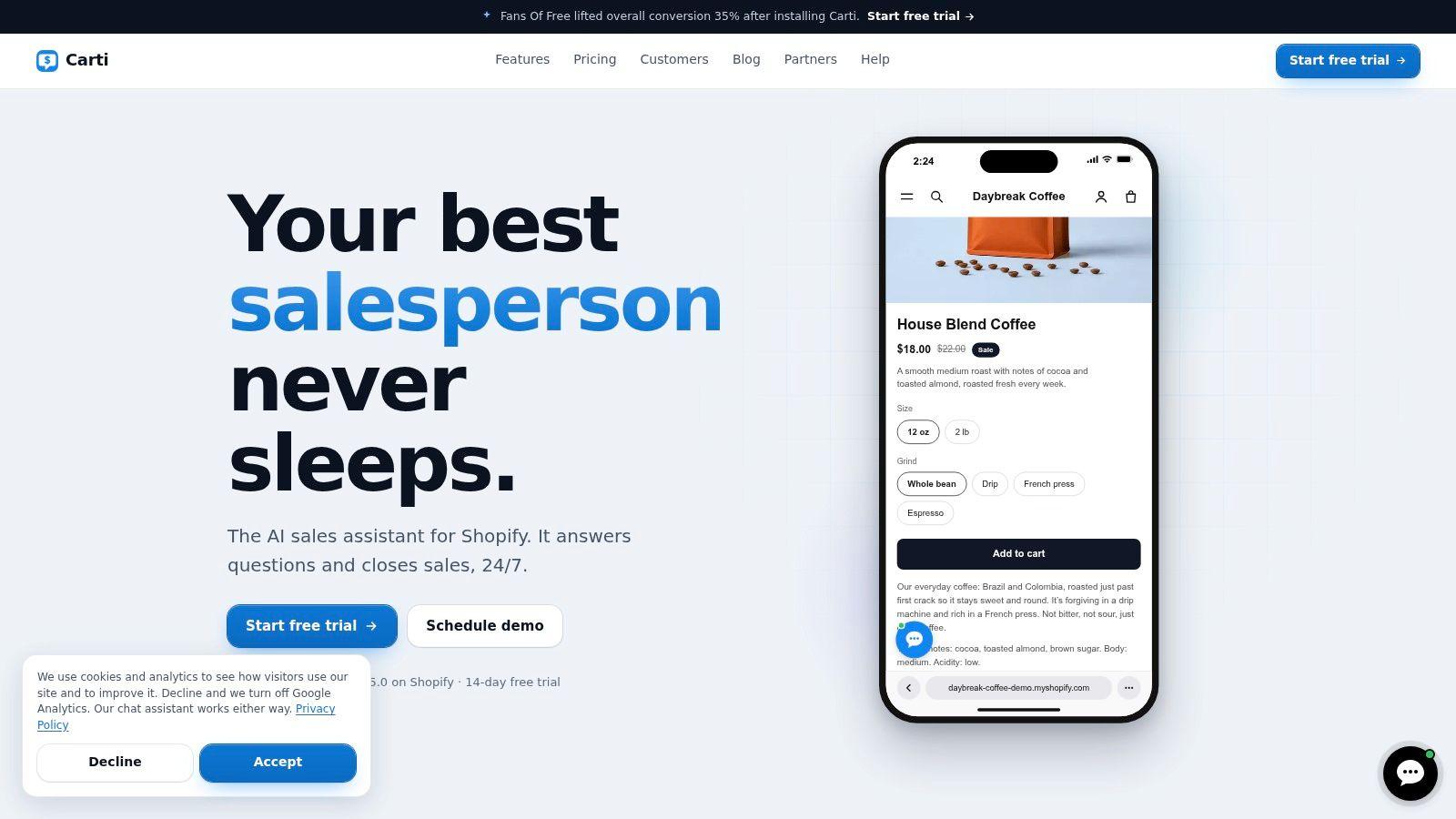
Carti works only on Shopify, and its focus is the pre-purchase conversation rather than the ticket queue. Setup takes a few minutes with no code. Once installed it learns the catalog, product pages, policies and FAQs, then answers sizing, shipping, returns, fit and quality questions on the storefront and in Instagram and Facebook Messenger threads, in 92 languages.
The selling mechanics are the reason it sits first for this job. Carti can pull a product from the live catalog with its real price and stock shown in chat, and product cards can carry View Item, Add to Cart, or both buttons. A shopper who gets a confident answer can add the item without leaving the conversation. It also handles cart abandonment recovery in chat, so a stalled cart becomes a prompt rather than a lost session.
Where the answer quality comes from
- Review evidence: Carti can use reviews from Judge.me, Loox, Yotpo, Okendo and Fera to answer fit and quality questions, which is what a shopper asking "does it run small" wants.
- Proactive Triggers: It opens conversations with shoppers who look like they're hesitating instead of waiting for a question.
- Insights Dashboard: Recurring questions and gaps in store content show up as a list you can act on.
Practical rule: Fill the policy gaps before judging any assistant. If your size chart lives in a PDF nobody linked, the answer will be vague no matter which vendor you pick.
Plans are Free with 50 AI conversations a month, Starter at $49 for 250, Growth at $99 for 600 and Scale at $249 for 1,750, with a 14-day free trial on paid plans. The free tier is enough to judge answer quality on real traffic before spending anything. Every plan has a conversation ceiling, so forecast cost by your monthly chat volume rather than your store traffic. Upgrades take effect immediately, which helps during a launch week.
Switching is the part most merchants underestimate. Carti publishes step-by-step switch plans for stores leaving Tidio, Zipchat or Rep AI, laying out what carries over and what does not, so you can price the migration before committing to it.
2. REP AI
REP AI is the closest like-for-like swap if you want selling and support in one Shopify app. It reads shopper behavior and opens a conversation when someone stalls on a product page, then recommends from the catalog and answers product or order questions.
It also covers the unglamorous half of the inbox. Order status, returns, cancellations and order changes sit in the same tool, with integrations for Shopify, Gorgias, Zendesk and Klaviyo, so a brand already running a helpdesk doesn't have to rip it out.
The pricing model to model first
REP AI prices by store sessions, not by conversations. That includes sessions where nobody opens the chat. A store with heavy paid traffic and a low chat rate pays for reach it doesn't convert into dialogue, while a store with modest traffic and chatty shoppers gets good value from the same tier.
- Forecast with your own numbers: Pull monthly sessions from Shopify analytics, then apply your current chat engagement rate before comparing quotes.
- Watch the traffic spikes: A successful ad week raises sessions and can push you into a higher tier even if conversation count barely moves.
- Confirm channel coverage: Some messaging and helpdesk capabilities depend on plan or add-ons.
A trial is available, and the entry pricing is published for smaller stores, which makes it easier to shortlist than sales-only vendors.
3. Tidio (Lyro)
Say a skincare store gets 400 messages a month, half asking which moisturizer suits oily skin and half asking where an order is. Tidio is built for that split. Lyro answers from store knowledge and synced Shopify products, makes recommendations and comparisons, and hands off to a human in the same shared inbox your team already watches.
Around the AI you get live chat, ticketing, visual chatbot flows and support for Instagram, Messenger and WhatsApp. There's a free plan and a free trial, so testing costs nothing but time.
The trade-off is structural. Tidio is a support platform with a selling layer, not a lightweight sales assistant, and AI plus human conversations can draw on a shared usage allowance. Product recommendations and some Shopify actions need an eligible Lyro plan, so check the tier before you assume the feature is included.
Switching costs more than the subscription line. Carti publishes step-by-step switch plans for stores leaving Tidio, Zipchat or Rep AI, showing what carries over and what doesn't, and that's the level of detail to demand from any vendor you migrate to.
For a deeper teardown of the setup and the limits, this Tidio Lyro review for Shopify stores covers what merchants run into after the trial ends.
4. Zipchat
Zipchat meters something different from everyone above it. Plans are priced by AI replies, not sessions and not conversations. Every outbound AI message spends allowance, so a shopper who asks eight follow-up questions about a sofa's dimensions costs more than one who asks a single shipping question and buys.
That model rewards tight answers and punishes rambling ones. It also makes forecasting straightforward if you know your average messages per conversation, which most stores can pull from their current chat logs in an afternoon.
Coverage is broad for an ecommerce-focused agent. AI search and product-page questions, recommendations grounded in store content, website chat, Instagram, Messenger, WhatsApp and email, plus human escalation, analytics and multilingual replies. The entry plan includes multiple channels, and a trial is offered, though there's no free tier.
- Budget for overage: Extra replies can cost more or force an upgrade mid-month.
- Test long-tail questions: Ask about ingredients, compatibility and shipping eligibility to a remote region, not just your top five FAQs.
A detailed Zipchat review for Shopify merchants walks through the reply-based math and where it gets expensive.
5. Gorgias
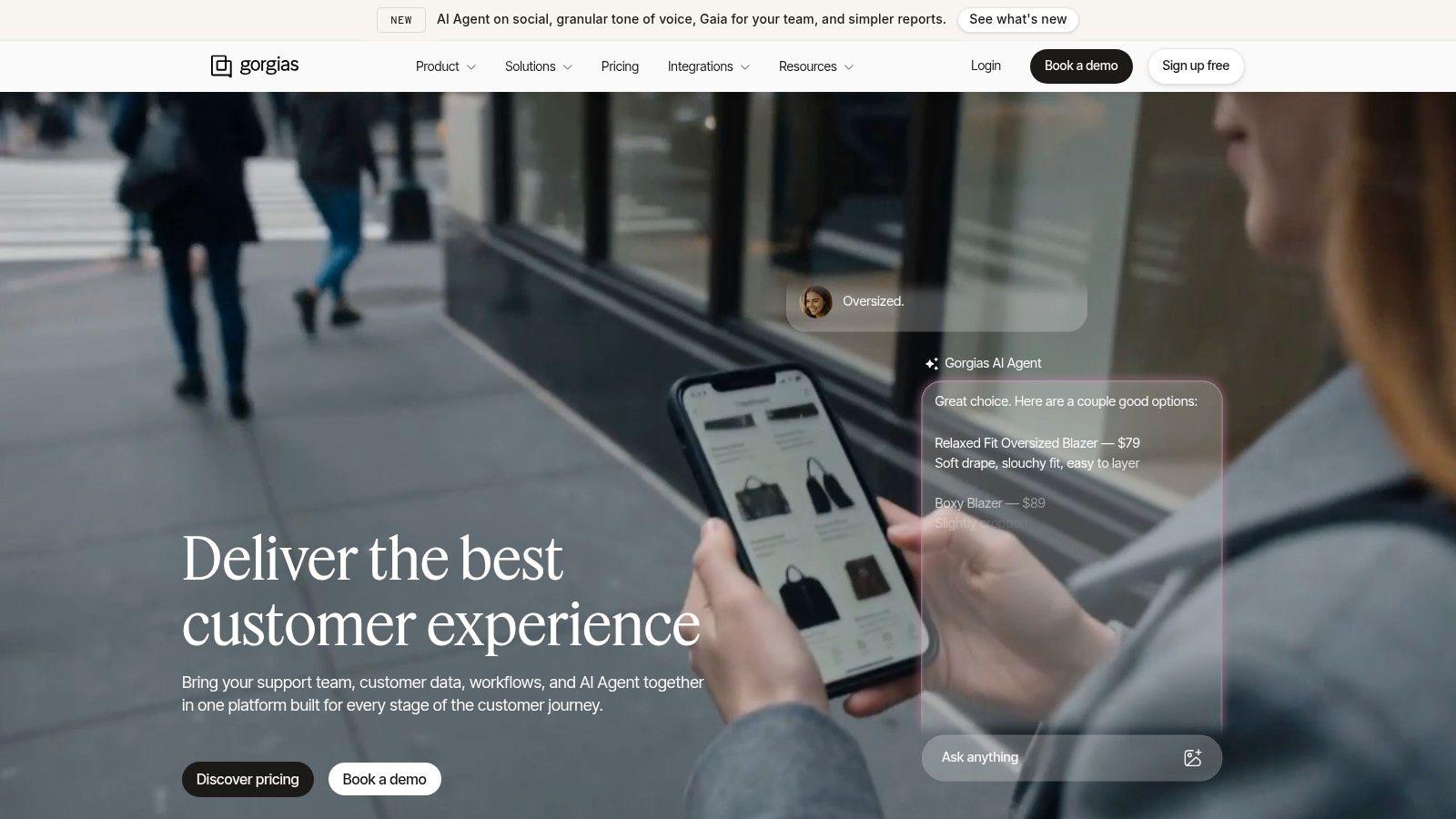
If your team already lives in Gorgias, adding its AI Agent is the shortest path to storefront selling. The Shopping Assistant uses Shopify catalog data and store content to answer product questions and recommend items, with controls for product eligibility and selling style, while the helpdesk handles the post-purchase queue.
The measurement question matters more than the feature list here. A 2026 Gorgias analysis of platform data reported that roughly 14% of shopping-assistant conversations ended in an attributed online order within a three-day attribution window. That's not a store conversion rate, it's a rate among shoppers who actively engaged, and it's the kind of number to ask any vendor to reproduce on your own traffic.
Two billing streams feed one invoice. Helpdesk pricing follows ticket volume rather than agent seats, and AI charges follow automated outcomes, with overages possible on both.
Ask what counts as automated before you sign. A conversation counted as resolved because the shopper stopped replying is a different bill from one where an action was completed.
The AI Agent, including Shopping Assistant, is currently limited to Shopify stores. A merchant who only wants a storefront sales assistant may not need the full platform around it.
6. Shopify Inbox
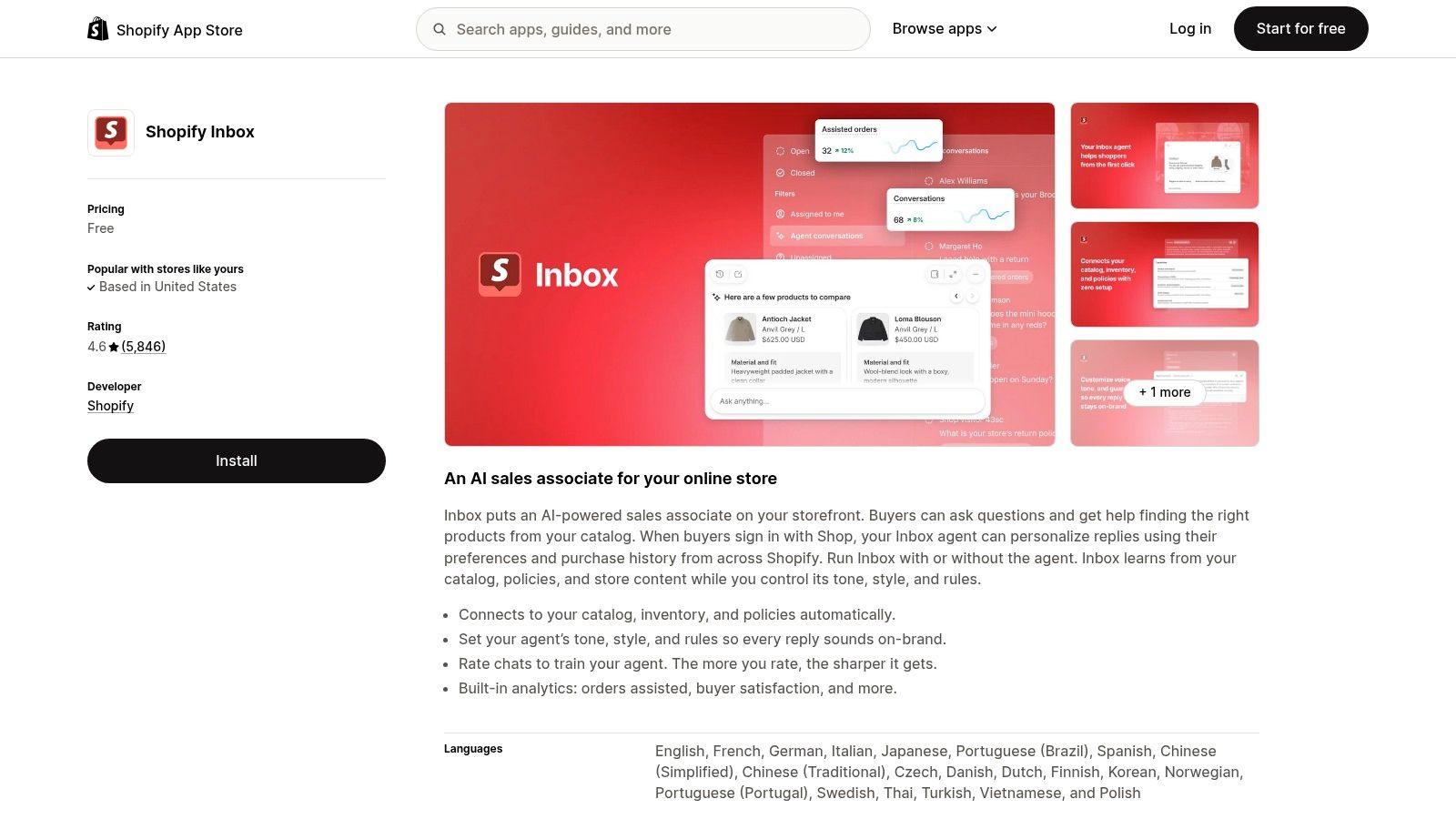
The free option deserves a fair test before anyone signs a contract. Shopify Inbox includes an AI-powered sales assistant that learns from the store's catalog, policies and content, recommends products, and lets you set tone, style and rules. Analytics cover assisted orders and buyer satisfaction, and there's no extra subscription.
Setup is native, so the assistant already has access to store information without an integration project. For a store testing whether shoppers ask product questions at all, that's enough to find out.
The limits show up as complexity grows. Inbox is less specialized than tools built around proactive shopping journeys, and larger support teams will feel the ceiling on customization and workflow depth. Check the channel list against where your customers message you.
One caution on attribution. Baymard's checkout research found that nearly one in five online shoppers have abandoned an order because the checkout process was too long or complicated. No chat widget fixes a form that asks for too much, so keep pre-purchase guidance and checkout redesign as separate projects with separate measurements.
7. Re:amaze
Speed and relevance are the two things shoppers judge you on, and they pull in opposite directions when a team is small. The 2024 State of the Connected Customer report found 81% of customers expect faster service as technology advances and 73% expect better personalization. Those are expectations, not promised results from any app.
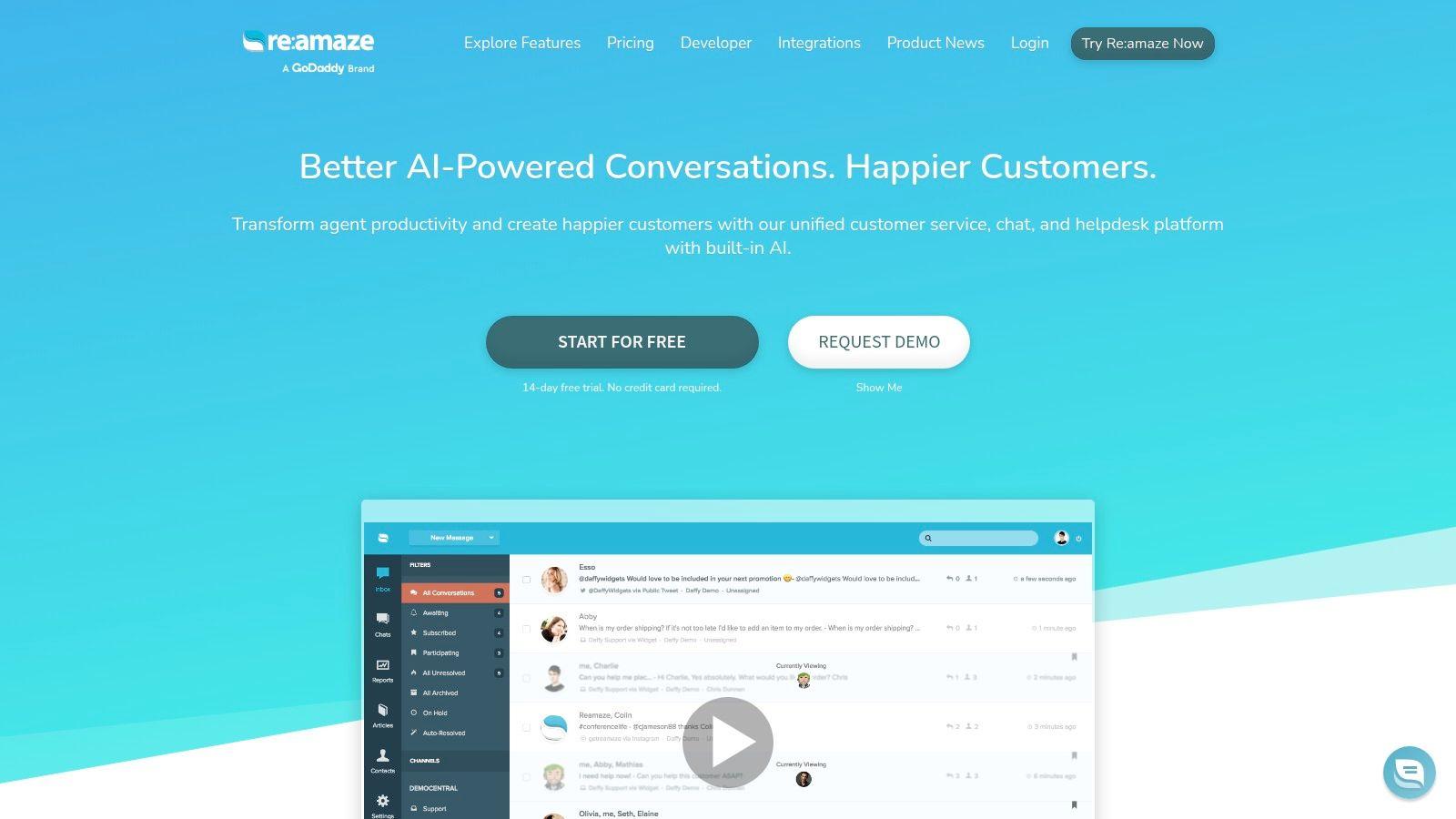
Re:amaze answers that with a shared helpdesk, live chat, proactive website messages, chatbots and an AI Agent trained on help content and connected store data. Shopify product and order information appears inside conversations, and FAQ, order-status and custom chatbots cover the predictable traffic. Social channels and multi-brand support suit agencies running several storefronts.
The cost structure is the thing to model carefully:
- Per team member: Standard plans scale with headcount, so a growing support team raises the bill even at flat conversation volume.
- Included AI resolutions: Each plan carries an allowance, with extra resolutions charged separately.
- Orientation: This is customer service software with chat, not a specialized product-discovery engine.
Published pricing and allowances make it forecastable, which counts for a lot in this category.
8. Octane AI
Not every pre-purchase question belongs in a chat window. When the choice involves shade matching, a supplement routine or a gift for someone else's skin type, a guided quiz often outperforms an open-ended conversation because it collects the same three facts every time.
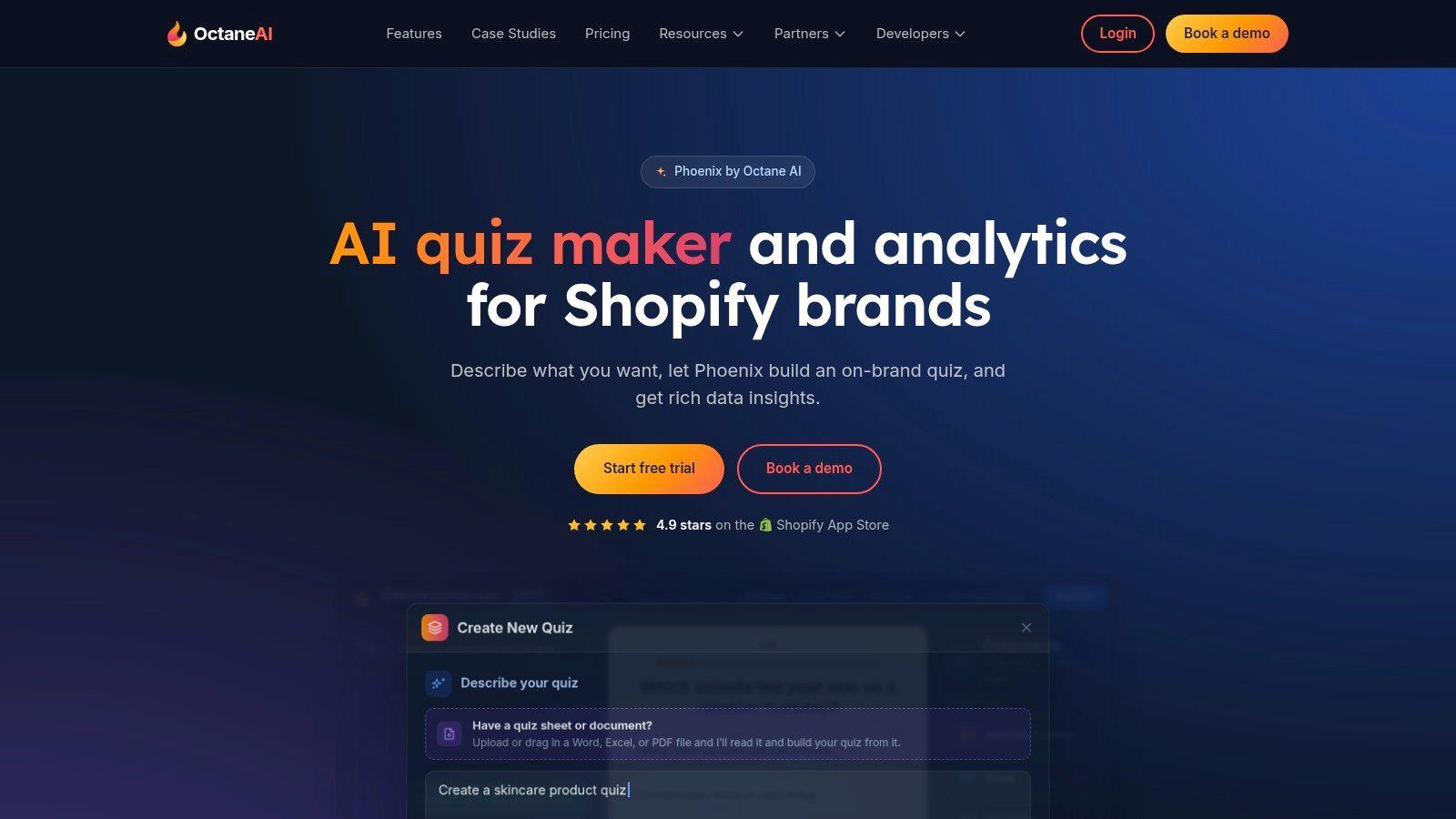
Octane AI does that job. Quizzes branch on answers, rank products from the Shopify catalog against recommendation rules, and push preference data into Shopify and marketing tools for later personalization. AI-assisted quiz creation speeds up the build, and eligible plans include quiz analytics and A/B testing.
It isn't a chat agent replacement. There's no support inbox, no order handling and no free-form conversation for the shopper who just wants to know if you ship to Switzerland. AI features run on credits alongside quiz engagement, so two meters need watching.
A quiz is a merchandising asset, not a set-and-forget app. Someone has to own the questions, review drop-off and update recommendations when the catalog changes.
Entry pricing is published and a trial is offered. Pair it with a chat tool rather than expecting it to cover both jobs.
9. Manifest AI
Consumer adoption is broad enough now that a storefront assistant isn't an experiment for early adopters. Adyen's survey of 41,000 consumers found 37% of consumers across 28 countries said they used AI to help with shopping in 2025, which is a useful reminder that international shoppers arrive with habits already formed.
Manifest AI combines a Shopify chatbot with product recommendations, quiz-based discovery and cart plus checkout recovery features. Chat customization, chatbot flows and analytics for recommendation and conversion performance round it out, and the Shopify listing includes a free option to try.
The comparison friction is pricing. Some plans are listed as free to install with additional charges, so the number you see at install isn't necessarily the number you pay in month two. Confirm post-trial costs in writing before you route real traffic through it.
- Read recent feedback: Ratings differ across listing snapshots, so weight the newest reviews.
- Test the quiz and the chat together: Overlapping recommendation logic can send a shopper in circles.
For a side-by-side on positioning and selling features, this Manifest AI vs Rep AI comparison is a practical starting point.
10. Richpanel
Some stores don't have a pre-purchase problem. They have a subscription-change problem, and the inbox is full of skip, pause and swap requests. Richpanel is aimed at that workload, with a Shopify-aware inbox showing customer and order history, AI handling of order questions, returns and subscription changes, permission controls and human handoff for actions.
Channels cover social, email and chat, and the ability to execute operational tasks rather than only explain policies is a key differentiator. For a store with recurring orders, that's worth more than another recommendation widget.
Costs come from two directions. Per-seat helpdesk pricing scales with the team, and AI usage is priced separately with a published monthly minimum, so a small store pays a floor whether it automates ten conversations or a thousand. Model both lines against your actual volume before committing.
Its center of gravity is post-purchase service automation. A merchant whose main leak is unanswered sizing questions at 9 p.m. is buying more platform than the problem needs.
How the leading Siena AI alternatives compare on free options, trials, pricing basis and best fit
| Item | Free Option | Trial | Pricing Basis | Best For |
|---|---|---|---|---|
| Carti | 50 AI conversations per month | 14 days on paid plans | Monthly conversation tiers; paid plans start at $49/month | Shopify stores seeking a recommended sales assistant for product questions and conversions |
| REP AI | Not stated | 14 days | Store sessions | Shopify stores combining sales assistance with support automation |
| Tidio (Lyro) | Free plan available | Free trial available | Usage allowances and plan eligibility | Stores wanting AI chat, live support, and a shared inbox |
| Zipchat | No free tier stated | 7 days | AI replies | Ecommerce stores needing product discovery and multichannel chat |
| Gorgias | Not stated | Not stated | Ticket volume and AI outcomes | Shopify brands already using Gorgias for customer support |
| Shopify Inbox | Free | Not stated | No additional software subscription | Shopify merchants wanting basic, native storefront messaging |
| Re:amaze | Not stated | Not stated | Per team member and AI resolutions | Stores combining helpdesk workflows with chat and support automation |
| Octane AI | Not stated | 14 days | Quiz engagement and AI credits | Shopify stores guiding shoppers through complex product choices |
| Manifest AI | Free option available | Not stated | Free installation with possible additional charges | Smaller Shopify stores exploring recommendations, quizzes, and cart recovery |
| Richpanel | Not stated | Not stated | Per-seat helpdesk pricing plus AI usage; $200/month minimum for AI | Stores automating post-purchase support and operational workflows |
Match the Chatbot to the Questions Your Shoppers Ask Most
The right choice among Siena AI alternatives is the one that answers your most common pre-purchase questions accurately, on the channels your shoppers already use, at a cost you can predict from your own volume. Feature lists won't tell you that. Your inbox will.
Start by sorting the last 200 conversations into buckets: sizing and fit, shipping and delivery eligibility, returns and policy edge cases, product comparisons, and order status. If the first four dominate, you need a storefront selling assistant. If order status dominates, a helpdesk with AI is the better spend, and a quiz platform belongs in the mix only when product matching is complex.
Then set a measurement standard before any trial begins. McKinsey's generative AI analysis describes a deployment involving 5,000 customer-service agents where generative AI increased issue resolution by 14% per hour and reduced handling time by 9%. That's an enterprise service benchmark, not a Shopify promise, but it shows the shape of the metrics worth tracking, resolution per hour and time per conversation, rather than a vendor's headline automation percentage.
Run the comparison as a controlled test. Keep traffic source, device and product category stable across the test window, and compare assisted sessions against unassisted ones instead of comparing this month to last month.
Watch for the gap between advertised and delivered automation. One comparison of Siena AI alternatives reports real-world full automation of roughly 30% to 50% after setup work, well below the higher advertised figure. Budget for knowledge-base maintenance and human escalations, not just the subscription.
Score error cost too. A wrong answer about ingredients, shipping eligibility or return windows damages trust even when the conversation counts as resolved, so read transcripts rather than dashboards. Shortlist two or three tools, run each trial with real questions from your inbox, price each one at your traffic level, and move only when the answers match your policies.
If your leak is hesitant shoppers asking sizing, shipping and comparison questions before checkout, Carti is built for exactly that job on Shopify, with live catalog recommendations, in-chat add-to-cart buttons, replies in 92 languages across your storefront and social DMs, and an Insights Dashboard that shows what shoppers keep asking. Start on the free plan with 50 AI conversations a month, or test a paid tier free for 14 days to see how it handles your real questions. Visit Carti to set it up in a few minutes and compare the answers against your current chatbot.

Written by
Daniel AndersonFounder of Carti. 10+ years building ecommerce brands in apparel and supplements. Still runs a Shopify store and built Carti to help merchants convert more browsers into buyers.