
A shopper asks whether a jacket runs small while the Shopify merchant is packing orders. The chat notification gets buried, the reply goes out hours later, and the shopper has already left. By evening, the same inbox contains a delivery question, a return request, and another unanswered sizing question.
The widget still works. The operating setup doesn't.
Choosing among Tawk.to alternatives starts with deciding what chat should accomplish. A store trying to help hesitant browsers buy needs catalog-aware answers and relevant recommendations. A team struggling with delayed orders and returns needs ownership, routing, and reliable human escalation. Some stores need both, but those jobs shouldn't be treated as interchangeable.
A replacement also won't repair missing product information or confusing checkout design. Merchants still need clear sizing guidance, accurate policies, and someone responsible for exceptions.
The options below are grouped by their most useful job, from shopping assistance to structured support. Competitor prices and numerical allowances aren't quoted where their own pricing pages couldn't be confirmed. That matters because a subscription, an AI allowance, and a channel add-on can represent different charges.
Practical rule: A better chat tool should improve either the shopper's buying decision or the team's ability to resolve a request. A different-looking bubble isn't enough.
1. Carti
Best suited to Shopify stores prioritizing pre-purchase assistance over a conventional ticket queue.
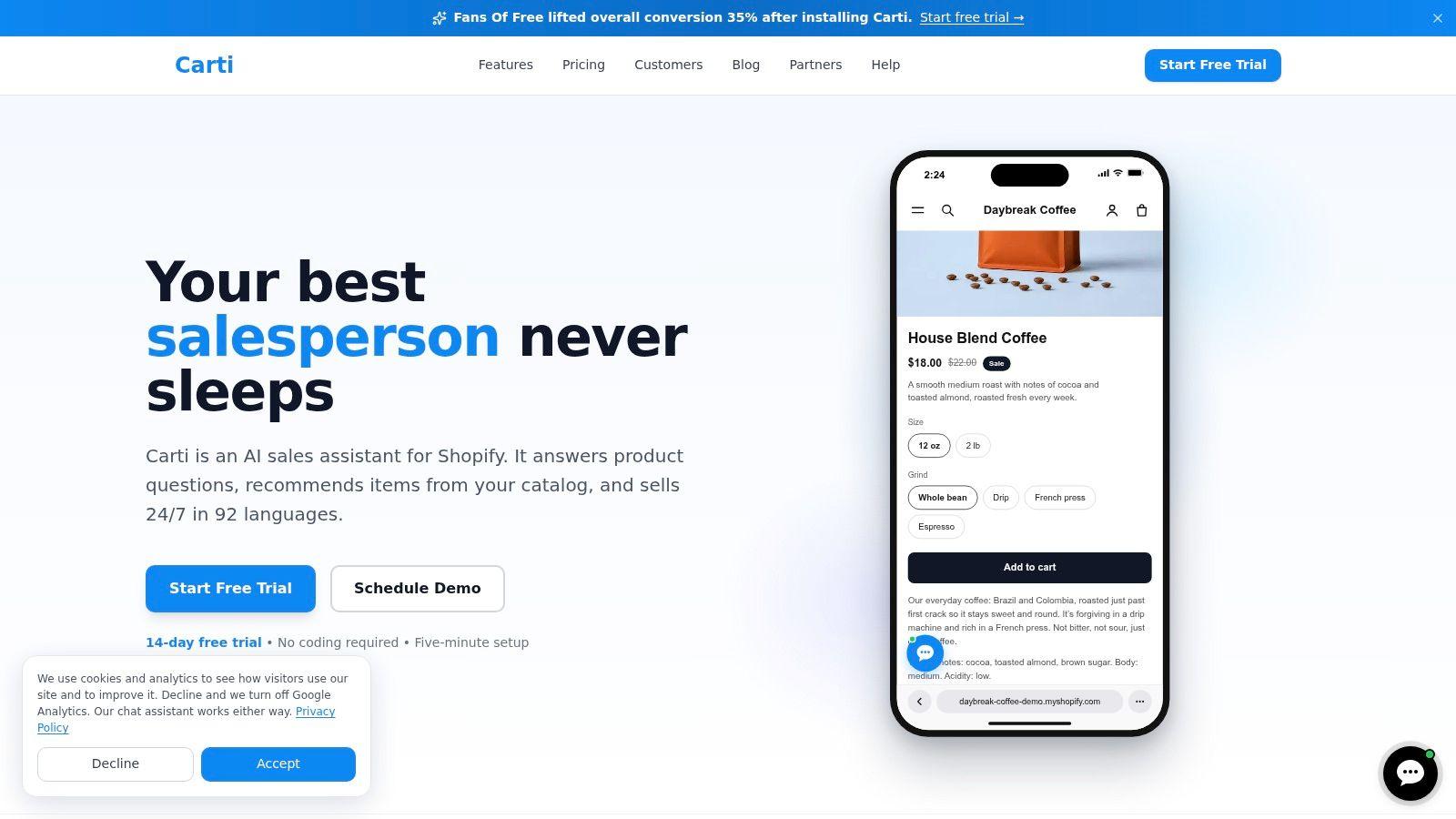
Carti is an AI shopping assistant for Shopify. It uses a store's catalog, policies, FAQs, and brand voice to answer product questions, explain sizing, shipping, and returns, and recommend relevant items.
That makes it an option when shoppers need help choosing rather than help opening a support ticket. Product cards can show current prices and stock, with an add-to-cart button inside the conversation.
Where the fit is strongest
Instant Answers and proactive triggers help merchants address hesitation during browsing. Supported review integrations include Judge.me, Loox, Yotpo, Okendo, and Fera, giving the assistant additional material for questions about fit and quality.
The Insights Dashboard and chat logs help merchants inspect shopper questions rather than judging the assistant solely by how often it replies. The Playground also lets a store test its current appearance, tone, knowledge, and triggers before launch.
- Coverage: Replies in 92 languages, with storefront chat and messaging through Instagram and Facebook Messenger.
- Plans: Free costs $0/month for 50 AI conversations, Starter costs $49/month for 250, Growth costs $99/month for 600, and Scale costs $249/month for 1,750.
- Trial: Paid plans include a 14-day free trial.
- Human support: Conversations escalate when a shopper needs a person.
The trade-off is a conversation allowance that needs to match actual demand. Answer quality also depends on the store's information, so incomplete sizing charts or contradictory return policies need fixing rather than more confident wording.
A suitable pilot should include product comparisons, unavailable variants, policy exceptions, and questions the catalog can't answer. The assistant should acknowledge missing information instead of inventing a recommendation.
2. Shopify Inbox
Shopify Inbox is the straightforward choice when a merchant still wants a person answering chat. Its advantage is proximity to the store, not the complexity of its automation.
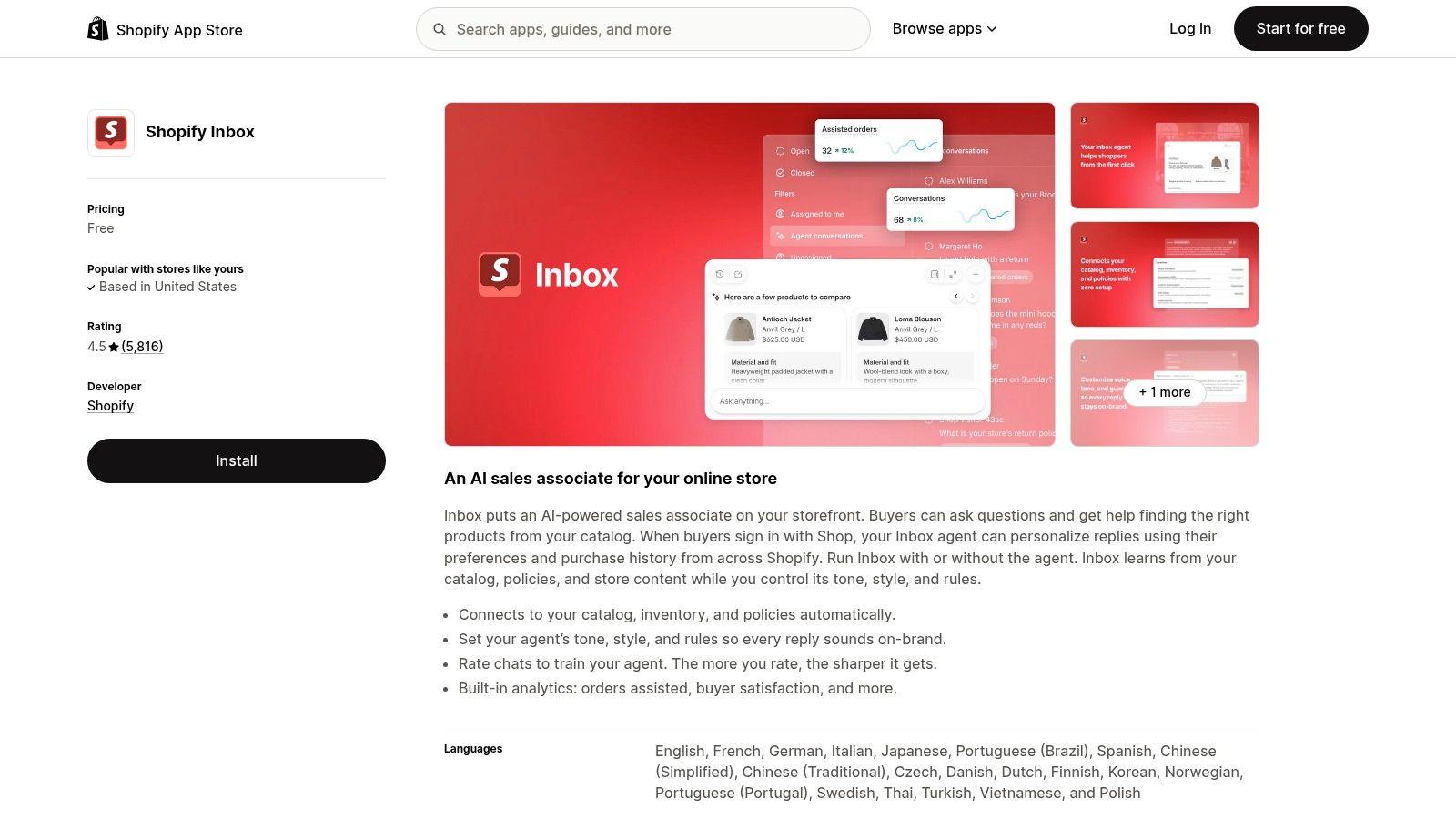
Shopify Inbox puts storefront conversations in Shopify admin and on mobile. Cart context and discount-code sharing make it useful for sales conversations, while instant answers, welcome messages, and away messages cover straightforward interactions.
For a small fashion store, the useful workflow is simple. A shopper asks about coordinating items, the merchant checks the cart context, and the reply stays connected to the buying decision.
- Works well for: Owner-operated stores that can respond consistently and want chat close to their existing Shopify workflow.
- Main limitation: A dedicated helpdesk is more appropriate when requests need complex routing, multiple specialist teams, or extensive channel coverage.
- Buying consideration: The relevant question isn't just software cost. It's whether someone can reliably cover the inbox.
The setup won't solve delayed replies if notifications still go unanswered. Away messages should state what happens next, and email continuation should have a named owner.
For merchants considering automation, the first test should be the quality of store content used for instant answers. A vague shipping page produces a vague answer regardless of how convenient the interface is.
3. Tidio
Tidio suits stores that want human chat, automated flows, and AI answers in the same setup. It's a middle path between a basic live-chat widget and a larger support platform.
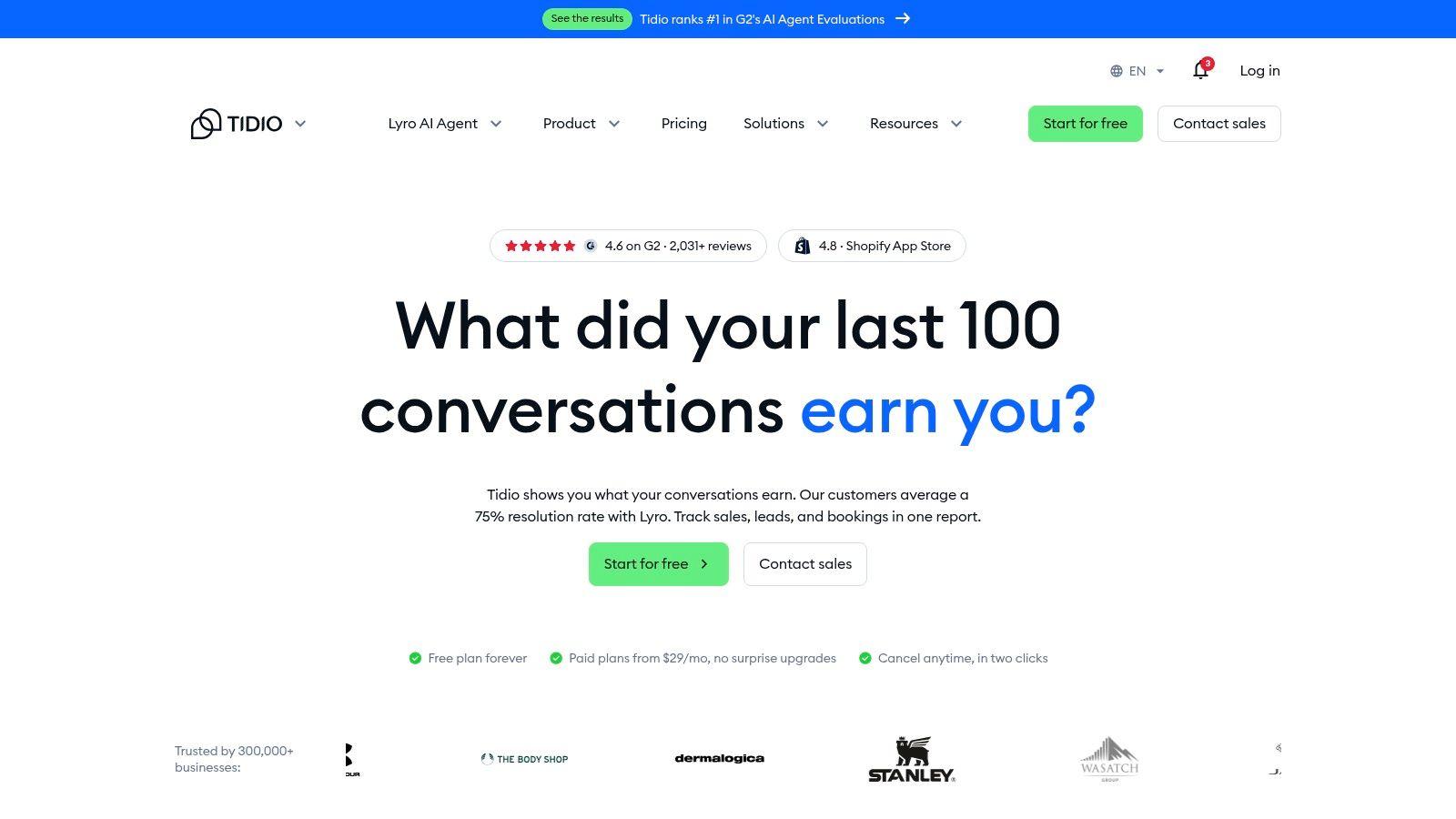
Tidio combines website chat, a mobile app, ticketing, visual chatbot flows, and an AI agent. Its Shopify-related actions deserve a practical test against the tasks the merchant wants automated.
A beauty store might use a flow to identify the shopper's concern, an automated answer for a published shipping policy, and human support for a reaction complaint. Those interactions shouldn't share the same escalation rules.
The pricing question is which usage applies
Chat, AI conversations, and automated flows can involve separate allowances. Merchants should map the intended workflow before comparing subscription costs, rather than assuming the entry subscription includes every automation requirement.
The Tidio pricing breakdown helps frame those distinctions. Current prices and limits still need confirmation on the company's own pricing page.
The upside is flexibility without immediately committing to a full helpdesk migration. The trade-off is configuration and usage tracking across different capabilities.
During a pilot, merchants should test whether an automated flow ends cleanly when a shopper changes the subject. A bot that keeps pushing a preset path after a customer requests a person creates extra work for the eventual human responder.
4. Gorgias
Choose Gorgias primarily for support operations, with shopping assistance as an additional capability. It's a more substantial decision than replacing a standalone widget.
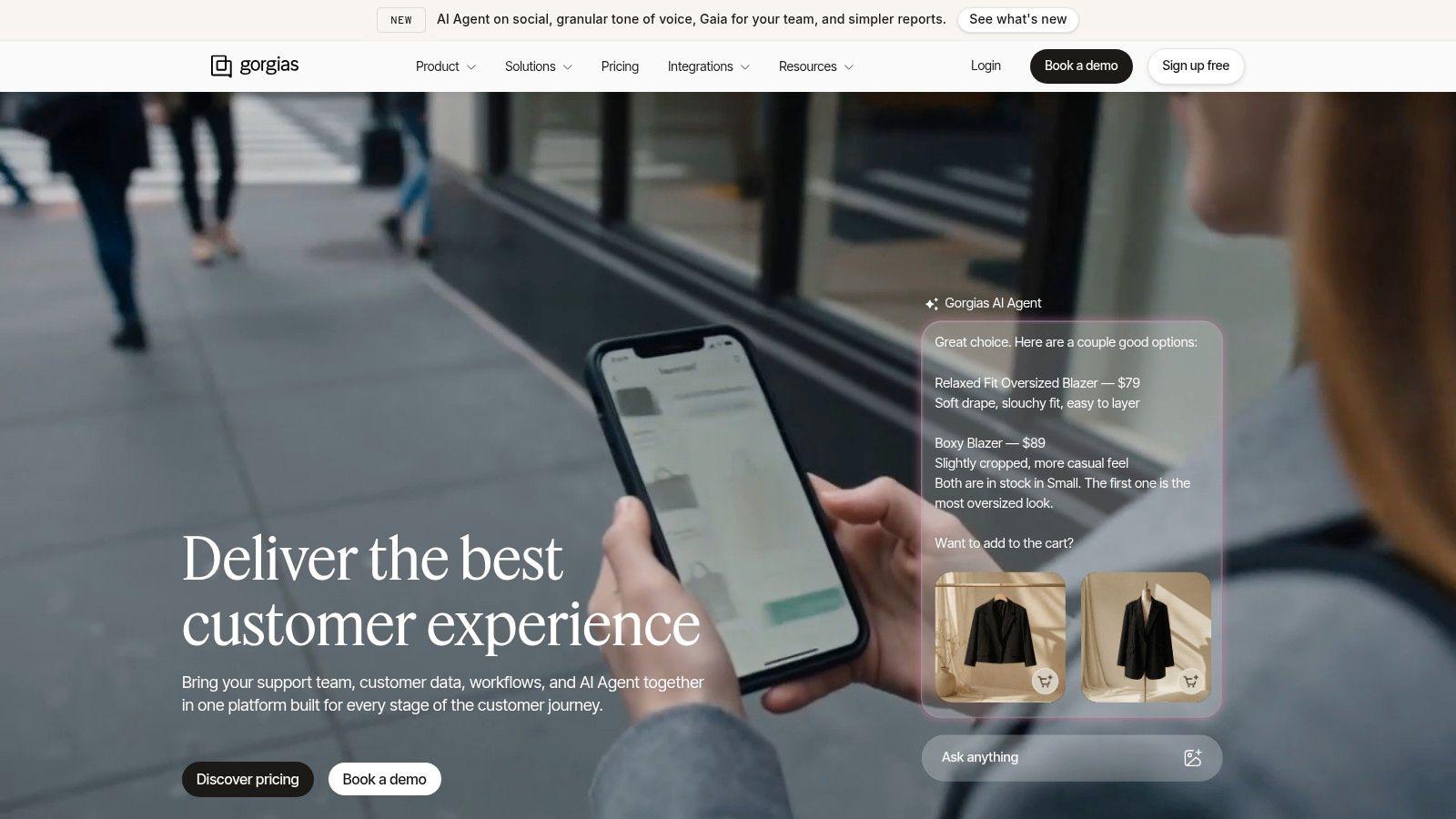
Gorgias brings Shopify customer and order context into a shared support environment. Its channel coverage includes live chat, email, social messaging, SMS, and voice, alongside AI support and shopping assistance.
The strongest reason to shortlist it is fragmented work. When an agent must check Shopify, search an email thread, and inspect a social message before answering, consolidating context can be more useful than adding another chatbot.
- Operational advantage: Customer service and product assistance can sit within the same broader support operation.
- Commercial trade-off: Ticket-volume billing and AI-related charges require separate attention when estimating total spend.
- Implementation burden: Assignment rules, permissions, macros, and escalation ownership need deliberate setup.
A successful automated reply isn't the same as a successfully resolved customer request.
For a homeware merchant, an ordinary delivery-policy question may be suitable for automation. A damaged-item complaint with photographs and a replacement request needs a different workflow.
Merchants should test what the human receives after handoff, including the shopper's question, relevant order context, and previous automated answers. If agents still ask customers to repeat everything, the platform's breadth hasn't translated into a better experience.
5. Re:amaze
A customer emails about a return, then follows up through social messaging. Re:amaze is worth considering when that cross-channel overlap is the daily problem.
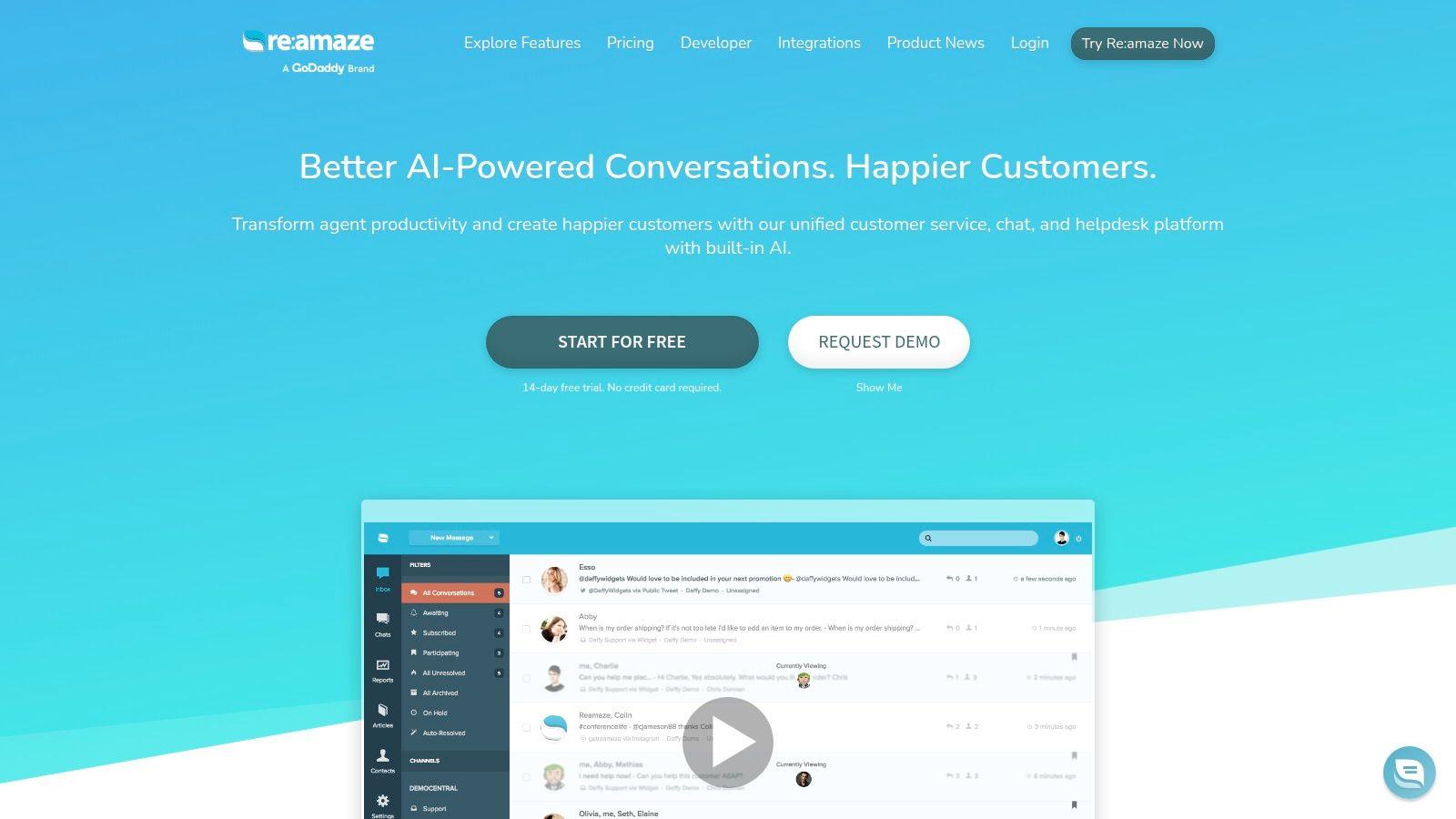
Re:amaze combines live chat and chatbots with a shared inbox for email, social, SMS, and calls. FAQs, workflows, AI-assisted replies, an AI Agent, and Shopify-related order context extend it beyond website messaging.
Its appeal is consolidation. Merchants can evaluate a shared operational workspace rather than asking staff to monitor disconnected channel inboxes.
Better for coordination than a widget-only replacement
The broader feature set needs more configuration than a basic chat installation. Categories, routing, customer identification, and ownership should reflect how the team handles requests.
- Strong fit: Stores with recurring support conversations across channels or a need to coordinate multiple storefronts.
- Potential mismatch: A merchant seeking only product recommendations may not need the surrounding service infrastructure.
- Cost review: Staff access, higher-tier capabilities, and multi-store requirements should all appear in the estimate.
A useful pilot follows a customer across channels and checks whether agents can understand the history without manual detective work. Merchants should also distinguish an AI-drafted reply from an independently resolved request.
The former may save writing time while still requiring agent review. The latter needs stronger safeguards around policy interpretation, exceptions, and escalation.
6. Crisp
Crisp deserves a look when workspace-based purchasing fits the team better than a purely per-agent approach. It combines website chat with a shared inbox and room to expand into broader support.
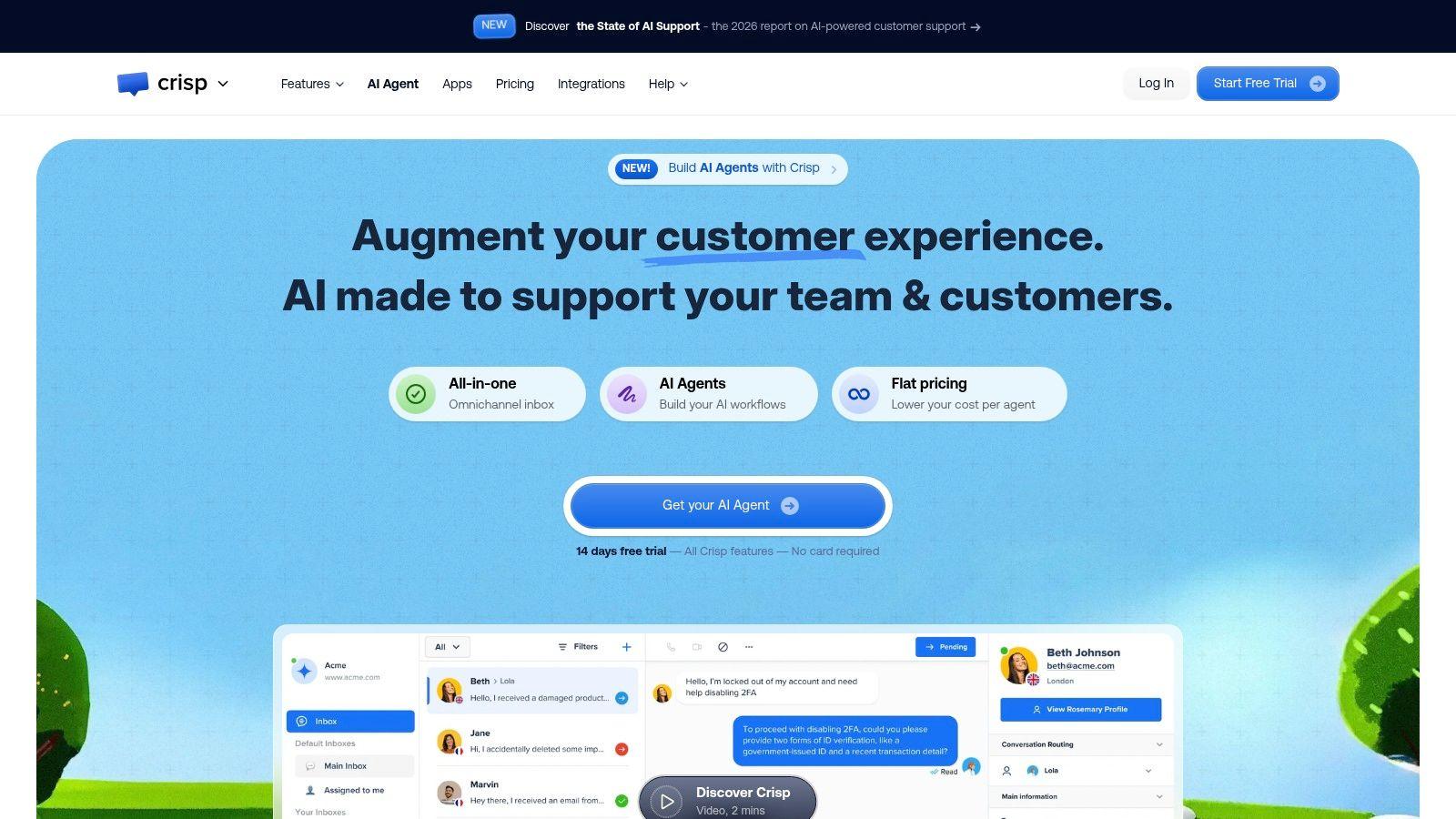
Crisp offers mobile apps and Shopify data syncing alongside its chat interface. Omnichannel messaging, automation, AI chatbot capabilities, knowledge-base tools, analytics, and routing depend on the selected tier.
The practical distinction is between workspace cost and automation cost. Bundled seats can make team access easier to understand, but they don't automatically make AI consumption predictable.
Budget beyond the workspace
Merchants should inspect included seats, AI credits, channel access, and pay-as-you-go settings together. A subscription that accommodates the support team may still need additional budget for automated answers.
The strongest fit is a store that wants to start with shared messaging and expand gradually. The weaker fit is a merchant expecting every advanced channel and automation capability immediately.
A pilot should include an ordinary support shift, not just a chatbot demonstration. Staff need to assess search, assignment, conversation history, and the ease of taking over an automated exchange.
For Shopify stores, synced data should also be checked against real customer scenarios. An integration is only useful when it exposes the information needed to answer the question, without agents repeatedly opening separate systems to complete the reply.
7. Freshchat
Freshchat is most compelling when messaging belongs inside a broader support operation, particularly for teams already evaluating the Freshworks ecosystem.
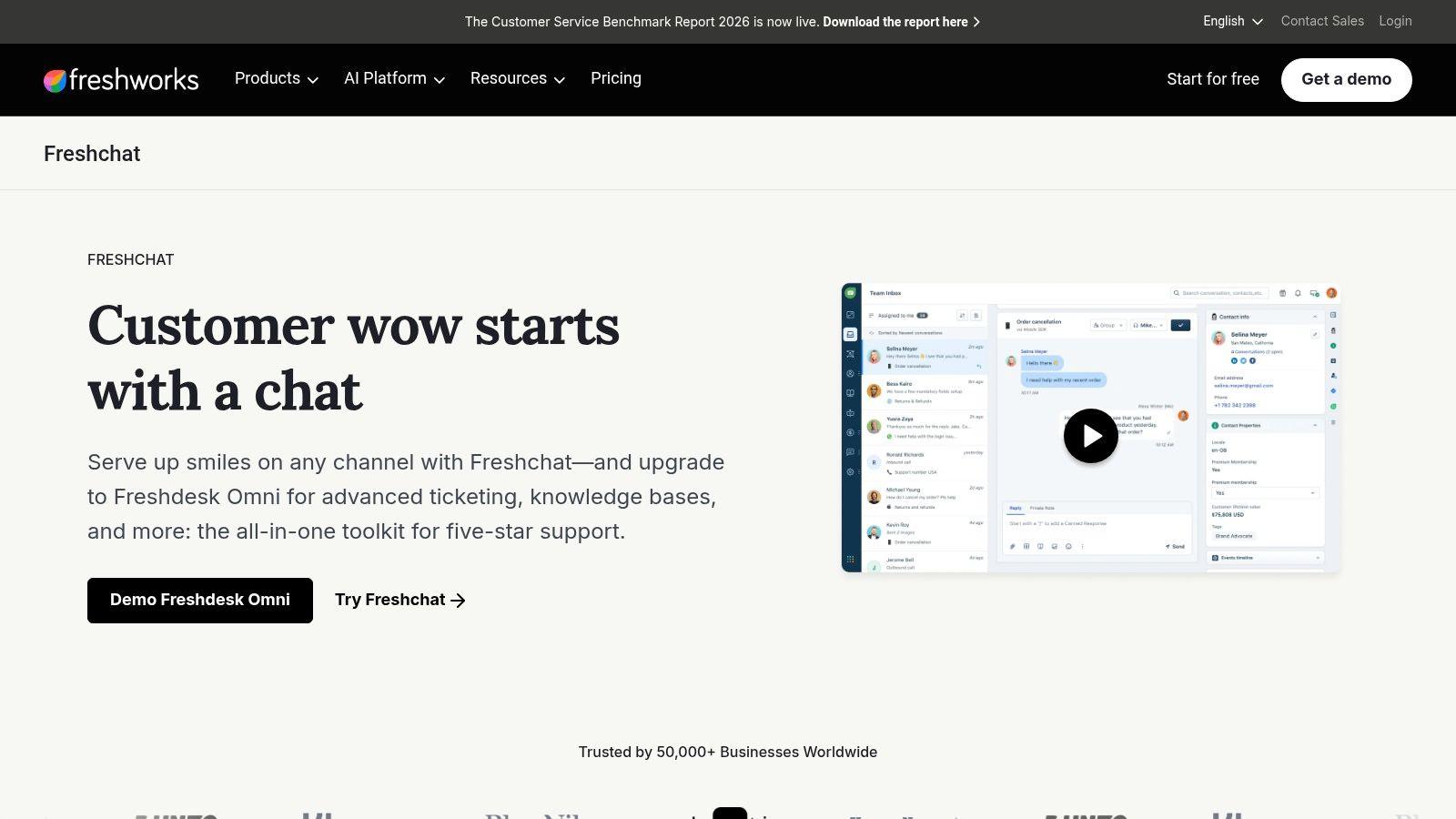
Freshchat provides web and mobile messaging, a shared inbox, and email connection. Social messaging, routing, reporting, multilingual capabilities, and AI functionality depend on the package and configuration.
That makes it a different purchase from a Shopify-specific recommendation assistant. The merchant should begin with support workflows, then verify the depth of Shopify integration rather than assuming product expertise comes with the chat widget.
- Best job: Organizing inbound conversations and expanding customer messaging.
- Important boundary: Product comparison and recommendation quality need direct testing against the catalog.
- Budget uncertainty: Agent subscriptions and AI usage should be estimated separately.
A wellness store, for example, may safely automate a published dispatch policy while routing questions about product suitability to trained staff. The assistant shouldn't convert incomplete catalog information into health-related assurances.
The pilot should also distinguish languages available in the interface from languages handled effectively in customer conversations. Merchants need to test actual product vocabulary, policy terms, and the handoff message.
Freshchat is a reasonable shortlist candidate when support coordination is the priority. A sales-first store should require evidence that the chosen integration supports its shopping journey before committing.
8. Zendesk
Zendesk fits established service teams better than merchants seeking a lightweight storefront upgrade. Its value lies in structured ticket handling, agent workflows, and messaging within a wider service platform.
Zendesk offers messaging, web chat, ticketing, and AI-agent options. The relevant comparison isn't widget against widget, but the amount of operational structure the store needs.
For a merchant coordinating billing disputes, warehouse investigations, and specialist product questions, explicit ownership matters. For a solo founder answering occasional sizing questions, the same structure can introduce unnecessary administration.
Evaluate the operating burden
- Useful strengths: Structured workflows and a broad customer-service feature set.
- Cost considerations: Agent access, package requirements, and AI-related charges need a combined estimate.
- Main trade-off: Setup and ongoing administration can outweigh the benefit for a small team.
The guide to Zendesk alternatives provides a narrower comparison for merchants deciding whether that level of service infrastructure is necessary.
Human escalation should remain central to the evaluation. In its 2024 survey, Gartner found that only 14% of customer-service and support issues were fully resolved through self-service.
That finding isn't a forecast for a particular store. It supports testing completed resolution, not treating a customer who stops messaging as proof that automation worked.
9. Rep AI
Rep AI belongs on the shortlist when the main problem is purchase hesitation, not an overflowing support queue. Its proactive approach is intended to engage shoppers during browsing.
Rep AI offers product recommendations, pre-purchase assistance, and answers to support topics such as order status and returns. Human handoff and integrations with Gorgias, Zendesk, and Klaviyo make it relevant to stores that already have other customer-service or marketing tools.
The merchant's decision should focus on how that engagement feels. A helpful invitation on a complicated product page can be appropriate, while repeated interruptions during routine browsing can be unwelcome.
Launch safeguard: Proactive chat should answer a recognizable shopper need, not appear simply because the store can display another message.
For a fashion store, tests should include fit comparisons and unavailable sizes. For beauty and wellness catalogs, recommendations need clear boundaries around unsupported suitability claims.
The benefit is a sales-oriented assistant that can coexist with an existing support stack. The trade-off is the need to tune engagement behavior and verify recommendation quality.
Merchants should confirm the commercial terms before treating an installation offer as an ongoing operating budget. Usage, integrations, and human handoff should be evaluated as part of the same proposed setup.
A useful pilot compares relevant product engagement and completed assistance against interruptions, incorrect recommendations, and requests for human help.
10. Zipchat
Zipchat is worth evaluating for stores that want automated sales and support across storefront and messaging channels. Its emphasis is broader than website chat alone.
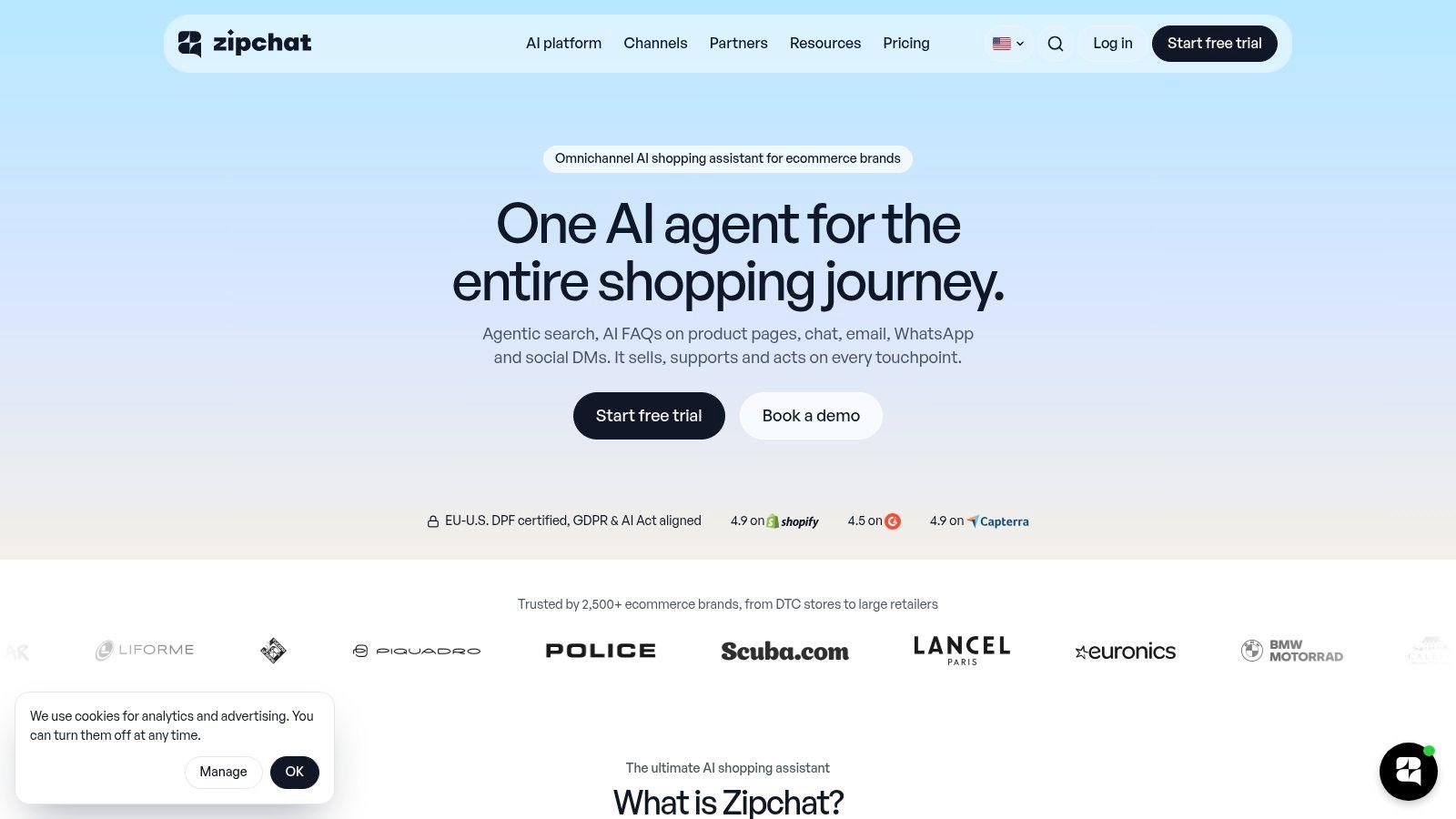
Zipchat covers storefront chat, email, WhatsApp, Instagram, and Messenger. Product recommendations, order-status assistance, and AI corrections are relevant for merchants trying to keep automated answers useful across those channels.
The correction workflow deserves particular attention. Merchants need to establish whether correcting a response fixes the underlying knowledge problem or merely changes an isolated answer.
Count replies, not just conversations
Monthly AI-reply allowances require a different estimate from conversation-based subscriptions. A shopper comparing products and asking follow-up questions may consume multiple replies during the same exchange.
The Zipchat pricing guide explains the budgeting questions, while current subscription terms require confirmation on the company's own pricing page.
- Best fit: Merchants handling shopping and service questions across social messaging and the storefront.
- Main cost risk: Comparing reply allowances directly with another tool's conversation allowance.
- Quality test: Consistency between product recommendations, order answers, and published store policies.
Merchants should run the same question through each intended channel. If an Instagram reply contradicts the storefront answer about returns or delivery, channel breadth hasn't produced consistent service.
The final test should include an unanswered question. A useful assistant needs a safe failure path, not just polished responses to straightforward prompts.
How the 10 Tawk to Alternatives Compare at a Glance
| Item | Free plan | AI features | Best fit |
|---|---|---|---|
| Carti (recommended) | 50 AI conversations per month | Product answers, recommendations, proactive engagement, and multilingual responses | Shopify stores focused on converting hesitant shoppers |
| Shopify Inbox | Free | AI-generated instant answers using store content | Small Shopify teams needing basic chat and sales assistance |
| Tidio | Free plan available | Lyro AI agent and visual chatbot flows | Merchants combining human support with chat automation |
| Gorgias | No free plan stated | AI shopping recommendations and automated support answers | Growing stores consolidating customer support channels |
| Re:amaze | No free plan stated, but paid plans offer a 14-day trial | AI Agent, AI-assisted replies, and chatbots | Stores managing customer service across multiple channels |
| Crisp | Free plan for basic chat and inbox, with no AI credits | Paid plans add AI chatbot features and automation | Teams wanting basic chat with room to expand |
| Freshchat | Free plan for up to 10 agents | Freddy AI Agent available as a paid add-on | Small teams needing general-purpose customer messaging |
| Zendesk | No free plan stated | AI agents and response translation in more than 80 languages | Established teams with structured, multichannel support |
| Rep AI | Free to install, but usage may cost extra | Proactive shopping assistance, product recommendations, and support answers | Shopify stores seeking sales-oriented chat and human handoff |
| Zipchat | Free plan available | Product recommendations, order-status assistance, and AI corrections | Shopify merchants automating sales and support across chat and social channels |
Choosing the Right Tawk to Alternative for Your Store
The main job of chat should determine the shortlist, whether that's selling, handling support, or both. A store losing hesitant browsers needs accurate product assistance. A team struggling with returns, delayed orders, and cross-channel follow-ups needs ownership and reliable resolution.
Shopify Inbox suits straightforward merchant-led conversations. Rep AI emphasizes proactive shopping assistance, while Gorgias and Re:amaze deserve attention when support consolidation is the larger problem. Tidio and Crisp offer a middle path, provided their automation allowances match the intended workload.
Price the actual workload
Each shortlisted tool should be priced at the store's real monthly demand using its own pricing page. The estimate needs the relevant billing unit, whether that's conversations, replies, tickets, agents, credits, or automated resolutions.
- Separate the charges: Include required channels, staff access, automation, and add-ons.
- Test changing demand: Compare ordinary trading periods with promotions and seasonal support spikes.
- Inspect the limit: Establish what happens when the allowance runs out, including whether automation pauses or additional usage is charged.
A free plan, where available, can support an initial catalog test. A trial should then reproduce the intended workflow rather than a simplified demonstration.
Test answers and escalation together
Fashion stores should test ambiguous sizing and fit. Beauty and wellness merchants should include suitability questions that require restraint, while homeware stores should test dimensions, compatibility, bulky delivery, and return conditions.
Shipping accuracy deserves special attention. Baymard found that 40% of US online shoppers who abandoned after excluding those merely browsing cited extra costs such as shipping, taxes, or fees. That supports answering cost questions clearly, not promising a particular conversion gain from chat.
Human handoff should preserve the conversation and identify who owns the next response. Language testing should include product terminology and policy exceptions, not just greetings.
Before migration, merchants should save useful transcripts and approved answers, remove contradictory source material, and confirm that the replacement can be disabled cleanly. Only the intended widget should remain visible after the switch.
The final decision should favor accurate assistance, recoverable failures, and understandable costs. If the current setup already delivers those outcomes, staying with Tawk.to remains reasonable. Switching makes sense when the replacement solves a defined operating problem rather than adding another dashboard.
Carti offers Shopify merchants catalog-aware product answers, recommendations, and proactive assistance for shoppers deciding what to buy. Merchants comparing sales-focused Tawk.to alternatives can visit Carti and test sizing, shipping, returns, and product-comparison questions against their own store content.

Written by
Daniel AndersonFounder of Carti. 10+ years building ecommerce brands in apparel and supplements. Still runs a Shopify store and built Carti to help merchants convert more browsers into buyers.